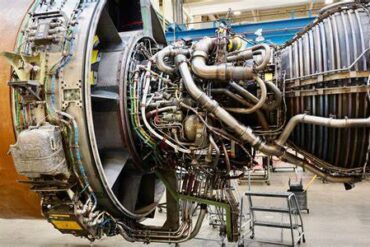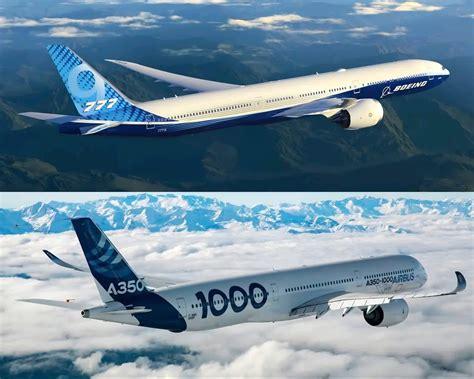
The modern aviation landscape is defined by efficiency, range, and passenger experience—and no aircraft captures that transformation more clearly than the Airbus A350. Built with cutting-edge composite materials and powered by highly efficient Rolls-Royce Trent XWB engines, the A350 has rapidly become the backbone of long-haul operations for leading global carriers. It is not merely a replacement for aging aircraft; it is a strategic tool reshaping how airlines design networks, manage costs, and compete for premium passengers.
Since its commercial debut in 2015, the A350 has steadily gained traction across continents. Yet, its adoption is not evenly distributed. A select group of airlines has committed heavily to the aircraft, building large fleets that reflect distinct operational philosophies. These carriers are not just operators—they are architects of modern long-haul aviation strategy.
Why the Airbus A350 Defines Modern Long-Haul Aviation
The A350’s significance lies in its ability to balance economics, performance, and passenger comfort in a way that previous generations could not. Compared to older widebodies like the A340 or early Boeing 777 variants, it delivers dramatically lower fuel burn, reduced maintenance requirements, and significantly improved environmental performance.
At the same time, passengers experience quieter cabins, higher humidity levels, larger windows, and improved pressurization—features that subtly but powerfully redefine long-haul travel. Airlines have leveraged these advantages not only to cut costs but to elevate brand perception and customer loyalty.
What makes the A350 particularly compelling is its versatility. It can operate ultra-long-haul routes exceeding 17 hours or efficiently serve medium-to-long-haul regional markets. This adaptability explains why airlines with vastly different strategies—from premium-focused carriers to network giants—have embraced it so aggressively.
Singapore Airlines: The Undisputed Leader in A350 Operations
Singapore Airlines stands at the top of the global A350 hierarchy, operating the largest fleet of these aircraft worldwide. With 65 A350s, including the specialized A350-900ULR (Ultra Long Range) variant, the airline has built its long-haul strategy around this aircraft more comprehensively than any competitor.
The airline’s approach is both bold and calculated. The ultra-long-range version enables nonstop flights between Singapore and cities like New York and Newark—routes that rank among the longest commercial flights on Earth. To make these journeys economically viable, Singapore Airlines has configured these aircraft with a premium-heavy layout, prioritizing business and premium economy seats over standard economy capacity.
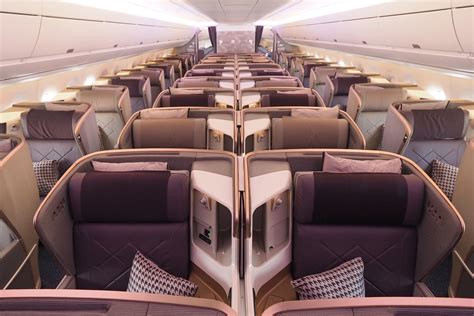
This configuration reflects a deeper strategic insight: ultra-long-haul routes are less about volume and more about yield optimization. By targeting high-paying passengers, the airline transforms extreme-distance flying into a profitable niche.
Meanwhile, its standard A350-900 fleet operates across Europe, Asia, and Australia, showcasing the aircraft’s flexibility. The relatively young average fleet age further enhances efficiency and reliability, reinforcing Singapore Airlines’ reputation for operational excellence.
The result is a unified long-haul fleet that benefits from simplified maintenance, consistent crew training, and scalable deployment—a model many airlines aspire to replicate.
Qatar Airways: Mastering Dual-Variant Flexibility
Qatar Airways has taken a different but equally powerful approach, operating the second-largest A350 fleet globally with a mix of A350-900 and A350-1000 variants. This dual-variant strategy allows the airline to fine-tune capacity based on route demand without sacrificing efficiency.
The smaller A350-900 is typically deployed on routes with moderate demand, while the larger A350-1000 serves high-density intercontinental markets. This flexibility gives Qatar Airways a crucial advantage: the ability to match aircraft size precisely to market conditions, maximizing profitability across its network.
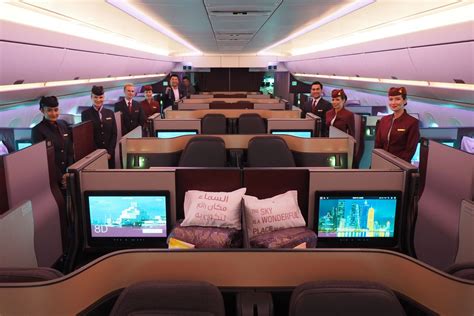
Operating from its Doha hub, the airline uses the A350 to connect an extensive global network spanning Europe, Asia, Africa, and the Americas. The aircraft’s range allows Qatar Airways to link secondary cities that might otherwise lack direct long-haul service, strengthening its hub-and-spoke model.
Equally important is the integration of premium products such as the renowned Qsuite business class, which enhances the passenger experience while driving higher revenue. In this sense, the A350 is not just an operational asset—it is a brand amplifier.
Cathay Pacific: Balanced Deployment Across Global and Regional Routes
Cathay Pacific ranks among the top A350 operators with a fleet that combines both the -900 and -1000 variants. Its strategy is defined by balance, using the aircraft across both long-haul and regional networks.
From its Hong Kong hub, Cathay Pacific deploys A350s on routes to Europe, North America, and key Asian destinations. The -900 variant handles medium-to-long-haul services, while the -1000 is reserved for routes requiring higher capacity.
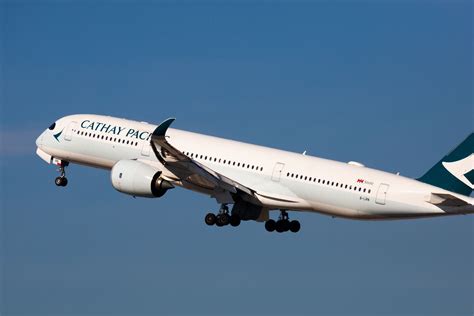
This dual-role deployment highlights the aircraft’s adaptability. Unlike airlines that focus purely on long-haul operations, Cathay Pacific leverages the A350 to optimize both regional and intercontinental connectivity.
The aircraft has also played a central role in the airline’s fleet modernization efforts, replacing older widebodies and improving fuel efficiency. In a highly competitive market with long stage lengths, these efficiency gains are not just beneficial—they are essential for survival.
Beyond economics, Cathay Pacific has used the A350 to standardize and upgrade its cabin products, ensuring consistency across its network. This alignment between hardware and service reinforces its position as a premium carrier.
Air France and Delta Air Lines: Western Powerhouses Embracing Efficiency
In Europe and North America, Air France and Delta Air Lines lead A350 adoption. Both airlines operate fleets approaching 40 aircraft and have chosen a single-variant strategy centered on the A350-900.
For Air France, this decision simplifies operations significantly. By avoiding multiple variants, the airline reduces complexity in pilot training, maintenance, and scheduling. The A350 has enabled the retirement of older aircraft such as the Airbus A340, delivering immediate improvements in fuel efficiency and emissions.
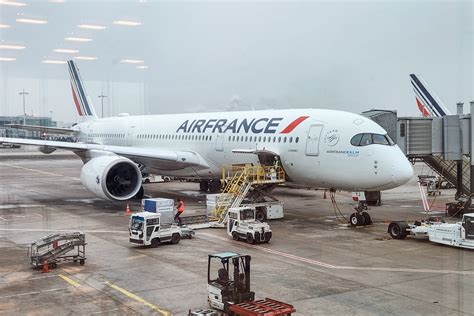
Operating from Paris, Air France deploys the A350 across a global network that includes North America, Africa, Asia, and the Middle East. The aircraft’s versatility ensures it can handle a wide range of route profiles without requiring multiple fleet types.
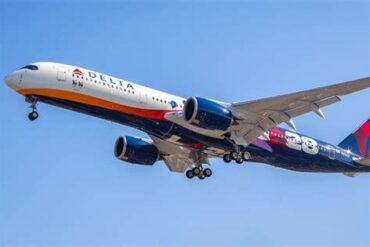
Delta Air Lines has taken a similar approach, using the A350-900 as a cornerstone of its long-haul operations. As the first North American airline to introduce the aircraft, Delta has used it to replace older Boeing 747 and 767 fleets.
The focus here is clear: efficiency-driven modernization. By standardizing on a single variant, Delta streamlines operations while benefiting from the A350’s advanced technology. At the same time, upgraded cabins—including premium economy and enhanced business class—boost revenue potential and passenger satisfaction.
Lufthansa and Air China: Diverging Paths, Shared Objectives
Lufthansa and Air China represent two contrasting yet complementary strategies in A350 adoption. Both operate fleets of around 30 aircraft, but their approaches reflect different market realities.
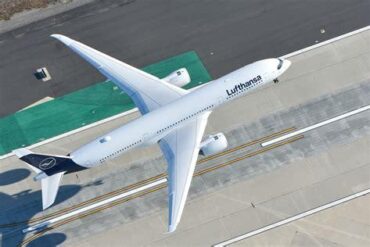
Lufthansa has taken a measured and methodical path, gradually expanding its A350 fleet while retiring older four-engine aircraft like the A340. The A350-900 is primarily based in Munich, where it serves as a flagship for long-haul routes.
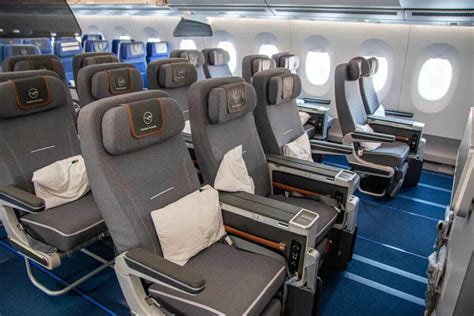
This centralized deployment allows Lufthansa to modernize efficiently without introducing unnecessary complexity. The focus is on operational stability, cost control, and passenger comfort, all of which the A350 delivers effectively.
Air China, on the other hand, uses the A350 as a growth engine. In a rapidly expanding aviation market, the aircraft supports both international expansion and high-demand domestic routes. Its range enables new connections to Europe and North America, while its efficiency keeps operating costs competitive.
This dual use—replacement and expansion—demonstrates the A350’s flexibility in different market contexts. For Air China, the aircraft is not just a tool for modernization; it is a catalyst for network expansion and global competitiveness.
What These Fleets Reveal About Airline Strategy
A closer look at the world’s largest A350 fleets reveals a deeper truth: there is no single “correct” way to deploy this aircraft. Instead, each airline uses it to support its unique strategic priorities.
Singapore Airlines emphasizes ultra-long-haul premium travel, leveraging specialized variants to dominate niche markets. Qatar Airways focuses on flexibility and global connectivity, using dual variants to optimize capacity. Cathay Pacific balances regional and long-haul efficiency, while Air France and Delta prioritize simplification and cost reduction. Lufthansa adopts a cautious modernization strategy, and Air China uses the aircraft to fuel rapid expansion.
Despite these differences, all these airlines share a common understanding: the A350 is not just a replacement aircraft—it is a platform for long-term competitive advantage.
The Airbus A350’s Lasting Impact on Global Aviation
The rise of the Airbus A350 marks a turning point in aviation history. It represents a shift toward aircraft that are not only more efficient but also more adaptable and passenger-focused.
Airlines with the largest A350 fleets are effectively setting the standard for the industry. Their investments signal confidence in a future where fuel efficiency, environmental performance, and premium passenger experience are non-negotiable.
As global travel demand continues to evolve, the A350 will remain at the center of long-haul strategy. Whether enabling ultra-long-haul flights, optimizing hub connectivity, or supporting network expansion, its role will only grow stronger.
In the hands of the world’s leading airlines, the Airbus A350 is not just shaping routes—it is reshaping the future of flight itself.