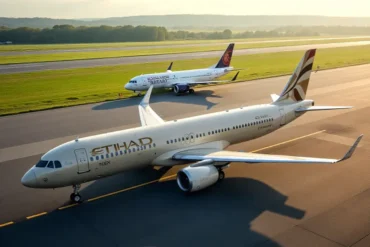
The evolution of long-haul aviation has quietly but decisively pivoted toward a new standard—one defined not by sheer size or brute force, but by precision engineering, fuel efficiency, and passenger-centric innovation. At the center of this transformation stands the Airbus A350, an aircraft that has redefined expectations for both airlines and travelers. Built primarily from advanced composite materials and powered by the remarkably efficient Rolls-Royce Trent XWB engines, the A350 is not just a plane—it is a statement of intent.
For airlines, fleet composition is strategy made visible. The number of Airbus A350s an airline operates is more than a statistic; it is a clear signal of its commitment to sustainability, long-haul dominance, and premium travel experience. As legacy four-engine aircraft fade into history, the A350 has emerged as the backbone of global connectivity, enabling airlines to stretch routes further while reducing operational costs.
This ranking explores the six airlines that have made the Airbus A350 the cornerstone of their long-haul ambitions, examining not only fleet size but also how each carrier leverages the aircraft to shape its identity and competitive edge.
By the time you reach the top of this list, one thing becomes unmistakably clear: the future of aviation doesn’t roar—it hums with quiet efficiency at 35,000 feet.
6. Lufthansa: Engineering Efficiency Meets Strategic Renewal
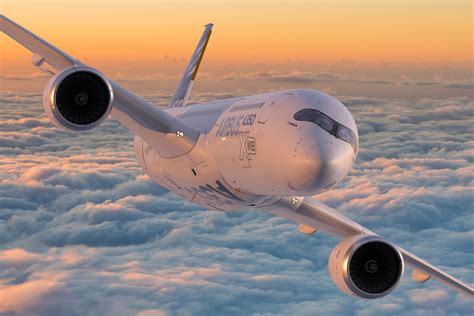
Lufthansa’s relationship with the Airbus A350 reflects a broader philosophy rooted in measured innovation and operational discipline. With 31 Airbus A350-900 aircraft currently active, the German flag carrier has methodically integrated the type into its long-haul network, particularly from its Munich hub.
The A350 serves as a direct successor to the aging Airbus A340 fleet, replacing four-engine inefficiency with twin-engine precision and significantly reduced fuel burn. This transition is not merely technical—it is symbolic of Lufthansa’s effort to modernize without abandoning its reputation for reliability.
What sets Lufthansa apart is not aggressive expansion, but strategic calibration. Each A350 deployment is carefully aligned with high-demand intercontinental routes, ensuring optimal load factors and consistent premium service delivery. The upcoming arrival of the A350-1000, with 15 units on order, signals a shift toward higher capacity while maintaining the same efficiency standards.
Inside the cabin, Lufthansa’s evolving Allegris concept promises a reimagined passenger experience, blending German design sensibility with cutting-edge comfort. The A350, in this context, becomes more than a replacement aircraft—it becomes a platform for redefining the airline’s global product.
5. Delta Air Lines: America’s Bold Bet on Airbus Excellence
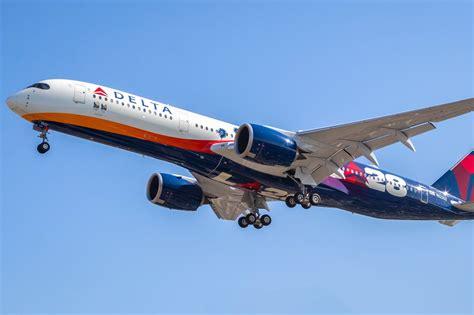
Delta Air Lines stands alone among major U.S. carriers as the most committed operator of the Airbus A350, a decision that reflects a deliberate departure from traditional fleet preferences. With 40 A350-900 aircraft, Delta has built a long-haul strategy centered on premium experience and operational consistency.
The A350 functions as the flagship of Delta’s international network, particularly across transatlantic and transpacific routes. It enables the airline to compete aggressively in high-yield markets, where passenger expectations are uncompromising.
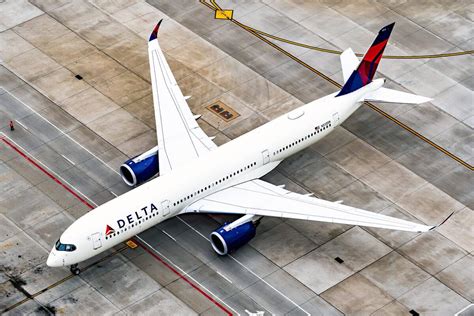
What truly distinguishes Delta’s A350 operation is its focus on passenger experience as a competitive weapon. The Delta One Suite, with sliding doors and fully flat beds, transforms business class into something closer to a private cabin. Combined with the A350’s naturally quieter cabin and higher humidity levels, the result is a travel experience that feels noticeably less taxing.
Operationally, Delta leverages the A350’s reliability to maintain tight schedules across complex global networks. The aircraft’s performance on ultra-long-haul routes allows the airline to optimize fleet utilization while minimizing downtime.
In choosing the A350 so decisively, Delta has made a clear statement: the future of American long-haul travel lies not in tradition, but in embracing global best-in-class technology.
4. Air France: Elegant Expansion with Purpose
Air France has orchestrated one of the most rapid and effective fleet transformations in modern aviation. With 41 Airbus A350-900 aircraft, the airline has positioned itself just ahead of its American counterpart, using the aircraft as the centerpiece of its long-haul renewal.
The transition has been both swift and deliberate. Older aircraft, particularly fuel-hungry quad-jets, have been phased out in favor of the A350’s 25% improvement in fuel efficiency. This has allowed Air France to maintain route frequency while significantly reducing environmental impact.
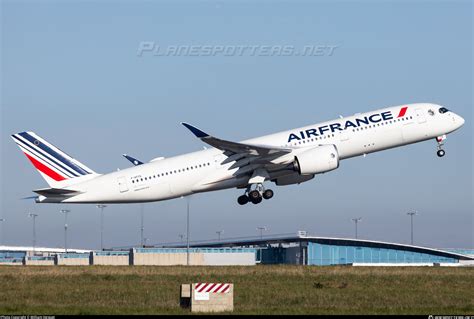
From its hub at Paris Charles de Gaulle, the A350 operates key routes to North America, Asia, and South America. The aircraft’s versatility enables the airline to balance capacity with demand, ensuring that even secondary long-haul markets remain economically viable.
Yet, efficiency is only part of the story. Air France has infused the A350 with its signature “Art de Vivre” philosophy, elevating the onboard experience through refined cabin design, curated cuisine, and attentive service. The result is an aircraft that feels unmistakably French—elegant, understated, and quietly luxurious.
Air France’s rapid A350 expansion is not just about growth; it is about redefining national identity in the skies through modern technology.
3. Cathay Pacific: Precision Logistics at Global Scale
Operating from one of the world’s most competitive aviation hubs, Cathay Pacific has turned the Airbus A350 into a tool of both resilience and precision. With a fleet of 48 A350 aircraft—split between 30 A350-900s and 18 A350-1000s—the airline has built a network that thrives on flexibility.
The dual-variant strategy allows Cathay Pacific to tailor capacity to route demands with remarkable accuracy. The A350-1000, in particular, plays a crucial role on transpacific routes, where its larger fuselage supports both increased passenger loads and high-value cargo operations.
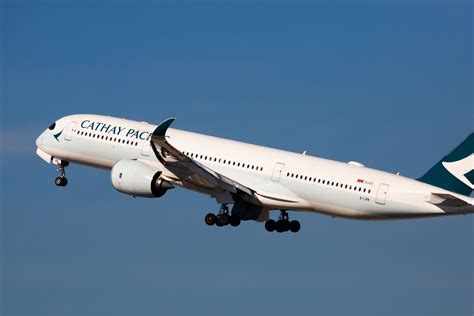
This dual-purpose capability is essential in Hong Kong’s aviation ecosystem, where cargo revenue often plays as significant a role as passenger traffic. The A350’s design—optimized for both efficiency and payload—aligns perfectly with this hybrid model.
Beyond logistics, Cathay Pacific has refined the onboard experience to reflect its brand values: calm, understated luxury paired with operational excellence. The A350’s quiet cabin and advanced air systems enhance long-haul comfort, reinforcing the airline’s reputation as a premium global connector.
In mastering the operational nuances of the A350, Cathay Pacific has ensured that every flight is not just efficient, but strategically optimized down to the last detail.
2. Qatar Airways: The Architect of A350 Excellence
Few airlines are as closely intertwined with the Airbus A350 program as Qatar Airways. As the launch customer for both the A350-900 and A350-1000, the Doha-based carrier has played a defining role in shaping how the aircraft is deployed globally.
Today, Qatar Airways operates 62 A350 aircraft, including 34 A350-900s and 28 A350-1000s, making it the largest operator of the -1000 variant worldwide. This balanced fleet provides unmatched flexibility, allowing the airline to seamlessly adjust capacity across its vast network.
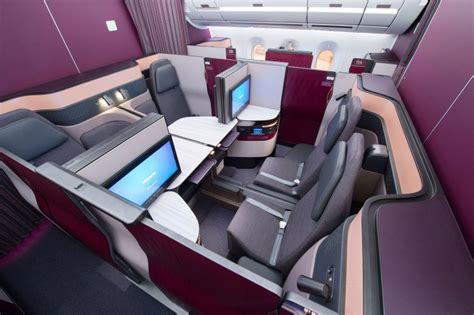
The A350-1000, in particular, serves as the flagship for Qatar’s most prestigious routes, often featuring the acclaimed Qsuite business class. This product has redefined expectations for premium travel, offering configurable private spaces that blur the line between business and first class.
Operationally, Qatar Airways uses the A350 to connect six continents through its Doha hub, leveraging the aircraft’s range and efficiency to maintain high frequencies even on ultra-long-haul routes.
The airline’s deep involvement in the A350 program has resulted in a level of technical mastery and product refinement that few competitors can match. Each aircraft is not just deployed—it is orchestrated to deliver maximum impact.
1. Singapore Airlines: The Undisputed A350 Powerhouse
At the pinnacle of A350 operations stands Singapore Airlines, a carrier that has transformed the aircraft into the core engine of its global dominance. With a fleet of 65 Airbus A350-900 aircraft, including seven Ultra-Long-Range (ULR) variants, Singapore Airlines leads the world by a clear margin.
The A350 is not just part of the fleet—it is the fleet. It enables the airline to execute one of the most ambitious route networks in aviation, including nonstop flights exceeding 19 hours, such as Singapore to New York.
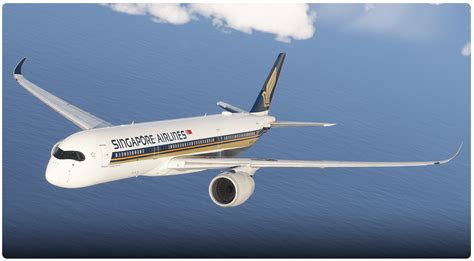
These ultra-long-haul operations are feats of both engineering and service design. The A350 ULR variant is optimized for endurance, with modified fuel capacity and a cabin configuration tailored for passenger well-being over extreme distances.
Singapore Airlines has paired this capability with a meticulously crafted onboard experience, ensuring that even the longest journeys remain comfortable and refined. From cabin layout to service flow, every detail is calibrated to support the demands of ultra-long-haul travel.
What sets Singapore Airlines apart is its total commitment to the A350 as a strategic foundation. By standardizing its long-haul fleet around this aircraft, the airline has achieved unparalleled consistency, efficiency, and global reach.
In doing so, it has not only secured the top position in this ranking—it has redefined what is possible in modern aviation.
Why the Airbus A350 Defines the Future of Long-Haul Aviation
Across these six airlines, a clear pattern emerges: the Airbus A350 is not simply replacing older aircraft—it is reshaping the economics and experience of long-haul travel. Its combination of range, efficiency, and passenger comfort allows airlines to operate routes that were once considered impractical or unprofitable.
More importantly, it aligns with the industry’s growing emphasis on sustainability and environmental responsibility. Lower fuel consumption translates directly into reduced emissions, making the A350 a critical asset in the transition toward greener aviation.
For passengers, the benefits are equally tangible. Quieter cabins, improved air quality, and thoughtfully designed interiors transform long-haul flights from endurance tests into genuinely comfortable experiences.
The airlines leading in A350 fleet size are not just investing in aircraft—they are investing in a vision of aviation that prioritizes efficiency, innovation, and global connectivity without compromise.
And if fleet size is any indication, that vision is already taking flight.