The Boeing 737 is not merely an aircraft; it is a cornerstone of modern aviation economics, a machine that quietly powers the global short-haul ecosystem with relentless efficiency. For decades, airlines have relied on this narrowbody jet to balance cost, frequency, and capacity, shaping route networks and redefining accessibility in air travel. Yet the true story of the 737 is best told not through engineering specifications, but through the airlines that have built vast operational empires around it.
Across continents, a select group of carriers has elevated the 737 from a dependable workhorse into a strategic backbone. These airlines do not simply operate the aircraft—they optimize, standardize, and scale it in ways that reflect their unique business models. From ultra-low-cost pioneers to legacy network giants, each operator reveals a different philosophy of how a single aircraft family can be stretched to its limits.
Understanding the largest Boeing 737 fleets in the world today is therefore not just about numbers. It is about how airlines deploy capacity, manage costs, and design networks in a competitive and constantly evolving market.
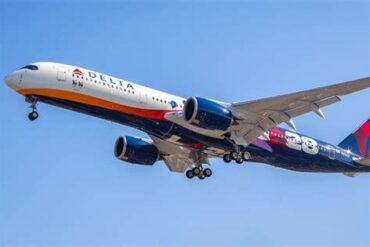
Delta Air Lines: A Selective, High-Capacity Boeing 737 Strategy
Delta Air Lines approaches the Boeing 737 fleet with a level of precision that reflects its broader operational philosophy: fewer variants, higher capacity, and consistent performance across key domestic routes. With 240 aircraft, Delta’s 737 fleet is not the largest, but it is among the most deliberately structured.
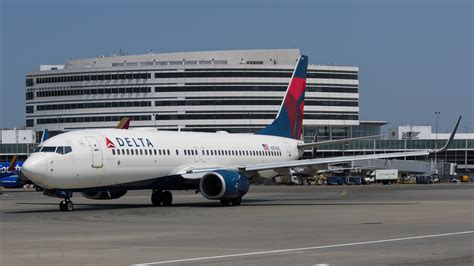
Unlike airlines that embrace the full spectrum of 737 variants, Delta has focused heavily on the 737-900ER, which forms the backbone of its narrowbody capacity. This choice is far from accidental. The -900ER offers greater seating capacity and improved economics per flight, making it ideal for high-demand routes between major hubs such as Atlanta, Minneapolis, and Salt Lake City.
The 737-800, while still present, plays a supporting role. Delta’s strategy leans toward “gauge over frequency”, prioritizing larger aircraft to maximize passenger throughput where airport slots or demand constraints exist. This results in fewer flights carrying more passengers—an approach that aligns with its premium-heavy domestic network.
Interestingly, Delta has not yet integrated the 737 MAX into its operations. This absence underscores a broader tendency: the airline prioritizes proven reliability and operational consistency over rapid fleet modernization. In a world where many competitors chase the latest technology, Delta’s approach feels almost contrarian—and remarkably effective.
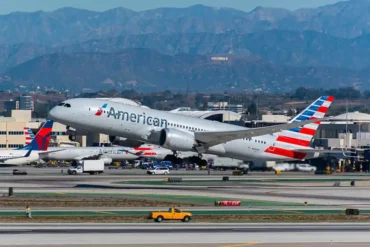
American Airlines: Scale, Simplicity, and Strategic Balance
With 392 Boeing 737 aircraft, American Airlines operates one of the most substantial fleets in the world, yet its strategy is defined less by complexity and more by streamlined efficiency.
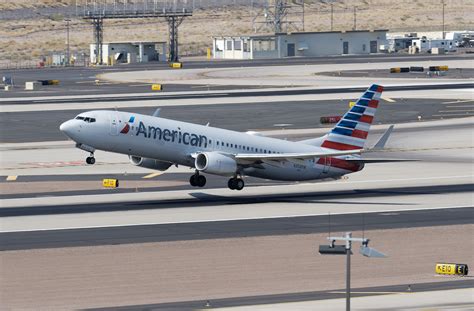
The airline’s fleet revolves around two primary variants: the 737-800 and the 737 MAX 8. This simplicity is not just operationally convenient—it is strategically powerful. By limiting fleet diversity, American reduces training costs, maintenance complexity, and scheduling friction, all while maintaining flexibility across its vast domestic and near-international network.
The 737-800 remains the workhorse, handling the bulk of daily operations from hubs like Dallas/Fort Worth, Charlotte, and Miami. Meanwhile, the MAX 8 represents the future: quieter, more fuel-efficient, and better suited for longer routes into the Caribbean and Latin America.
What defines American’s use of the 737 is its role as a scalable platform rather than a defining identity. Unlike Southwest, where the 737 is the airline, American treats it as one piece of a larger puzzle that includes a significant Airbus narrowbody presence.
This balance allows American to maintain network breadth and operational resilience, ensuring that the 737 remains indispensable without becoming limiting.
Ryanair: Maximum Efficiency Through Extreme Standardization
If there is a single airline that embodies the economic potential of the Boeing 737, it is Ryanair. Operating an astonishing 620 aircraft, the airline has transformed the 737 into a tool of relentless cost efficiency.
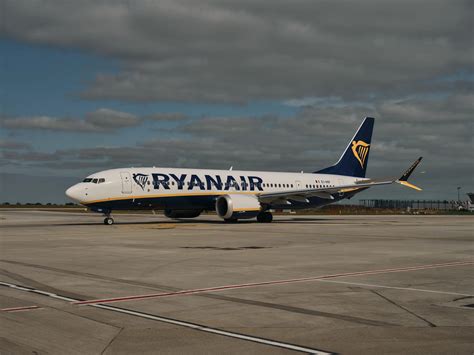
Ryanair’s model is built on uniformity and utilization. The majority of its fleet consists of the 737-800, the aircraft that enabled its rapid expansion across Europe. Complementing this is the 737 MAX 8-200, a high-density variant designed specifically for low-cost operations, capable of carrying more passengers while reducing fuel burn per seat.
This is where Ryanair’s strategy becomes particularly sharp. By increasing seat density and maintaining a single aircraft family, the airline minimizes turnaround times, simplifies crew training, and maximizes daily aircraft usage. Every minute on the ground is a missed revenue opportunity—and Ryanair treats that as a near-sacred principle.
The result is a fleet that is not just large, but exceptionally productive. Each aircraft is a revenue-generating machine, optimized to deliver the lowest possible cost per passenger. It is not glamorous, but it is brutally effective.
United Airlines: Complexity as a Competitive Advantage
United Airlines operates 674 Boeing 737 aircraft, making it one of the largest and most diverse 737 operators globally. Where others pursue simplicity, United embraces complexity as a strategic asset.
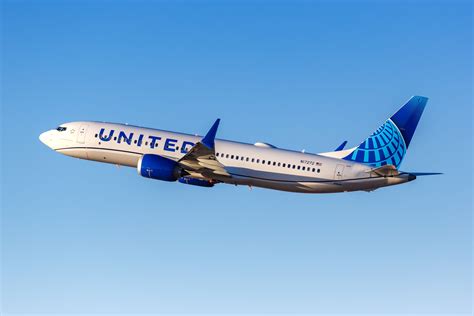
The airline’s fleet spans multiple generations and variants, including the 737-700, -800, -900, -900ER, MAX 8, and MAX 9. At first glance, this might seem inefficient. In reality, it enables granular capacity management across an extraordinarily complex network.
A smaller 737-700 can serve lower-demand routes or maintain frequency in competitive markets. Larger variants like the 737-900ER handle dense domestic corridors, while the MAX series introduces improved efficiency and extended range for modern route planning.
This flexibility is critical for an airline that must simultaneously serve business travelers, leisure markets, and international connections. United’s hubs—Chicago, Denver, Newark, and beyond—require a fleet capable of adapting to constantly shifting demand patterns.
The overarching narrative here is one of transition. United is steadily moving toward a more MAX-heavy fleet, leveraging newer aircraft to reduce costs while maintaining the operational depth that defines its network.
Southwest Airlines: The Ultimate Boeing 737 Powerhouse
At the top of the list stands Southwest Airlines, with an unparalleled 798 Boeing 737 aircraft. This is not just the largest 737 fleet—it is the most philosophically pure expression of single-type operations in commercial aviation.
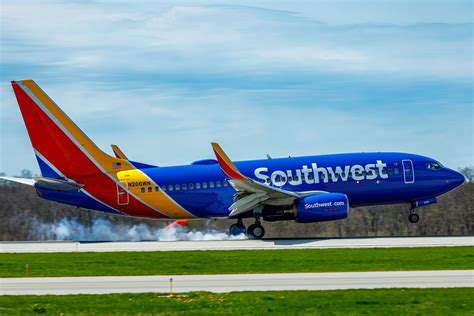
Southwest’s strategy is elegantly simple: one aircraft family, endless possibilities. By standardizing entirely on the 737, the airline achieves extraordinary efficiencies in pilot training, maintenance, scheduling, and fleet management. There is no need to juggle multiple aircraft types or maintain separate operational ecosystems.
The fleet itself is evolving. While the 737-700 still forms a significant portion, the airline is increasingly relying on the 737-800 and 737 MAX 8 to boost capacity and improve fuel efficiency. This gradual shift reflects a broader industry trend toward larger, more efficient narrowbodies.
Yet Southwest’s genius lies not just in scale, but in utilization and flexibility. The airline can redeploy aircraft across its network with minimal friction, maintaining high frequency even on thinner routes while scaling up where demand surges.
This creates a network that feels both dense and dynamic, a rare combination in aviation. The 737 is not just part of Southwest’s identity—it is the identity.
What These Massive Fleets Reveal About Airline Strategy
Looking across these five carriers, a fascinating pattern emerges. The same aircraft family is being used to achieve dramatically different outcomes.
- Delta Air Lines prioritizes capacity and reliability, focusing on larger variants.
- American Airlines emphasizes scale and simplicity, balancing legacy and modern aircraft.
- Ryanair pushes for maximum efficiency, squeezing every ounce of productivity from a standardized fleet.
- United Airlines leverages diversity and flexibility, tailoring capacity to complex demand.
- Southwest Airlines perfects single-type operations, achieving unmatched operational cohesion.
What ties them together is the enduring relevance of the Boeing 737 itself. Few aircraft have demonstrated such adaptability across business models, geographies, and decades of technological change.
In a rapidly evolving aviation landscape, where sustainability, efficiency, and cost control dominate strategic thinking, the 737 continues to prove that versatility is the ultimate competitive advantage. And as these airlines expand, modernize, and refine their fleets, one thing remains certain: the Boeing 737 will continue to shape the skies—and the economics behind them—for years to come.