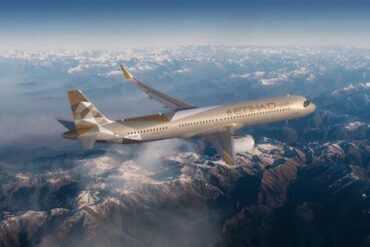
Etihad Airways is making a bold strategic move with the launch of its Airbus A321LR fleet expansion, a maneuver that not only aligns with its long-term growth goals under its ‘Journey 2030’ initiative but also counters the wider expansion trends of European giants like British Airways, Air France, Lufthansa, and Turkish Airlines. The move to integrate the A321LR into Etihad’s fleet underscores a pivot toward operational agility, premium passenger experience, and route diversification in a competitive global aviation market.
Etihad’s A321LR Strategy: Transforming Narrowbody Expectations
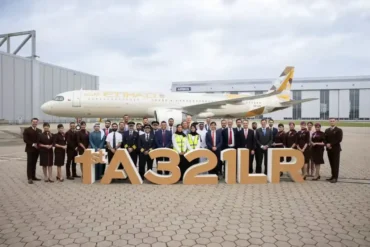
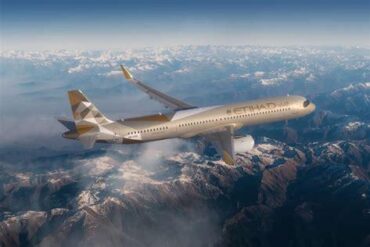
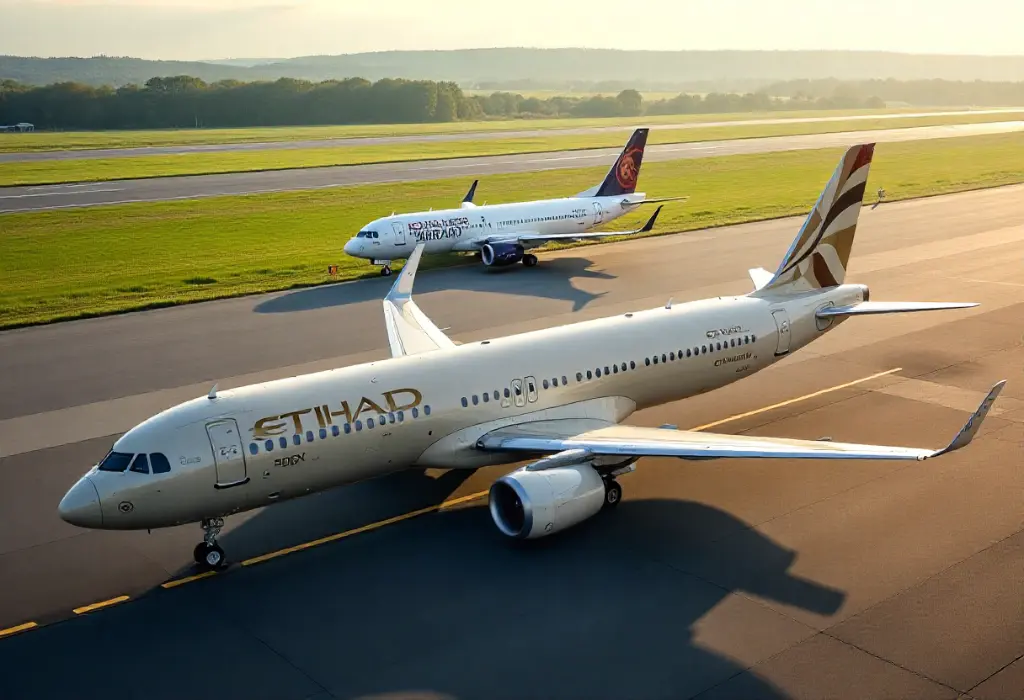
With the delivery of its first Airbus A321LR in July 2025, Etihad sets the tone for a reimagined narrowbody travel experience. Unlike traditional narrowbody aircraft deployments, the A321LR will serve medium-haul routes that previously required larger widebody jets, offering lower operating costs and expanded market reach.
According to Etihad CEO Antonoaldo Neves, the A321LR “transforms single-aisle travel” by reducing route development risk and enabling seamless entry into thin or underserved markets. With a focus on maximizing flexibility and minimizing overhead, these aircraft allow Etihad to launch routes that were once deemed economically unfeasible, without compromising its premium brand identity.
A New Era of Passenger Experience: First Suites on a Single-Aisle Jet
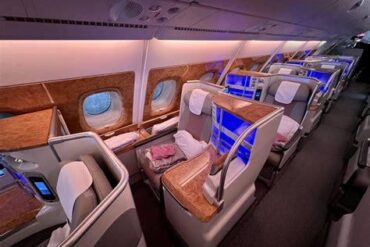
One of the standout features of the A321LR program is its unmatched cabin design, which rivals even widebody standards. The aircraft features three distinct classes, including an industry-first for narrowbodies: First Suites. These ultra-premium suites are enclosed with sliding doors for complete privacy, equipped with 20-inch 4K UHD entertainment screens, and convertible into lie-flat beds with companion seating—a clear nod to the airline’s high-end branding.
The business class cabin adopts a 1-1 herringbone configuration featuring lie-flat seats, personal 17.3-inch screens, and enhanced in-flight entertainment. Meanwhile, economy class breaks from convention with 13.3-inch monitors, wireless charging, Bluetooth connectivity, and USB ports, signaling a democratization of in-flight luxury.
Connectivity and Comfort: Leading the Next-Gen Travel Experience
Beyond seating and design, Etihad’s A321LRs are fitted with Viasat’s next-generation Wi-Fi, providing hundreds of Mbps in bandwidth—a game-changer for business and leisure travelers alike. This high-speed connectivity will debut across Etihad’s Asia network in September 2025, setting a new bar for inflight internet standards.
Passengers will also enjoy increased overhead bin capacity, a frequent pain point on single-aisle aircraft. These ergonomic upgrades make the A321LR particularly attractive to frequent flyers and business travelers, offering the amenities of long-haul travel on shorter, more regional routes.
Route Deployment: Accessing Untapped Markets
Etihad’s deployment strategy begins with Abu Dhabi to Phuket service starting August 1, 2025, followed by an aggressive roll-out to diverse destinations. These include:
- Algiers
- Bangkok
- Chiang Mai
- Copenhagen
- Dusseldorf
- Kolkata
- Krabi
- Krakow
- Medan
- Milan
- Paris
- Phnom Penh
- Tunis
- Zurich
This geographical diversification is a tactical response to evolving market demand and global passenger flows. Many of these destinations were previously underserved due to the economics of operating widebody aircraft on routes with lower passenger volumes. The A321LR now makes these services profitable, expanding Etihad’s global footprint.
Fleet Delivery Timeline: A Long-Term Commitment to Growth
Etihad’s fleet expansion plan involves the acquisition of 30 A321LRs, with a staggered delivery schedule:
- 10 aircraft in 2025
- 10 aircraft in 2026
- 5 aircraft in 2027
- 5 aircraft in 2028
This calculated rollout enables scalable growth, allowing the airline to refine route economics, adjust capacity based on demand, and maintain optimal load factors. The A321LR expansion is a central pillar of Etihad’s Journey 2030 initiative, which aims to carry 38 million passengers annually by the end of the decade.
The European Context: Rising Competition from Flag Carriers
While Etihad pursues this agile growth strategy, European legacy carriers are also accelerating their fleet expansions. British Airways has committed to fleet modernization through new A350s and 787s. Air France is reinforcing its narrowbody backbone with A220s and eyeing transatlantic growth, while Lufthansa is increasing both long- and short-haul capacity with new orders for 777X and A320neos. Turkish Airlines, meanwhile, continues its aggressive network buildout, targeting 600 aircraft in its fleet by 2033.
In this competitive landscape, Etihad’s bet on the A321LR positions it uniquely. Instead of replicating the widebody-heavy strategies of its European counterparts, Etihad is optimizing fleet diversity to adapt to variable demand conditions, especially in markets with geopolitical or seasonal volatility.
Risk Mitigation and Economic Sustainability
Deploying widebodies to light or experimental routes is a high-risk endeavor. The A321LR mitigates this risk by offering widebody-like range with narrowbody efficiency. This means Etihad can experiment with new markets without committing the resources required by larger aircraft, leading to a higher success rate in route development.
This aligns with modern airline economics that emphasize unit cost efficiency (cost per available seat kilometer) and yield management over brute-force capacity. The A321LR offers a significantly lower seat-mile cost, while maintaining a level of passenger experience parity with larger aircraft.
Delivering a Seamless Brand Experience
One of Etihad’s long-standing differentiators has been its brand consistency across all classes and aircraft types. The introduction of the A321LR strengthens this by offering the same premium amenities and cabin aesthetics found on its flagship A380s and 787s. This ensures that passengers on shorter routes receive the same standard of service and comfort, reinforcing brand loyalty and passenger satisfaction.
The Supplier Ecosystem: Airbus and Geven
The development of the A321LR is supported by Airbus’s technological innovation and Geven’s cabin design excellence. Airbus executive Benoît de Saint-Exupéry highlighted the synergy between the two companies, emphasizing Airbus’s role in empowering Etihad’s fleet strategy through cutting-edge aerodynamics, fuel efficiency, and cabin comfort. Meanwhile, Geven’s role in shaping cabin interiors contributes to making the A321LR a narrowbody aircraft with a widebody soul.
Looking Forward: The Next Stage in Fleet Evolution
Etihad’s A321LR initiative signals a new philosophy in fleet planning, one that prioritizes route viability, environmental efficiency, and passenger comfort in equal measure. This strategic evolution enables the airline to flex its operations to meet a wider range of market demands—from leisure-heavy routes to corporate travel corridors—while remaining financially sustainable.
With the European majors also ramping up their long-term fleet investments, the global aviation landscape is entering a new phase where fleet diversity and operational flexibility will define competitive advantage. Etihad’s move to embrace the A321LR now gives it a first-mover edge in regions and markets that reward agility and tailored capacity.
As 2025 progresses, all eyes will be on how Etihad leverages this new chapter to consolidate its global positioning, while delivering a consistently premium travel experience—whether you’re in Abu Dhabi, Paris, or Phnom Penh.