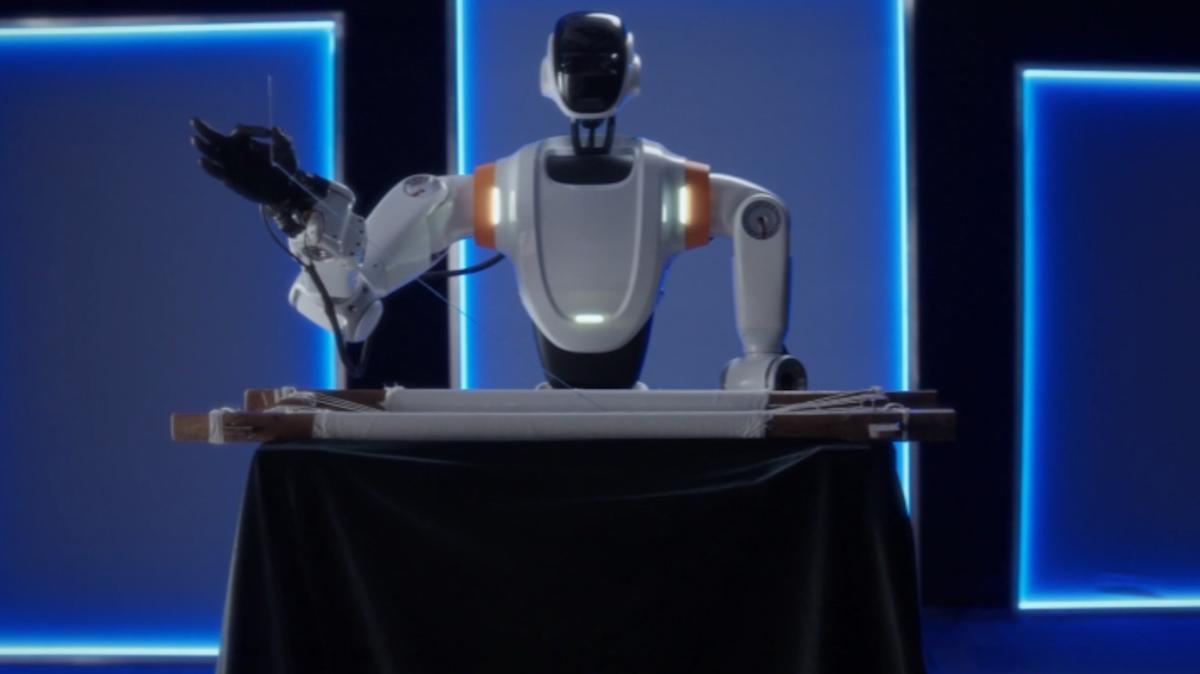
Artificial intelligence has entered an extraordinary new phase—a Chinese company claims its AI robot has completed a needle-threading and embroidery feat, setting what may be a world-first in robot dexterity. The company, TARS Robotics, unveiled the development in late December 2025, creating ripples across the AI and robotics landscape. The implications extend far beyond mere spectacle—this could signal a new age of humanoid robots capable of mastering intricate manual tasks previously reserved for human hands.
The Achievement: Needle, Thread, and a Breakthrough in Dexterity
The task accomplished by TARS Robotics’ humanoid robot isn’t just about embroidery—it’s a landmark proof of concept. Threading a needle and sewing by hand requires coordinated two-handed precision, fine motor control, visual acuity, and continuous real-time adjustment. These characteristics have historically eluded even the most sophisticated robots. What TARS showcased, if entirely authentic, represents an astonishing leap forward in embodied artificial intelligence (EAI).
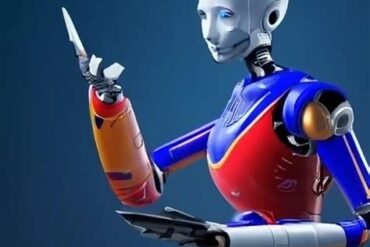
The brief demonstration video, the only existing public evidence, displays a humanoid robot smoothly guiding thread through a needle and executing hand embroidery on fabric. No human assistance, no cuts in footage, and no behind-the-scenes techs were visible. While some animated elements overlay the video, its core visuals remain compelling.
Still, questions linger. The company has not released a full demonstration recording, nor is there a public-facing website offering supplementary documentation or imagery. The lack of transparency makes it difficult for experts to verify the feat independently, but what the company has shown is enough to captivate global attention.
TARS Robotics: A Rising Force in China’s AI Landscape
Founded in February 2025, TARS Robotics emerged from the minds of seasoned engineers and executives formerly affiliated with China’s top tech conglomerates. In less than a year, the company secured substantial venture capital to fund its vision: to lead in the development of embodied AI—systems where intelligence is deeply integrated with hardware.
What sets TARS apart is its status as a full-stack EAI company. From developing hardware and crafting software to producing the robotic systems themselves, TARS handles it all internally. This vertical integration allows the company to iterate rapidly, control design cohesion, and push technical boundaries without external bottlenecks.

China’s National Strategy to Lead in Humanoid Robotics
The rise of TARS Robotics is not an isolated phenomenon. China has strategically positioned embodied AI as a national priority, pouring resources, grants, and government-backed investments into the field. This focused momentum has accelerated the commercialization of humanoid robots, moving them from research prototypes to scalable industrial solutions.
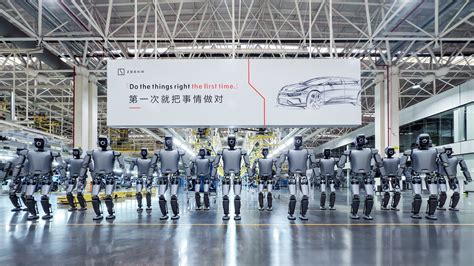
As part of this initiative, dozens of Chinese start-ups and research institutions have emerged, each contributing to what is now a booming sector. China’s humanoid robot segment is on track to command nearly half of the global market share, signaling both technological maturity and economic intention.
The country’s aim is not just to produce more robots but to reshape global labor economics, industrial automation, and even healthcare services. Embodied AI holds the promise of introducing machines capable of dexterous work, complex decision-making, and emotional responsiveness—all attributes long considered exclusive to human cognition and physicality.
Market Forecasts and Strategic Implications
According to industry estimates, global spending on embodied AI reached $4.44 billion in 2025, with expectations that the number will surpass $23 billion by 2030. The applications of this investment are manifold:
- Healthcare: Assistive robots for elderly care, rehabilitation, and surgical precision.
- Manufacturing: Robots that can adapt on-the-fly to changes in production lines.
- Defense: Autonomous systems capable of navigating unpredictable terrains and tasks.
- Service industries: Human-like customer service bots and logistics aides.
China’s outsized share in this growth points to a potential rebalancing of the AI power hierarchy, with Beijing challenging Silicon Valley and other global AI hubs not just in theory but in practice.
The Skepticism and the Evidence Gap
Despite the grandeur of the announcement, the demonstration lacks the verification typically required to claim a ‘world-first’ title. The singular video released by TARS Robotics appears professional and technically sound but raises concerns due to several missing elements:
- No public technical documentation or white papers.
- No available product specifications or robot model names.
- No third-party witnesses, media presence, or real-time demo recordings.
- No company website or contactable PR channel.
Moreover, digital overlays in the footage—while not necessarily indicative of manipulation—add ambiguity to what might otherwise be considered a transparent display of robotic prowess. Until third-party validation occurs, TARS Robotics’ achievement must be seen as a fascinating but unconfirmed development.
Still, the difficulty of the task itself lends credibility. Threading a needle by machine is no trivial endeavor, and even a successful partial automation of this act indicates highly advanced control systems, sensory integration, and AI coordination.
Embodied AI: A Convergence of Learning and Touch
Unlike traditional AI, which often exists solely in the digital realm, embodied AI unifies physical action with computational cognition. It’s about putting learning models into bodies that can act, adapt, and refine themselves based on interaction with the physical world. In this case, the threading of a needle is not merely symbolic—it demonstrates that AI can understand physical parameters such as resistance, thread tension, and spatial alignment.
The systems involved likely included:
- Vision Models: Capable of real-time object recognition and depth perception.
- Tactile Sensors: Simulating human skin to detect pressure and texture.
- Reinforcement Learning: Teaching the robot to iterate and improve through trial.
- Proprioception: Giving the robot a sense of its own body’s position in space.
This convergence is reshaping not just robotic performance but how AI will be expected to interact with the world—not just as a brain in the cloud, but as a body in motion.
Global Race for Humanoid Robot Supremacy
The global competition to develop advanced humanoid robots is intensifying. Tesla’s Optimus, Figure AI’s autonomous biped, and Xiaomi’s CyberOne are just a few notable examples from the West and East. However, what makes China’s trajectory so formidable is the alignment of government, capital, talent, and industrial deployment.
While Western companies focus on long-term usability and ethical AI debates, Chinese firms are moving swiftly toward commercialization and real-world testing. This approach, although occasionally raising transparency concerns, gives Chinese robotics firms a speed advantage that could translate into early market dominance.
Looking Ahead: Will TARS Validate Its Claim?
The road ahead for TARS Robotics is as promising as it is precarious. To fully cement its place as a pioneer in robotic dexterity, the company must meet several key expectations:
- Publicize more demonstration footage with live testing environments.
- Release technical specifications and performance data for peer review.
- Engage with academic institutions and robotics expos.
- Establish a digital presence for transparency and communication.
If these steps are taken, TARS could transition from a mysterious tech upstart to a global player in robotic evolution. The needle-threading achievement would then serve not just as a symbolic breakthrough, but a functional stepping stone toward a society where machines augment, rather than replace, human finesse.
Conclusion: A Moment of Quiet Revolution
TARS Robotics has sparked a rare moment in technological history—where fiction inches closer to fact, and where an embroidered pattern may stitch the seams of a future intertwined with humanoid intelligence. The claim, though awaiting verification, already illustrates the trajectory of embodied AI: toward machines that not only think, but feel, move, and master the fine motor skills once reserved for human artisans.
Whether or not TARS’ robot has truly achieved the feat claimed, the world is now watching. And in the quiet elegance of a needle piercing cloth, the world may be witnessing the dawn of a new kind of intelligence—embodied, expressive, and exacting.