The Second World War forced aviation into a relentless race of scale, endurance, and engineering ambition. Nations were no longer building aircraft merely to fly—they were building them to dominate continents, cross oceans, and carry entire battlefields in their fuselages. The result was a generation of aircraft so massive, so daring in concept, that they still command fascination decades later.
While fighter planes captured public imagination with speed and agility, it was the largest military aircraft of WWII that quietly reshaped strategy. These giants hauled troops, delivered devastating payloads, and extended the reach of war far beyond front lines. Each of the following aircraft represents not just size, but a bold leap in technological thinking under extreme pressure.
Messerschmitt Me 323 Gigant: The Luftwaffe’s Airborne Leviathan
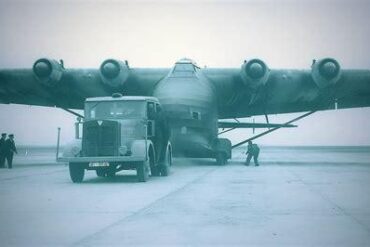
The Messerschmitt Me 323 Gigant stands as a testament to Germany’s urgent need for heavy transport during its early-war expansion. With a staggering wingspan of 181 feet and a maximum takeoff weight nearing 95,000 pounds, it was the largest land-based transport aircraft deployed during the conflict.
Originally conceived as a glider—the Me 321—the aircraft evolved into a powered version when Germany realized that towing such enormous payloads was impractical under combat conditions. Equipped with six radial engines, the Gigant became capable of transporting up to 100 fully equipped troops or heavy vehicles, including artillery and armored cars.
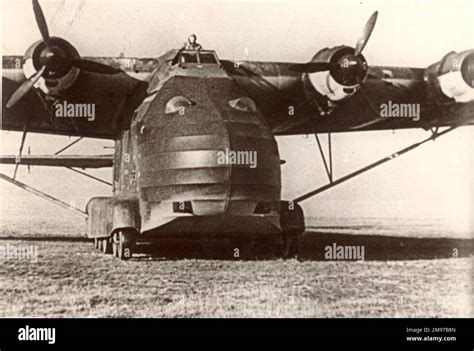
Despite its impressive capacity, the Me 323 had a critical weakness: vulnerability. Its slow speed and massive profile made it an easy target for Allied fighters. During operations in the Mediterranean and North Africa, entire formations were sometimes intercepted and destroyed. The Gigant, for all its scale, highlighted a brutal truth—size without protection could become a liability in modern air warfare.
Boeing B-29 Superfortress: The Pinnacle of Strategic Bombing
If one aircraft could symbolize the industrial and technological might of the United States, it would be the Boeing B-29 Superfortress. Though smaller in wingspan than some experimental giants, its maximum takeoff weight of 133,500 pounds and unmatched sophistication made it the most effective large aircraft of the war.
The B-29 was not just big—it was revolutionary. It introduced a pressurized cabin, allowing crews to operate at high altitudes without oxygen masks, and featured an analog computer-controlled fire system, enabling remote turret operation with remarkable precision. These innovations made it both deadly and survivable.
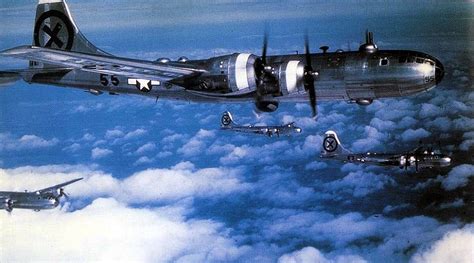
Its role in the Pacific Theater was decisive. The B-29 conducted extensive firebombing campaigns over Japanese cities, culminating in the deployment of atomic weapons over Hiroshima and Nagasaki. With nearly 4,000 units produced, it became one of the most impactful aircraft in history, extending its service into the Korean War and beyond.
The B-29 wasn’t just a bomber—it was a strategic instrument that changed how wars were fought, proving that distance was no longer a barrier to destruction.
Douglas XB-19: The Giant That Arrived Too Late
The Douglas XB-19 was an aircraft that embodied ambition, but also the unforgiving pace of wartime innovation. With a colossal wingspan of 212 feet and a maximum weight of 162,000 pounds, it briefly held the title of the largest bomber built for the United States Army Air Forces.
Yet despite its size, the XB-19 suffered from a fatal flaw: timing. By the time it was completed, aviation technology had already advanced beyond its design. Faster, more efficient aircraft like the B-29 rendered it obsolete before it could prove its worth.
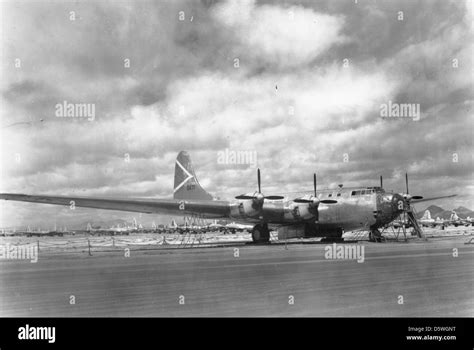
Only a single prototype was ever constructed. Engineers considered converting it into a cargo aircraft, recognizing its enormous lifting potential, but the idea never materialized. The XB-19 flew its final mission in 1946 before being scrapped.
Still, its legacy shouldn’t be dismissed. It served as a critical stepping stone, offering insights into large-scale aircraft design that would later influence even more ambitious projects. In a way, the XB-19 was less a failure and more a preview of what aviation was becoming.
Hughes H-4 Hercules “Spruce Goose”: The Myth Made Real
Few aircraft carry as much legend as the Hughes H-4 Hercules, famously nicknamed the “Spruce Goose.” With an astonishing wingspan of 319 feet, it remains one of the largest aircraft ever constructed—and the largest flying boat in history.
Built almost entirely from birch wood due to wartime aluminum shortages, the Hercules was designed as a transatlantic transport capable of carrying troops and equipment across U-boat-infested waters. Powered by eight massive radial engines, it was intended to revolutionize logistics by taking the war to the skies—literally over the ocean.
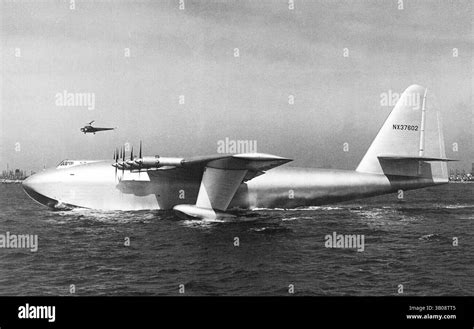
But history had other plans. By the time the aircraft was ready, the strategic need had diminished. On November 2, 1947, the Hercules made its only flight—a brief hop that lasted less than a minute. It never flew again.
Despite this, dismissing it as a failure would be shortsighted. The H-4 demonstrated that extreme-scale aviation was possible, pushing boundaries in materials, aerodynamics, and construction. It remains a symbol of visionary engineering—perhaps excessive, but undeniably bold.
Blohm & Voss BV 238: Germany’s Flying Fortress on Water
The Blohm & Voss BV 238 was Germany’s answer to the need for a long-range, heavy-duty flying boat bomber. When it first took flight in 1944, it became the heaviest aircraft ever built, with a maximum takeoff weight exceeding 220,000 pounds—roughly equivalent to two fully loaded B-29s.
Designed for endurance, the BV 238 boasted a range of over 6,000 miles, making it capable of long-distance reconnaissance or bombing missions. Its structure was heavily armored, and it was equipped with multiple defensive gun positions, reflecting Germany’s intent to create a nearly indestructible aerial platform.
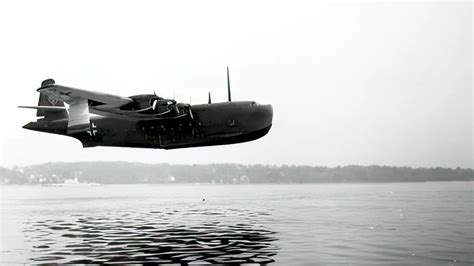
However, like several late-war German projects, it never reached operational maturity. Only one prototype was completed, and it was ultimately destroyed by Allied aircraft while docked, partially sinking in shallow water.
The BV 238 represents both the peak and the limitation of wartime engineering under pressure. It was massive, innovative, and intimidating—but it arrived too late, in a war Germany was already losing.
The Legacy of WWII’s Largest Aircraft
These five aircraft reveal a fascinating pattern: size alone did not guarantee success, but it consistently pushed the boundaries of what was possible. From the operational dominance of the B-29 to the experimental ambition of the H-4 Hercules, each machine contributed to a broader transformation in aviation.
World War II forced engineers to think bigger—literally. The lessons learned from these giants influenced post-war developments, leading to aircraft like the B-36 Peacemaker and modern strategic airlifters. Pressurization systems, long-range bombing doctrines, and heavy transport logistics all owe a debt to these early pioneers.
There’s something undeniably captivating about these machines. Maybe it’s their sheer scale, or the audacity behind their creation. Or maybe it’s the fact that, in the middle of global conflict, humanity still found ways to dream bigger—even if those dreams sometimes barely left the ground.