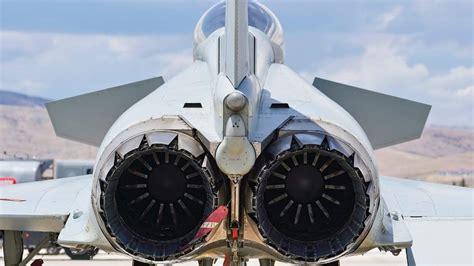
Military aviation has never been a simple numbers game. Some aircraft dominate the skies through sheer volume, rolling off production lines by the hundreds or even thousands. Yet others—arguably the most technologically daring and strategically significant—exist in strikingly small numbers. These rare machines often emerge at the intersection of cutting-edge innovation, shifting geopolitical priorities, and staggering development costs. Their limited production runs only amplify their mystique, transforming them into icons of precision, power, and exclusivity.
Across decades of conflict and deterrence, a select group of aircraft has proven that influence does not scale linearly with quantity. Instead, these platforms deliver disproportionate impact, reshaping doctrines and redefining what air power can achieve. From stealth bombers capable of slipping through dense air defenses to reconnaissance aircraft outrunning missiles, each tells a story of ambition constrained by reality.
What follows is a deep exploration of six extraordinary military aircraft that were produced in surprisingly low numbers—each one a testament to engineering brilliance and strategic necessity.
Lockheed F-117 Nighthawk: The Birth of Operational Stealth
The Lockheed F-117 Nighthawk did not merely enter service—it rewrote the rules of aerial warfare. Conceived in secrecy by Lockheed’s Skunk Works, this angular, almost alien-looking aircraft became the world’s first operational stealth combat platform. Its faceted surfaces were not designed for beauty or aerodynamic elegance, but for one purpose: to scatter radar waves and effectively disappear from enemy detection systems.
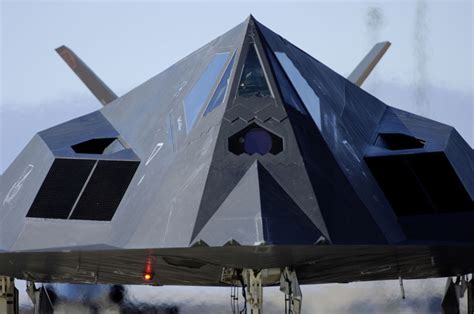
Flying the F-117 was an exercise in controlled instability. The aircraft was inherently aerodynamically unstable, relying entirely on a sophisticated fly-by-wire control system to remain airborne. This technological leap, groundbreaking at the time, allowed engineers to prioritize stealth over traditional flight characteristics. Despite its “F” designation, the Nighthawk was never a fighter—it was a precision strike weapon, engineered to deliver laser-guided bombs with surgical accuracy.
Only 64 aircraft were ever built, including pre-production models. This limited number was not accidental. The aircraft’s specialized mission profile, coupled with high costs and intense secrecy, made large-scale production impractical. Yet its impact was immediate and undeniable. During the 1991 Gulf War, F-117s penetrated heavily defended Iraqi airspace, striking high-value targets in Baghdad with near impunity.
Even after its official retirement in 2008, the Nighthawk refuses to fade into obscurity. Reports of its continued use in testing and training hint at a legacy that still influences modern stealth doctrine. In many ways, the F-117 was less a mass-produced weapon and more a proof of concept—one that permanently altered the trajectory of military aviation.
Dassault Mirage IV: France’s Nuclear Deterrent in the Sky
The Dassault Mirage IV represents a different philosophy of power—one rooted not in overwhelming force, but in credible deterrence. Developed during the height of the Cold War, this sleek delta-wing bomber became the airborne pillar of France’s Force de frappe, the nation’s independent nuclear deterrent.
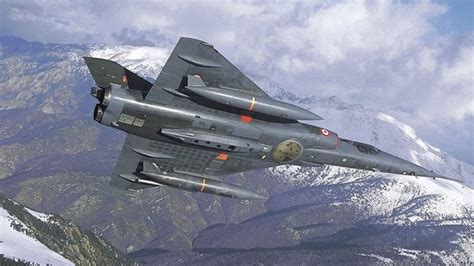
Unlike the United States or the Soviet Union, France never intended to field a massive fleet of strategic bombers. Instead, it pursued a more focused doctrine: a smaller number of highly capable aircraft, sufficient to guarantee retaliation in the event of a nuclear strike. The Mirage IV fit this role perfectly, combining supersonic speed with high-altitude penetration capability.
A total of 62 aircraft were produced, a figure that reflected strategic intent rather than industrial limitation. As air defense systems evolved, the Mirage IV adapted. Initially designed for high-altitude nuclear delivery, it later transitioned to low-level penetration missions and eventually to strategic reconnaissance. The Mirage IVP variant, equipped with advanced sensors, extended the aircraft’s operational life well into the 21st century.
Its longevity—nearly four decades of service—underscores a critical point: effectiveness is not measured by fleet size alone. The Mirage IV demonstrated that a carefully calibrated force, aligned with national strategy, could deliver enduring relevance even in a rapidly changing threat environment.
Hawker Siddeley Nimrod: Britain’s Silent Guardian of the Seas
Derived from the pioneering de Havilland Comet, the world’s first commercial jet airliner, the Hawker Siddeley Nimrod was anything but ordinary. It transformed a civilian platform into a highly specialized military asset, tailored for maritime patrol, anti-submarine warfare, and intelligence gathering.
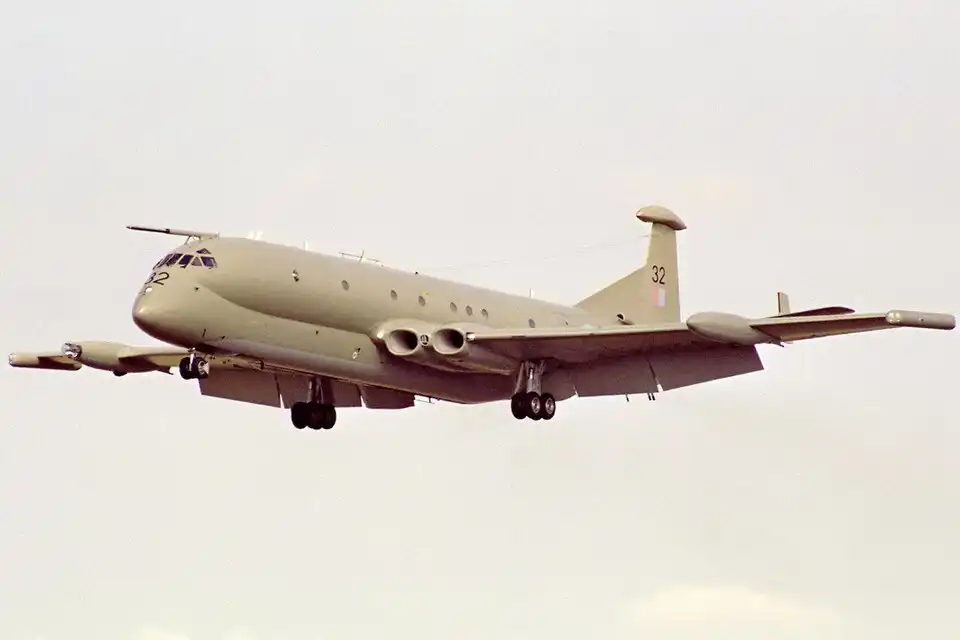
Entering service in 1969, the Nimrod brought jet-powered speed to a mission traditionally dominated by slower propeller-driven aircraft. This allowed it to rapidly reach patrol areas before settling into long-duration surveillance operations. Beneath its fuselage lay a weapons bay capable of carrying torpedoes, depth charges, and other anti-submarine ordnance, while onboard sensors scanned vast expanses of ocean for hidden threats.
Only 49 production aircraft were built, supplemented by a handful of prototypes. This modest number reflected the United Kingdom’s more focused maritime requirements compared to superpowers like the United States. Yet the Nimrod proved indispensable, particularly during the Cold War, when tracking Soviet submarines in the North Atlantic was a mission of existential importance.
The aircraft’s adaptability extended beyond maritime roles. During conflicts in the Falklands, Iraq, and Afghanistan, Nimrods were reconfigured for overland surveillance and intelligence missions, demonstrating remarkable versatility. Despite ambitious upgrade programs such as the Nimrod MRA.4, which ultimately fell victim to budget constraints and technical challenges, the aircraft’s operational legacy remains deeply respected.
Tupolev Tu-160: The Supersonic Giant That Refused to Fade
The Tupolev Tu-160, known to NATO as the “Blackjack,” is a study in extremes. It is the largest and fastest supersonic bomber ever built, a machine designed to project power across continents with unmatched speed and payload capacity. Its variable-sweep wings and immense fuel reserves allow it to adapt seamlessly between high-speed dash and long-range cruise.
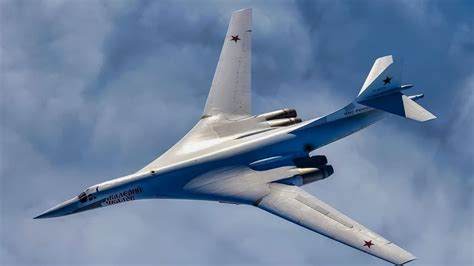
Originally developed in the 1980s, the Tu-160 was intended to serve as the Soviet Union’s premier strategic bomber. However, the collapse of the USSR disrupted production, leaving the fleet fragmented and incomplete. In total, only 38 aircraft were produced across its original and modernized variants.
What makes the Tu-160 truly unique is its second life. Decades after its initial debut, production resumed in the form of the Tu-160M and Tu-160M2, incorporating modern avionics, engines, and weapons systems. This revival underscores the enduring value of the platform—few aircraft are deemed worthy of resurrection on this scale.
Each Tu-160 is a strategic asset in its own right, capable of carrying long-range cruise missiles armed with either conventional or nuclear warheads. Its sheer performance ensures that even a small fleet can exert significant influence, reinforcing the idea that quality, in certain contexts, decisively outweighs quantity.
Lockheed SR-71 Blackbird: The Uncatchable Reconnaissance Aircraft
The Lockheed SR-71 Blackbird occupies a realm of its own. Even decades after its retirement, it remains the fastest air-breathing manned aircraft ever built, capable of sustaining speeds above Mach 3.2 at altitudes exceeding 80,000 feet. Developed under the legendary Clarence “Kelly” Johnson, the Blackbird was less an aircraft and more a technological marvel.
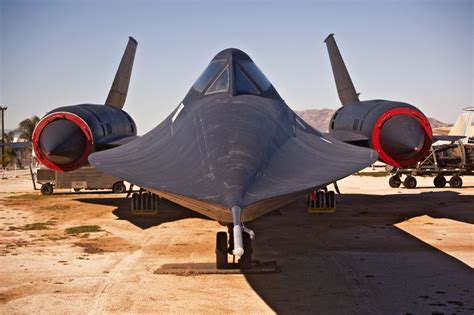
Constructed primarily from titanium to withstand extreme heat, the SR-71 pushed the boundaries of engineering. At operational speeds, surface temperatures soared beyond 300°C, causing the aircraft to expand measurably in flight. Fuel systems, engines, and even the airframe itself were designed to function optimally under these extraordinary conditions.
Only 32 aircraft were built, including training variants. Operating the Blackbird was as demanding as building it. Each mission required extensive preparation, and maintenance demands were so high that the aircraft typically flew just once per week. Yet its capabilities justified every challenge. The SR-71 could survey vast territories with unparalleled precision, often outrunning any missile launched against it.
Remarkably, no SR-71 was ever shot down. Its defense strategy was elegantly simple: speed and altitude rendered interception nearly impossible. Although retired in the late 1990s, the Blackbird’s records, set in 1976, still stand—a testament to how far ahead of its time it truly was.
Northrop B-2 Spirit: The Pinnacle of Stealth Bombing
At the apex of this list stands the Northrop B-2 Spirit, a flying wing that embodies the pinnacle of stealth technology and strategic reach. Designed to penetrate the most sophisticated air defense systems, the B-2 combines low observability, long range, and massive payload capacity in a single platform.
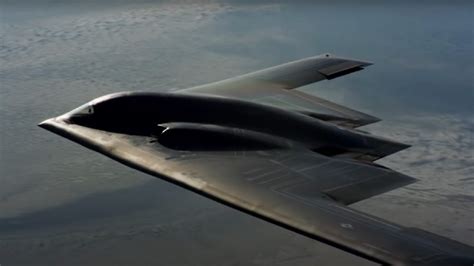
Originally envisioned as a fleet of over 100 aircraft, the program was dramatically scaled back following the end of the Cold War. Ultimately, only 21 B-2 bombers were produced, making it one of the rarest operational military aircraft ever built. The cost—approximately $2.1 billion per aircraft—played a decisive role in limiting production.
The B-2’s design eliminates vertical surfaces, reducing its radar cross-section to a fraction of conventional aircraft. Advanced composite materials and precision manufacturing further enhance its stealth characteristics. This allows it to strike heavily defended targets deep within enemy territory, often without detection.
Despite its small numbers, the B-2 has played a central role in U.S. military operations, from Kosovo to Iraq and Afghanistan. Its ability to deliver both conventional and nuclear payloads ensures its continued relevance, even as the next-generation B-21 Raider prepares to take its place.
The fleet has diminished slightly over time due to accidents and attrition, yet its strategic importance remains undiminished. Each B-2 is not merely an aircraft—it is a critical node in a global power projection network.
Why Fewer Aircraft Can Mean Greater Impact
The stories of these aircraft converge on a compelling truth: scarcity does not imply insignificance. On the contrary, the limited production of these platforms often reflects their extraordinary complexity, cost, and specialization. They are not designed for ubiquity; they are engineered for precision roles where failure is not an option.
In an era where technology evolves rapidly and defense budgets face constant scrutiny, the emphasis increasingly shifts toward capability over quantity. These aircraft exemplify that philosophy, proving that a small fleet, when properly deployed, can shape the course of conflicts and redefine strategic balance.
Their legacy endures not in numbers, but in influence—etched into the history of aviation as reminders that sometimes, the rarest machines leave the deepest mark.