The pursuit of speed has always been at the heart of American fighter jet innovation, where raw velocity is more than a statistic—it is a tactical advantage, a survival mechanism, and often the thin line between victory and defeat. From Cold War interceptors built to outrun nuclear threats to modern stealth fighters designed to dominate unseen, the United States has consistently engineered aircraft that redefine the limits of atmospheric flight.
Speed alone does not win wars, but it shapes how wars are fought. A faster aircraft can dictate engagements, disengage at will, and exploit weaknesses before an adversary can react. Across decades of technological evolution, a select group of American fighter jets have stood out not merely for their velocity, but for how that speed integrates with combat capability, avionics, and mission versatility.
This deep dive explores America’s five fastest fighter jets of all time, focusing exclusively on combat-ready aircraft that were built to fight—not experimental outliers or niche reconnaissance platforms. Each of these machines represents a distinct era of aerial warfare, yet all share one defining trait: an ability to push the boundaries of speed while maintaining lethal effectiveness.
5. McDonnell Douglas F-4 Phantom II — The Supersonic Trailblazer (Mach 2.23)
The F-4 Phantom II didn’t just enter service—it made an entrance loud enough to echo through aviation history. Capable of reaching Mach 2.23, the Phantom was among the first American fighters to truly embrace the concept of high-speed, multi-role combat on a global scale. Developed during the late 1950s and introduced in 1960, it quickly became a backbone aircraft for the U.S. Air Force, Navy, and Marine Corps, a rare example of cross-branch standardization.
Its speed was not just impressive on paper. The Phantom shattered records for altitude, climb rate, and acceleration, proving that brute force engineering—twin engines, heavy payloads, and sheer thrust—could deliver extraordinary performance. Pilots often described flying the F-4 as a visceral experience, closer to piloting a rocket than a traditional aircraft.
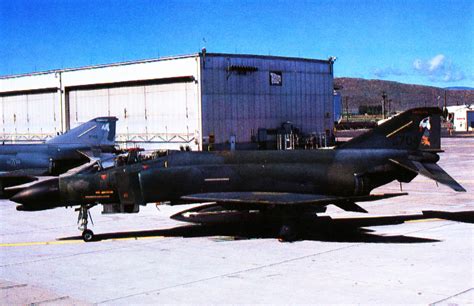
Yet speed alone revealed its limitations in combat. Early doctrine assumed that missile technology would replace dogfighting, leading to initial variants lacking an internal cannon. In the chaotic air battles over Vietnam, this assumption proved costly. Agile enemy fighters could outmaneuver the Phantom in close-range engagements, exposing the gap between theoretical speed advantage and real-world combat dynamics.
Despite these challenges, the F-4 evolved. Later versions reintroduced cannons, improved avionics, and refined tactics. Its longevity—serving into the 1990s and beyond in allied nations—speaks volumes about its adaptability. More importantly, the Phantom’s lessons reshaped future fighter design, proving that speed must be paired with maneuverability and situational awareness.
4. Lockheed Martin F-22 Raptor — Stealth Meets Supersonic Precision (Mach 2.25)
At first glance, the F-22 Raptor might seem out of place in a list dominated by raw speed legends. With a top speed of around Mach 2.25, it doesn’t dramatically outpace its predecessors. But focusing solely on maximum velocity misses the point entirely. The Raptor redefines what speed means in modern air combat.
Unlike older jets that rely on fuel-hungry afterburners to break the sound barrier, the F-22 can maintain supercruise—sustained supersonic flight without afterburners. This capability transforms speed from a short burst into a persistent advantage, allowing the aircraft to cover vast distances quickly while remaining harder to detect.
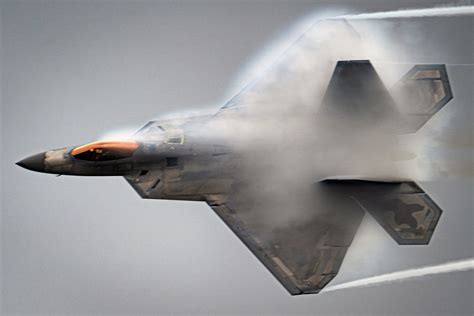
The Raptor’s twin Pratt & Whitney F119 engines feature thrust-vectoring nozzles, enabling maneuvers that seem to defy physics. In close combat, this translates into unparalleled agility, allowing the aircraft to maintain control at extreme angles of attack where others would stall.
But speed in the F-22 is inseparable from its stealth. Its radar-evading design ensures that enemies often never see it coming, making its supersonic approach not just fast—but effectively invisible. In this sense, the Raptor represents a philosophical shift: speed is no longer about outrunning threats, but about arriving undetected and striking first.
3. Grumman F-14 Tomcat — Naval Supremacy at Mach 2.34
Few aircraft have captured public imagination quite like the F-14 Tomcat, and its performance justifies the legend. Reaching speeds of Mach 2.34, the Tomcat was the fastest fighter ever deployed by the U.S. Navy, designed to defend carrier battle groups against high-speed threats during the Cold War.
Its defining feature—the variable-sweep wing—allowed it to adapt mid-flight. Wings extended for low-speed maneuverability during carrier operations, then swept back for high-speed interception. This design gave the Tomcat a rare combination of agility and velocity, making it equally capable in dogfights and long-range engagements.
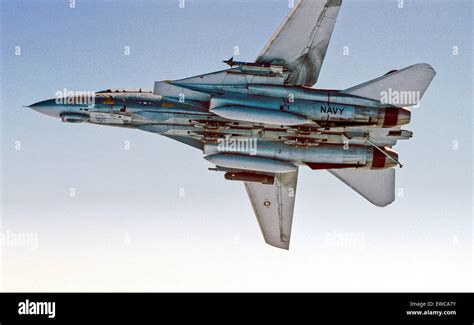
The Tomcat wasn’t just fast; it was strategically formidable. Equipped with the AWG-9 radar and long-range AIM-54 Phoenix missiles, it could engage multiple targets at distances far beyond visual range. Speed enabled it to position itself rapidly, but its true strength lay in combining that speed with reach and firepower.
Operational experience in Vietnam influenced its development, ensuring it corrected earlier mistakes made with aircraft like the F-4. The result was a fighter that could dominate both close and distant engagements. However, this performance came at a cost—literally. The Tomcat’s complexity made it expensive to maintain, eventually leading to its retirement despite its unmatched capabilities.
2. General Dynamics F-111 Aardvark — The Underrated Speed Titan (Mach 2.5)
Often overshadowed by sleeker fighters, the F-111 Aardvark quietly carved out a reputation as one of the fastest and most versatile combat aircraft ever built. With a top speed exceeding Mach 2.5, it rivaled—and in some cases matched—the fastest dedicated fighters of its era.
Originally conceived as a multi-role platform, the F-111 blended fighter-like speed with bomber-level payload capacity. Its terrain-following radar allowed it to fly at high speeds just above ground level, slipping under enemy radar coverage in a way that felt almost unfair.
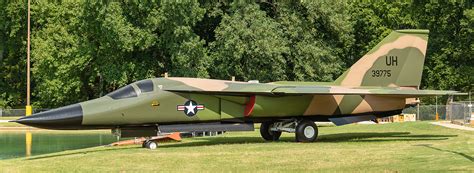
Its variable-geometry wings, similar in concept to the F-14, optimized performance across different flight regimes. At high altitudes, it could stretch its legs and unleash its full speed potential; at low altitudes, it could hug the terrain while maintaining remarkable velocity.
The aircraft’s electronic warfare variant, the EF-111A Raven, added another layer of strategic value. By jamming enemy radar and missile systems, it ensured that allied aircraft could operate with reduced risk. Notably, no coalition aircraft were lost to missile strikes while under Raven escort during Operation Desert Storm, a testament to its effectiveness.
Despite its achievements, the F-111’s complexity and maintenance costs eventually led to its retirement. Still, its legacy as a high-speed, multi-role pioneer remains firmly intact.
1. Boeing F-15 Eagle — The Undisputed Speed King (Mach 2.5+)
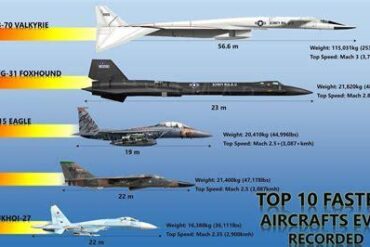
At the top of the list stands the F-15 Eagle, a fighter that doesn’t just flirt with speed—it dominates it. With a top speed exceeding Mach 2.5, and test reports suggesting it approached Mach 3.0, the Eagle remains the fastest operational fighter jet in U.S. Air Force history.
But raw speed is only part of its legend. The F-15 boasts an unmatched combat record: over 100 air-to-air victories with zero losses. This is not coincidence—it is the result of a design philosophy that prioritized energy advantage, allowing the aircraft to climb faster, accelerate harder, and outmaneuver opponents with ruthless efficiency.
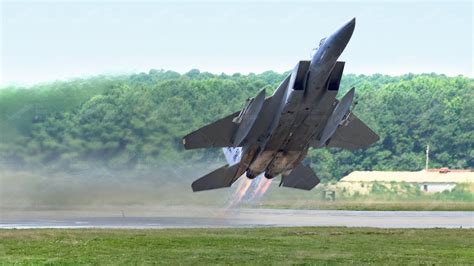
Developed during the Cold War, the Eagle was built to counter the most advanced Soviet fighters. Its massive twin engines provide a thrust-to-weight ratio greater than one, meaning it can accelerate vertically—a capability that turns speed into a three-dimensional weapon.
Modern variants like the F-15EX Eagle II ensure that this platform remains relevant decades after its introduction. With upgraded avionics, expanded payload capacity, and continued emphasis on high performance, the Eagle is not fading into history—it is evolving alongside newer stealth aircraft.
Interestingly, future fighter development suggests that extreme speed may no longer be the ultimate goal. Aircraft like the proposed F-47 are expected to prioritize stealth, efficiency, and networked warfare over sheer velocity. Yet even in this shifting landscape, the F-15’s role as a high-speed “missile truck” ensures it will remain a cornerstone of American air power.
Why Speed Still Matters in Modern Air Combat
It’s tempting to assume that in an age of stealth and beyond-visual-range missiles, speed has lost its relevance. That assumption doesn’t hold up under scrutiny. Speed continues to influence engagement timing, survivability, and mission flexibility in ways that no other single attribute can fully replicate.
A faster aircraft can dictate the terms of battle—choosing when to engage, when to retreat, and how to position itself relative to threats. Even stealth fighters benefit from speed, as it enhances their ability to exploit openings and minimize exposure.
What has changed is the context. Speed is no longer the sole metric of superiority; it is one component in a broader ecosystem of capabilities. The fastest jets in American history demonstrate this evolution clearly—from the brute-force velocity of the F-4 Phantom to the integrated, stealth-driven performance of the F-22 Raptor.
In the end, these aircraft are more than machines. They are milestones in a relentless pursuit of aerial dominance, each one pushing the envelope a little further, a little faster. And while the definition of superiority continues to evolve, one truth remains ثابت: in the skies above, speed will always matter.