Air combat is ultimately a contest of energy management, and nowhere is that more brutally evident than in the race from runway to stratosphere. In the unforgiving geometry of a dogfight, altitude is not just a number—it is stored kinetic opportunity, a tactical currency that dictates who dictates the fight. The faster a fighter jet can convert thrust into vertical gain, the more lethal it becomes.
Speed-to-altitude performance is not merely about raw climb rate figures. It is a fusion of thrust-to-weight ratio, aerodynamic efficiency, engine responsiveness, and flight control authority at extreme angles of attack. The jets that dominate this category are not just fast—they are capable of rewriting the physics of aerial engagement.
What follows is a deep dive into five of the most formidable aircraft ever built for vertical dominance—machines engineered to own the sky from the moment wheels leave the runway.
Sukhoi Su-27 Flanker — The Blueprint of Modern Vertical Superiority
The Sukhoi Su-27 Flanker represents a turning point in fighter design philosophy. Before its arrival, the idea that a large, heavy air superiority platform could rival lightweight fighters in agility—and exceed them in vertical performance—was largely theoretical. The Flanker shattered that assumption.
Its climb rate of 59,000 feet per minute is not just impressive—it is foundational. This aircraft didn’t just compete; it defined the rules of vertical combat for an entire generation.
What sets the Su-27 apart is its blended wing-body design, where the fuselage itself contributes significantly to lift. Unlike traditional aircraft that rely primarily on wings, the Flanker transforms its entire structure into a lifting surface. This allows it to sustain upward momentum even as air density drops at higher altitudes.
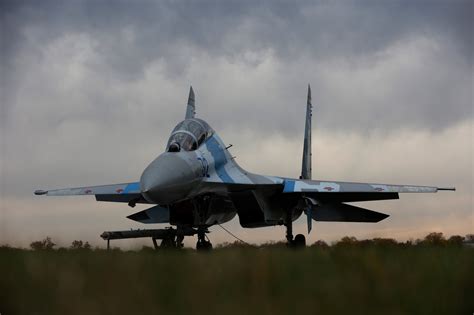
Equally critical is its natural aerodynamic instability, intentionally engineered to make the aircraft eager to climb and turn. Controlled by a sophisticated fly-by-wire system, the Flanker becomes an extension of pilot intent—reacting instantly to aggressive pitch inputs.
The aircraft’s legendary execution of the Pugachev’s Cobra maneuver is more than an airshow spectacle. It demonstrates the jet’s ability to retain control at extreme angles of attack, allowing a pilot to momentarily decelerate, force an overshoot, and then convert that position into a vertical advantage.
Unlike modern successors, the Su-27 achieves this without thrust vectoring. Its performance is rooted in pure aerodynamic mastery and raw engine power, making it the conceptual ancestor of every supermaneuverable fighter that followed.
Boeing F-15EX Eagle II — The High-Thrust Interceptor King
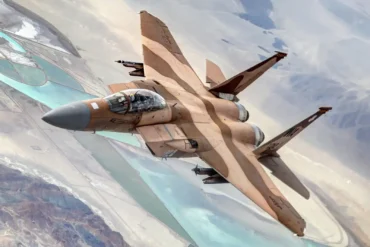
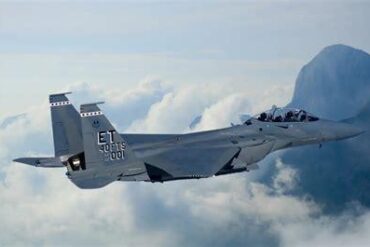
The Boeing F-15EX Eagle II approaches vertical performance from a completely different angle. Where Russian designs emphasize agility and instability, the F-15 lineage embraces overwhelming thrust and structural robustness.
With a climb rate of 60,000 feet per minute, the Eagle II is a direct descendant of the record-breaking “Streak Eagle,” an aircraft that redefined what was physically possible in vertical ascent during the Cold War.
Powered by twin GE F110-129 engines, each producing nearly 29,000 pounds of thrust, the F-15EX is essentially a missile truck with fighter DNA. It does not rely on subtlety. It relies on brute force acceleration.
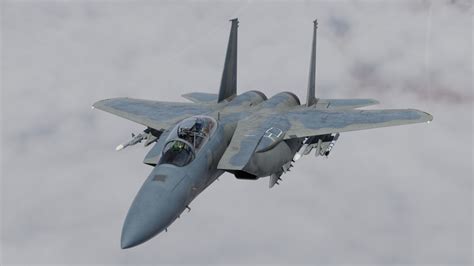
This design philosophy allows the Eagle II to reach Mach 2.5 in operational conditions, with test scenarios pushing it even closer to Mach 3. That raw speed translates directly into vertical energy. In practical terms, it means the aircraft can rapidly reposition above the battlespace, acting as a high-altitude weapons platform.
However, the absence of thrust-vectoring nozzles limits its agility compared to newer designs. The F-15EX compensates with payload dominance, capable of carrying up to 22 air-to-air missiles. In modern doctrine, it operates in tandem with stealth fighters, climbing rapidly to altitude and leveraging sensor data from forward assets.
The result is a fighter that may not dance in the vertical plane like its rivals—but one that can own it through sheer kinetic authority.
Lockheed Martin F-22 Raptor — The Apex Predator of Vertical Combat
The Lockheed Martin F-22 Raptor is where physics begins to feel negotiable. With a climb rate of 62,000 feet per minute and a thrust-to-weight ratio exceeding 1.25, it possesses a capability that borders on the surreal: sustained acceleration in a vertical climb.
This is not a theoretical metric. The Raptor can literally point its nose straight up and continue gaining speed, a feat that redefines how energy is managed in combat.
At the core of this capability are its F119 engines, equipped with 2D thrust-vectoring nozzles. These nozzles allow the aircraft to maintain control even when aerodynamic surfaces become ineffective in thin air.
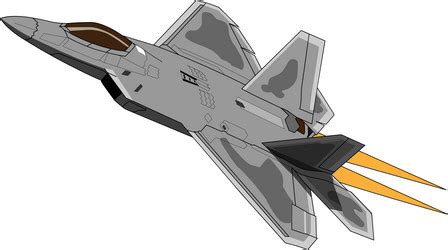
The implications are profound. Traditional fighters lose maneuverability at high altitude due to reduced air density. The F-22 bypasses this limitation entirely, using engine thrust to actively control pitch and direction.
This enables maneuvers like the J-Turn and Power Loop, where the aircraft can rapidly reverse direction or reposition itself vertically without relying on forward speed. In combat, this translates to unmatched positional control, allowing the pilot to dictate engagement geometry at will.
Beyond raw performance, the Raptor integrates stealth technology, meaning it can achieve these positions without being detected. It is not just fast—it is invisible until it is already dominant.
The F-22 doesn’t just climb—it controls the vertical battlefield with surgical precision.
Mikoyan-Gurevich MiG-35 Fulcrum-F — The Pure Energy Fighter
The Mikoyan-Gurevich MiG-35 Fulcrum-F is a study in focused design philosophy. It does not attempt to balance every aspect of modern air combat. Instead, it prioritizes one thing above all: explosive energy generation.
With a climb rate of 65,000 feet per minute, the MiG-35 is engineered for rapid interception and vertical dominance. Derived from the already formidable MiG-29, it refines the platform with lighter structures and more powerful RD-33MK engines, delivering nearly 10% increased thrust.
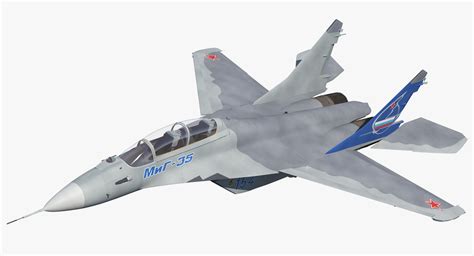
What truly elevates the Fulcrum-F is its 3D thrust-vectoring capability. Unlike the F-22’s 2D system, the MiG-35’s nozzles can deflect in multiple directions independently, granting it unprecedented control in post-stall regimes.
This allows the aircraft to perform maneuvers that appear to defy aerodynamics—hovering nose-up, rotating in place, or executing tight vertical spirals. These capabilities are not just for show; they enable the pilot to manipulate energy states in ways that disrupt enemy targeting solutions.
Unlike stealth fighters that operate as long-range snipers, the MiG-35 is built for close-range dominance. Its rapid climb rate ensures it can scramble quickly, intercept threats, and establish altitude superiority within moments.
It is a fighter designed not for subtlety, but for overwhelming, immediate presence in the vertical domain.
Sukhoi Su-57 Felon — The Pinnacle of Vertical Power and Stealth
At the top of the hierarchy sits the Sukhoi Su-57 Felon, a machine that combines every lesson learned from decades of fighter evolution into a single, formidable platform.
With a staggering climb rate of 71,000 feet per minute, the Su-57 does not just lead—it dominates.
Its defining feature is the integration of 3D thrust-vectoring engines with advanced stealth architecture. This combination allows the aircraft to maintain control and generate lift even when aerodynamic surfaces are effectively useless.
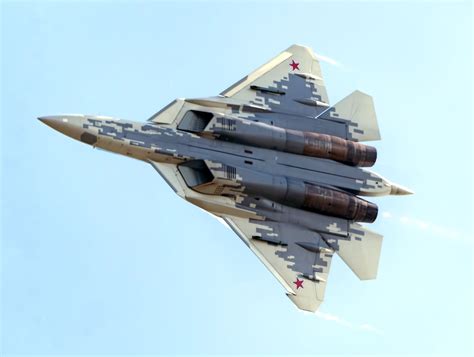
The introduction of the Izdeliye 177 engine further enhances its performance, pushing the thrust-to-weight ratio beyond 1.34. This enables the aircraft to accelerate vertically even while fully armed, a capability that fundamentally alters engagement dynamics.
In practical terms, the Su-57 can seize the altitude advantage almost instantly, forcing adversaries into a reactive posture. Its ability to maintain control at low speeds while climbing also allows it to execute aggressive maneuvers that would stall other aircraft.
However, this performance comes with trade-offs. Sustained high-speed climbs generate significant thermal and structural stress, particularly on the aircraft’s stealth coatings. As a result, pilots must carefully manage how often they push the aircraft to its limits.
Even so, the Su-57 represents the ultimate expression of vertical combat philosophy—a fighter that can climb faster, maneuver harder, and remain harder to detect than anything else in its class.
Why Speed-To-Altitude Defines Air Combat Superiority
The common thread across these aircraft is not just speed—it is energy control. In aerial warfare, altitude translates directly into options. A fighter with superior vertical performance can:
- Initiate or disengage combat at will
- Convert altitude into speed during attack runs
- Force opponents into disadvantageous positions
- Maintain sensor and missile range superiority
This is why climb rate and thrust-to-weight ratio remain critical metrics, even in an era dominated by stealth and beyond-visual-range missiles.
What makes these five aircraft exceptional is their ability to compress time and space in combat. They reduce the window between detection and dominance, allowing pilots to dictate the terms of engagement almost instantly.
The Evolution of Vertical Dominance in Fighter Design
From the aerodynamic brilliance of the Su-27 to the raw thrust of the F-15EX, and from the stealth-driven precision of the F-22 to the extreme vectoring capabilities of the Su-57, the evolution of speed-to-altitude performance tells a larger story.
It is a story of engineering pushing against the boundaries of physics, of nations investing in machines that can climb faster, turn sharper, and strike sooner.
Modern air combat may increasingly rely on sensors and data links, but when missiles are evaded and distances collapse, the fight often returns to fundamentals. And in those moments, the aircraft that can climb faster, control energy better, and dominate the vertical plane holds the decisive edge.
These five fighters are not just fast—they are architects of the sky, redefining what it means to own the high ground in the most demanding combat environment ever created.