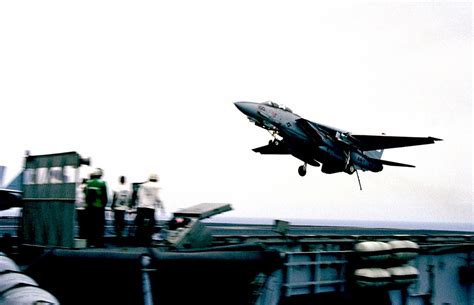
In the intense world of aerial combat, where agility, range, and raw power often determine survival, one innovation temporarily rewrote the rules of engagement — the swing-wing fighter jet. Known technically as variable-geometry aircraft, these platforms allowed in-flight wing adjustments to optimize performance at different speeds, granting exceptional versatility to multirole combat jets.
As Cold War superpowers pushed aviation engineering into overdrive, the swing-wing became a favored feature for numerous fourth-generation aircraft, balancing short runway operations with high-speed performance. Though eventually surpassed by digital flight systems and advanced fixed-wing designs, these swing-wing marvels marked a distinct era of military aviation. Here are the top 5 swing-wing fighter jets that defined that legacy.
1. F-111 Aardvark – The Variable-Geometry Pioneer
The General Dynamics F-111 Aardvark was the first operational fighter jet to incorporate swing wings, setting a new standard for speed and low-altitude penetration. Developed in response to Soviet advances in surface-to-air missile technology, the F-111 was born from a 1960s Pentagon initiative for an all-weather, supersonic tactical strike aircraft.
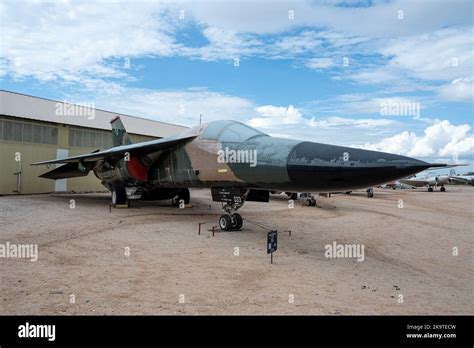
Key Features:
- First Flight: 1964
- Entered Service: 1967
- Top Speed: Mach 2.0+
- Range: 3,565 km (2,215 miles)
- Payload: Over 31,500 lbs of ordnance
Equipped with terrain-following radar, the Aardvark could fly at tree-top level to evade radar detection, a critical capability during the Cold War. Its swing-wing configuration allowed short takeoffs while maintaining excellent high-speed performance at low altitudes.
Despite its size and weight, the F-111 boasted remarkable agility for a bomber-class aircraft. It played a critical role in Vietnam, Operation El Dorado Canyon (Libya, 1986), and the Gulf War, before retiring in 1998.
2. MiG-23 Flogger – The Soviet’s High-Speed Contender
Unveiled in 1970, the MiG-23 Flogger was the Soviet Union’s direct response to the F-111 and other NATO swing-wing platforms. Designed to replace the nimble but limited MiG-21 Fishbed, the MiG-23 brought expanded capability in range, radar, and multirole functionality.
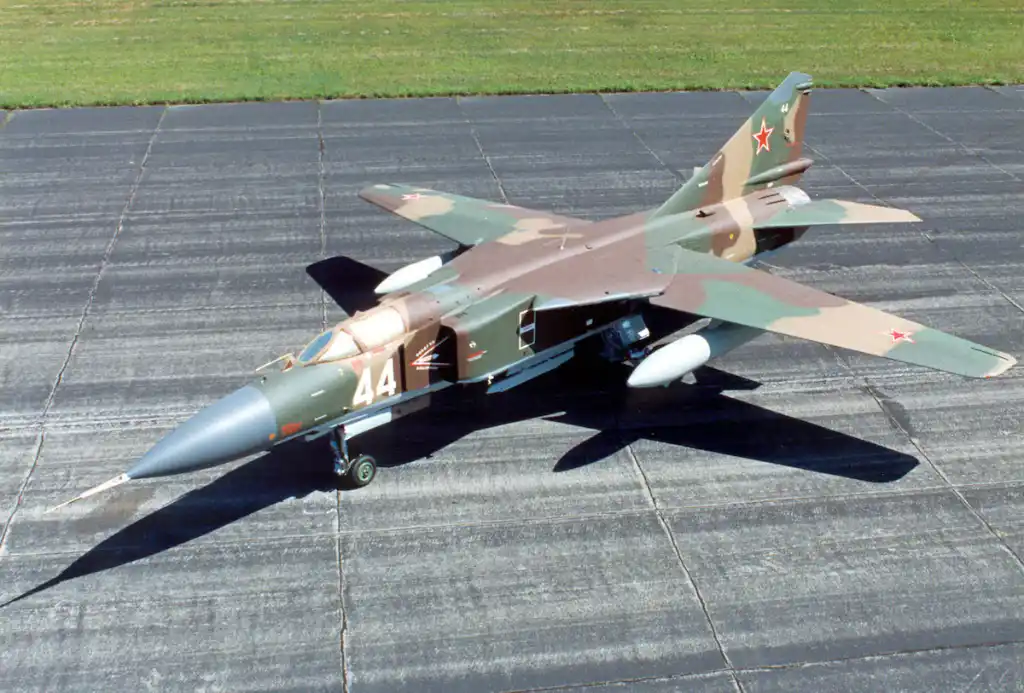
Key Features:
- Top Speed: Mach 2.35
- Combat Radius: 1,150 km
- Service Ceiling: 59,100 ft
- Armament: R-23 (AA-7 Apex) and R-60 missiles, up to 4,400 lbs of bombs
Its variable geometry wings allowed rapid adaptation between interception missions and ground strike roles, making it one of the most flexible Soviet aircraft of the era. Though it suffered from a reputation for complexity and mechanical issues, over 5,000 airframes were built, a testament to its utility and affordability in Warsaw Pact doctrine.
The MiG-23 saw service in numerous regional conflicts, including the Iran-Iraq War, Angolan Civil War, and the Soviet-Afghan War, and remains in limited service in a few nations today.
3. F-14 Tomcat – The Icon of Carrier Aviation
No discussion of swing-wing aircraft is complete without the Grumman F-14 Tomcat — a carrier-based interceptor, air superiority fighter, and tactical reconnaissance platform that became a cultural icon.
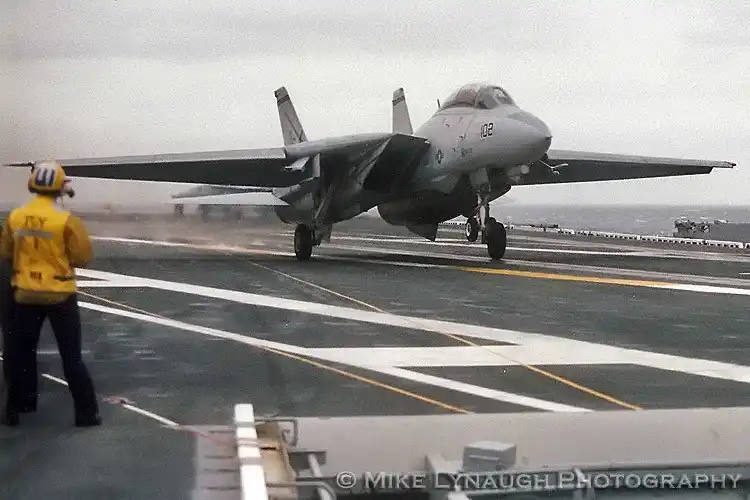
Key Features:
- Top Speed: Mach 2.34
- Range: 1,900 km (combat)
- Armament: AIM-54 Phoenix, AIM-7 Sparrow, AIM-9 Sidewinder, 20mm Vulcan cannon
- Radar: AN/AWG-9 (could track 24 targets, engage 6 simultaneously)
Developed in response to the canceled F-111B naval variant, the F-14 became a cornerstone of U.S. naval aviation. Its swing-wing capability enabled stable carrier takeoffs and landings, and high-speed performance once airborne. Most famous for its Phoenix missile system, the F-14 could engage threats over 100 miles away, giving it dominance over vast oceanic battlefields.
The aircraft gained global fame as the star of Top Gun (1986), yet its combat record in Operation Desert Storm and Southern Watch affirmed its real-world potency. The Navy retired the Tomcat in 2006, but Iran still operates upgraded versions under domestic modernization programs.
4. MiG-27 Flogger-D/J – Ground Strike Specialist
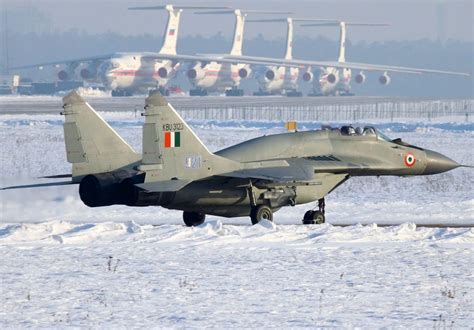
Derived from the MiG-23, the MiG-27 Flogger-D/J took the proven airframe and tailored it for tactical ground-attack missions, particularly in contested environments. Retaining the swing-wing architecture, the MiG-27 offered enhanced payload capacity, armor protection, and precision bombing capability.
Key Features:
- Top Speed: Mach 1.09
- Payload: 9,700 kg (21,380 lbs)
- Powerplant: Tumansky R-29B-300 turbojet
- Avionics: Laser rangefinder and ground attack radar
Unlike its air-to-air predecessor, the MiG-27 featured a down-angled nose to improve the pilot’s view of ground targets and was equipped with dedicated avionics for close air support. Its integrated cannon, the GSh-6-30, was among the most powerful aircraft cannons ever fitted to a tactical jet.
The Indian Air Force was a major operator and even produced variants under license. The MiG-27 saw action in the Kargil War (1999) and was phased out in 2019, closing the chapter on Soviet swing-wing ground attack jets.
5. Tu-160 Blackjack – The Strategic Supersonic Bomber
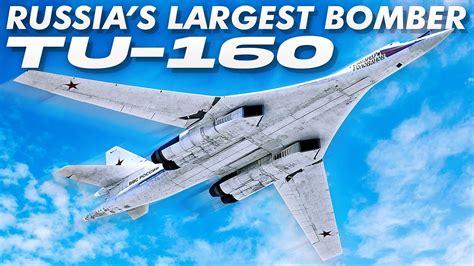
Although not a fighter, the Tupolev Tu-160 Blackjack is the largest and heaviest swing-wing aircraft ever built, and the fastest supersonic bomber in operation. With a wingspan of 182 feet when fully extended and four NK-32 afterburning engines, it delivers unmatched range and speed among bombers.
Key Features:
- Top Speed: Mach 2.05
- Combat Range: 12,300 km (7,643 miles)
- Payload: 40,000 kg (88,000 lbs)
- Missiles: Kh-55, Kh-102 nuclear cruise missiles
Introduced in 1987, the Tu-160 was intended to penetrate Western airspace with nuclear or conventional payloads. While its radar cross-section is substantial, the aircraft relies on speed, altitude, and electronic countermeasures to evade interception. Its swing wings give it maneuverability at low speeds for takeoff and long-range cruising, while enabling supersonic dash capability during combat ingress or escape.
As of 2025, less than 20 Tu-160s remain in Russian service. Despite modernization efforts — including the Tu-160M2 upgrade program — production bottlenecks and sanctions have limited expansion. Nevertheless, the Blackjack remains a critical element in Russia’s nuclear triad.
Comparison Table: Top 5 Swing-Wing Fighter Jets
| Aircraft | Role | Top Speed (Mach) | Combat Radius (km) | Payload (lbs) | First Flight | Notable Operator |
|---|---|---|---|---|---|---|
| F-111 Aardvark | Tactical bomber | 2.0+ | 2,200+ | 31,500 | 1964 | United States |
| MiG-23 Flogger | Multirole fighter | 2.35 | 1,150 | 4,400 | 1967 | USSR, multiple |
| F-14 Tomcat | Carrier interceptor | 2.34 | 1,900 | 13,000 | 1970 | United States, Iran |
| MiG-27 Flogger D/J | Ground-attack fighter | 1.09 | 780 | 21,380 | 1970 | USSR, India |
| Tu-160 Blackjack | Strategic bomber | 2.05 | 12,300 | 88,000 | 1981 | Russia |
Legacy of Swing-Wing Fighter Jets
While modern fighters such as the F-22 Raptor and Su-57 achieve superior performance using fixed-geometry airframes with thrust vectoring and fly-by-wire systems, the swing-wing era demonstrated how adaptable wing geometry could yield impressive performance gains. From long-range intercepts to low-level ground strikes, these aircraft showed how form could meet function — even if at a cost of added mechanical complexity.
Each of these jets — from the F-14 soaring off carriers to the Tu-160 roaring across polar skies — showcased the strategic value of variable-geometry aircraft in Cold War and post-Cold War battlefields.
FAQ: Swing-Wing Fighter Jets
Why were swing-wing designs eventually phased out?
Swing-wing aircraft, while offering versatile performance across various speeds, introduced significant mechanical complexity, added weight, and demanded higher maintenance. As fly-by-wire systems and advanced aerodynamics evolved, designers found ways to achieve similar or better results using fixed-wing configurations.
Which countries still operate swing-wing aircraft today?
As of 2025, Iran operates a limited number of F-14 Tomcats, and Russia maintains a small fleet of Tu-160 bombers. Most other nations have retired their variable-geometry platforms due to cost, obsolescence, or fleet modernization.
Are there any modern aircraft being developed with swing wings?
No major fifth or sixth-generation fighter designs incorporate swing wings. Instead, advancements focus on stealth, artificial intelligence, thrust vectoring, and hypersonic capabilities. Swing-wing designs, though revolutionary in their time, have largely become obsolete in modern air warfare.