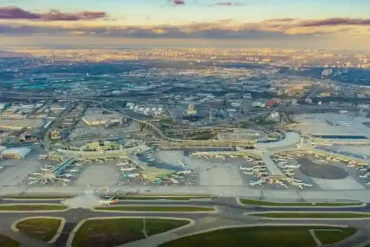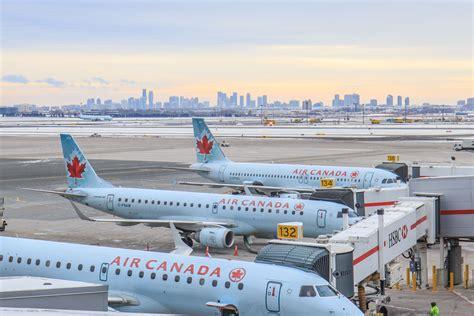
Canada’s aviation map looks calm from orbit, but zoom in and you’ll see a living, breathing circulatory system of runways, terminals, and routes pulsing with motion. The country’s airports have rebounded hard after the pandemic freeze, and the rhythm of travel has returned with fresh energy. Among this network, one hub stands so far ahead of the rest that calling it “busy” feels like understatement. Toronto Pearson International Airport (YYZ) doesn’t merely lead Canada in passenger traffic—it defines the scale at which Canadian aviation operates, setting benchmarks in connectivity, employment, and global reach that the rest of the country orbits around.
The broader picture matters here. Canada is not a global aviation giant in raw volume, yet its growth curve tells a story of resilience. The eight largest airports collectively screened more than 58 million departing passengers in the most recent year, surpassing pre-pandemic levels. This rebound is not evenly distributed. Traffic concentrates heavily in a handful of hubs, with Toronto Pearson towering over the field. In practical terms, this concentration shapes route planning, airline strategies, infrastructure investment, and even the geography of Canada’s global connections. When people ask what the busiest airport in Canada is, they’re really asking where the nation meets the world most intensely.
Toronto’s dominance isn’t a statistical quirk; it’s the gravitational center of Canadian air travel. The airport serves the country’s largest metropolitan area and its main financial engine. That alone would guarantee heavy traffic. Add the role of Toronto as a transatlantic and transborder gateway, and you get a hub whose volume isn’t just high—it’s structurally baked into how Canadians move across continents. The numbers tell the story plainly: 46.8 million passengers passed through Toronto Pearson in 2024, a figure that places it nearly 17 million passengers ahead of Vancouver International Airport, the country’s second-busiest. That gap is not a margin; it’s a canyon.
Toronto Pearson International Airport: Canada’s Undisputed Aviation Giant
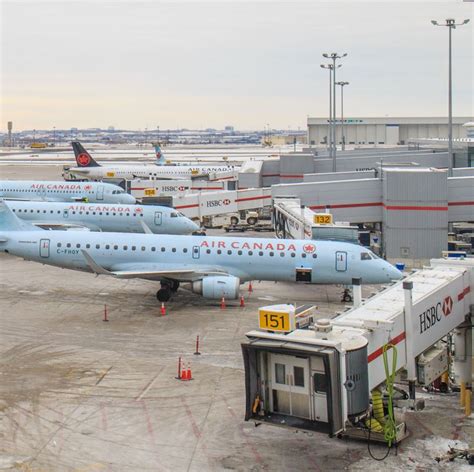
The scale of Toronto Pearson is difficult to grasp until you imagine it as a small city with wings. Spread across 4,600 acres and stitched together by five main runways, the airport functions like a logistics organism that never sleeps. Before the pandemic, it supported more than 50,000 jobs, making it not just an airport but one of Canada’s largest employment zones. That workforce spans pilots, engineers, baggage handlers, security officers, retail staff, caterers, air traffic controllers, and an invisible army of planners and technicians who keep the whole machine humming. Airports at this scale become economic ecosystems, pulling gravity from hotels, logistics centers, airline headquarters, and tech firms that orbit nearby.
Toronto Pearson’s traffic is not just large; it is lopsided toward the international. In recent quarterly reporting, international travelers made up the majority of passengers, with tens of millions moving between Toronto and destinations across Europe, Asia, the Caribbean, and beyond. The airport’s revenue performance mirrors this global orientation, with more than $1.6 billion generated in a single nine-month period. This international emphasis gives Toronto Pearson a role beyond national infrastructure. It is Canada’s primary handshake with the world, the place where business deals, family reunions, academic exchanges, and tourism flows converge into a single choreography of arrivals and departures.
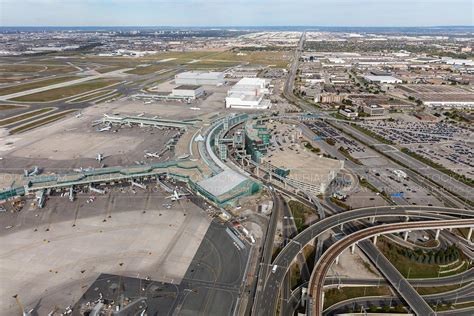
What makes Toronto Pearson particularly magnetic is the density of routes. Airlines cluster where demand is thickest, and demand thickens where airlines cluster. This feedback loop has made Pearson a launchpad for record numbers of routes, including a swelling portfolio of transatlantic flights. In peak seasons, the airport becomes a global crossroads where European, Asian, Middle Eastern, Caribbean, and North American networks overlap. This density doesn’t just serve Toronto. It acts as a national relay point, allowing travelers from smaller Canadian cities to reach far-flung destinations with fewer transfers and better schedules.
Why Toronto’s Geography and Economy Create a Traffic Magnet
Airports do not become giants by accident. They grow where population, wealth, and global connectivity intersect. Toronto sits at the heart of Canada’s most populous region, a metropolitan area whose economic gravity pulls in finance, technology, culture, and immigration. The city’s diversity translates directly into air traffic patterns. Family ties stretch across continents, business relationships span time zones, and cultural exchange flows in both directions. Every one of these threads becomes a seat on a plane.
Toronto’s location on the eastern half of the continent also matters. Flights to Europe are shorter than from Western Canada, making Toronto a natural transatlantic springboard. Airlines can deploy aircraft more efficiently on these routes, improving profitability and frequency. That efficiency compounds. More flights create more options, more options attract more passengers, and the cycle reinforces itself. The result is that Toronto Pearson becomes not just the busiest airport in Canada, but the most strategically positioned for long-haul connectivity.
This gravitational pull also shapes domestic travel. Toronto acts as a hub for flights within Canada, connecting smaller cities to international routes. Travelers from across the country funnel through Pearson to reach global destinations, boosting its passenger counts beyond what the local population alone would generate. In network terms, Toronto is the main node in Canada’s aviation graph, the place where domestic and international edges intersect most densely.
Canada’s Other Major Airports in the Shadow of Pearson
Vancouver International Airport stands as Canada’s western gateway, with nearly 27 million passengers in the most recent year. Its Pacific orientation makes it indispensable for routes to Asia and Oceania, and its three-runway layout supports a sophisticated mix of long-haul and regional traffic. Vancouver’s role is crucial, but the volume gap between it and Toronto Pearson highlights how concentrated Canadian air travel remains. Vancouver is busy; Toronto is on another scale.
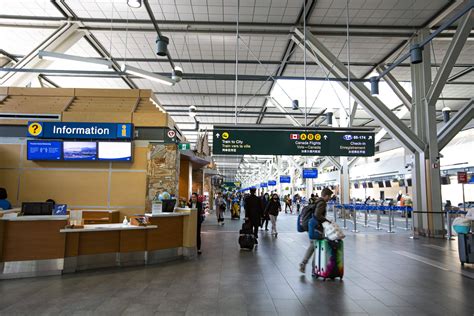
Montréal–Trudeau International Airport comes next, serving as Quebec’s primary portal to the world. With more than 22 million passengers, Montréal balances transatlantic routes with strong domestic and transborder traffic. The airport’s bilingual, bicultural identity shapes its route network, anchoring connections to Europe and francophone destinations. Calgary International Airport follows, reflecting Alberta’s economic rhythms and energy-driven business travel. Edmonton International Airport rounds out the top five, a regional anchor with substantial land area and a growing role in cargo and logistics.
These airports are not minor players. Each functions as a regional heartbeat, shaping how people and goods move through Canada. Yet the scale difference is telling. Toronto Pearson’s lead is not merely numerical; it reflects the structural centralization of Canada’s global air connectivity. In practical terms, airlines prioritize Toronto for new long-haul routes, premium cabin offerings, and capacity expansions. That prioritization feeds back into passenger behavior, further widening the gap.
Shifting Travel Patterns and the Resilience of Toronto Pearson
Recent years have nudged Canadian travel habits in new directions. Transborder travel to the United States has softened, with year-over-year declines recorded across major airports. Political tensions and shifting traveler preferences have redirected some demand toward destinations like Mexico, Portugal, the Bahamas, and Belize. These changes ripple through route networks and seasonal planning, altering which destinations see growth and which face contraction.
Toronto Pearson, however, has shown a peculiar resilience in this shifting landscape. While declines in U.S.-bound travel have nudged down certain international segments, strong growth in domestic traffic and diversified international routes have cushioned the impact. The airport’s sheer scale allows it to absorb shocks that might sting smaller hubs more sharply. When one market cools, another warms. This portfolio effect—spread across regions and travel purposes—makes Toronto Pearson not just busy, but robust against volatility.
The airport’s flight volume underscores this resilience. Before the pandemic, Toronto Pearson recorded 455,000 aircraft movements in a single year, far ahead of its nearest competitors. Aircraft movements matter because they reflect operational complexity. High movement counts mean dense scheduling, tight runway choreography, and sophisticated air traffic management. Running an airport at this tempo is a feat of systems engineering, human coordination, and technological orchestration. It’s less like running a terminal and more like conducting a symphony that never pauses between movements.
Size Versus Busyness: Why the Biggest Airport Isn’t the Busiest
An amusing twist in Canada’s aviation story is that the largest airport by land area is not the busiest by passengers. That title belongs to Montréal–Mirabel International Airport, a sprawling site of more than 17,000 acres that once aspired to be one of the world’s largest hubs. The vision faltered. Passenger services eventually ceased, leaving Mirabel to host cargo operations, aircraft manufacturing, testing facilities, and the occasional cinematic cameo. The empty terminal stands as a monument to ambitious planning that outpaced demand.
This contrast reveals a useful truth. Airport size in acreage does not equate to busyness in people. Busyness emerges from demand density, network centrality, and geographic positioning. Toronto Pearson, smaller in land area than Mirabel, Edmonton, or Calgary, surpasses them all in footfall because it sits at the crossroads of population, economy, and route networks. Infrastructure matters, but demand geometry matters more.
Why Toronto Pearson’s Crown Is Secure—for Now
Could another Canadian airport dethrone Toronto Pearson in the future? In theory, shifts in population, trade patterns, or airline strategies could redistribute traffic. In practice, the structural forces that make Toronto Pearson dominant are slow-moving. The city’s population growth, economic gravity, and role as a national connector continue to deepen. The airport’s investment pipeline, including route expansions and seasonal capacity surges, reinforces its centrality.
Toronto Pearson’s crown is not merely about being busy today. It rests on a self-reinforcing loop of connectivity, demand, and infrastructure that keeps pulling more traffic into its orbit. The airport has become a place where Canada’s local rhythms meet global flows, where the country’s internal movement stitches itself to international pathways. That convergence is hard to replicate elsewhere without reshaping Canada’s demographic and economic geography.
The busiest airport in Canada is not just a statistic. It is a living system that mirrors how the country connects to itself and to the world. Toronto Pearson stands at that junction, a vast, humming interface between runways and runways of human intention, where millions of individual journeys condense into a single, relentless motion of departure and return.