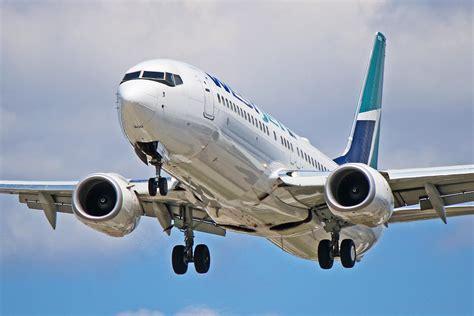
On the evening of November 20, 2025, a potentially dangerous situation unfolded in the final stages of approach at Toronto Pearson International Airport, when a WestJet Boeing 737-800, operating as Flight WS2101 from Punta Cana, was forced into a go-around maneuver due to an unexpected runway obstruction: a NetJets Cessna Citation Sovereign that had not yet cleared the runway.
This near-incursion incident drew attention due to the ever-present risk of runway conflicts at busy international airports and the split-second decisions that keep aircraft — and lives — safe.
Critical Go-Around Triggered by Runway Occupancy
Flight data from Flightradar24 reveals that the WestJet aircraft, tail number C-FRWA, was on final approach to Runway 06R, with a smooth descent profile and clear weather reported in the Toronto area. Meanwhile, NetJets Citation N389QS, arriving from Asheville, North Carolina, had just landed and was instructed by Pearson Tower to vacate the runway via high-speed exit D1.
However, the Citation Sovereign failed to comply promptly, reportedly stopping short of the D1 exit and hesitating ahead of D4, causing immediate concern for Air Traffic Control (ATC). In response, the tower issued an urgent instruction to WS2101 to perform a go-around, a maneuver that involves aborting the landing, increasing thrust, and climbing back into the traffic pattern for another approach.
Although go-arounds are standard operating procedures, executed hundreds of times daily across global airspace, their sudden execution is often jarring to passengers. In this case, the WestJet crew responded professionally, ascending safely and circling for a successful landing a short time later. The Cessna eventually exited via D4, despite that exit typically serving aircraft landing on Runway 24L in the opposite direction.
Flight Details: Aircraft and Crew Involved
The incident involved two very different types of aircraft:
- WestJet WS2101: A Boeing 737-800, 13 years old, configured for 174 passengers (12 in Premium, 162 in Economy), with a crew of 2 pilots and 4 flight attendants.
- NetJets N389QS (EJA389): A Cessna Citation Sovereign, typically configured for up to 8 passengers, with 2 crew members.
This combination — a narrow-body jetliner approaching a mid-sized business jet — emphasized the critical importance of precise runway clearance and adherence to ATC instructions, especially during peak operating hours.
Airfield Confusion and Possible Miscommunication
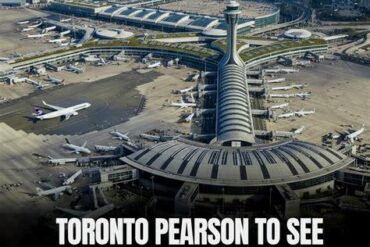
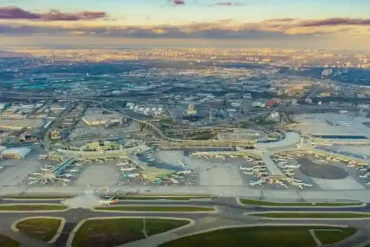
Toronto Pearson’s Runway 06R features four designated high-speed exits (D1, D3, D5, D7). Exit D1 is typically the first and most logical for aircraft landing on 06R to vacate. However, based on LiveATC audio and follow-up data, the Cessna Citation either missed D1 or paused short due to uncertainty or unfamiliarity with the airport layout.
This hesitation placed it in an unsafe position as the larger, faster 737 approached within visual proximity. Tower controllers, noting the developing conflict, issued the go-around for the WestJet flight to mitigate collision risk. The Cessna then turned and slowly taxied to exit via D4 — an unusual path suggesting the pilots may have been overwhelmed or lacked clarity in the taxi instructions provided.
Runway Safety: A Broader Aviation Concern
This is not the first close-call at a major North American airport in 2025. Just two months earlier, a Delta A330 was forced to go around at Boston Logan after a Cape Air aircraft failed to clear the runway in time, with vertical separation reportedly as low as 150 feet. Similarly, in September, a serious runway incursion occurred at LAX when an AeroLogic 777F mistakenly entered an active runway, leading to a high-speed rejected takeoff by an American Airlines A321.
These repeated near-misses point to a critical aviation safety issue: the need for enhanced situational awareness, both through pilot training and improved airport surface detection technologies. As runway layouts grow increasingly complex at hub airports, and as business jets and commercial flights intermingle in shared airspace, coordination is paramount.
What Comes Next?
While no injuries or damage occurred in this Toronto event, both NetJets and WestJet may face internal reviews. The Citation crew, especially, may be subject to remedial airport familiarization training, as suggested by standard post-incident protocol.
Transport Canada, as well as Nav Canada, may also review airfield signage, ATC procedures, and communications logs. Given Toronto Pearson’s high volume of mixed traffic — from regional jets to global long-haulers and private charters — reinforcing strict adherence to exit instructions and minimizing taxi route ambiguity will be essential.
Conclusion: Vigilance Ensures Safety
This incident underscores the delicate choreography of aviation — where timing, precision, and communication converge. A single misstep by a smaller aircraft can cascade into high-stakes decisions for commercial jetliners carrying hundreds. The WestJet crew’s timely go-around and ATC’s clear directives averted what could have been a far worse scenario. As traffic continues to rebound post-pandemic, these moments serve as a stark reminder: there is no room for complacency on the runway.