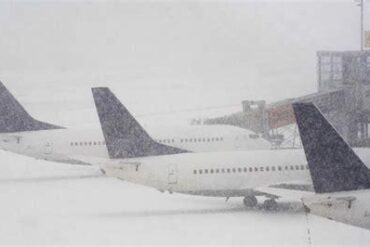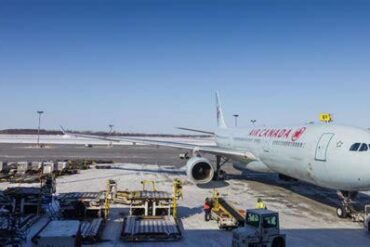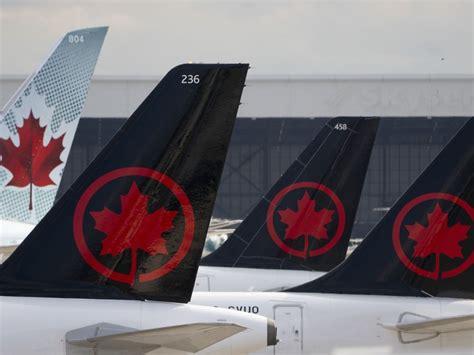
Canada’s aviation sector faced massive disruption over the weekend as severe weather conditions crippled air traffic, leaving thousands of passengers stranded and airlines scrambling to adjust schedules. A surge of thunderstorms, high winds, and heavy rainfall battered Toronto, Montreal, and Vancouver — the nation’s three busiest airports — leading to over 300 flight delays and cancellations involving both domestic and international carriers.
The turbulent weather system, which moved swiftly across multiple provinces, affected a broad spectrum of airlines including Air Canada, WestJet, Delta Air Lines, United Airlines, Lufthansa, Japan Airlines, British Airways, and Air France, as well as regional operators. Operations were paralyzed not only due to safety concerns in the air but also by the inability of ground staff to operate during lightning strikes and low visibility. The timing could not have been worse, with peak summer travel demand already straining airport logistics.
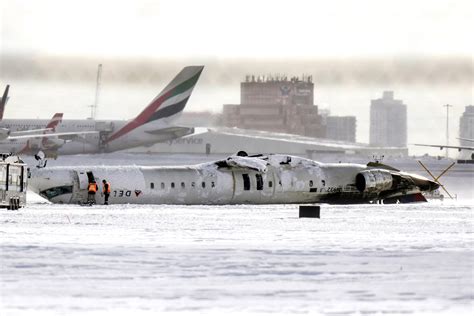
Toronto Pearson: Epicenter of the Disruption
Toronto Pearson International Airport (YYZ) bore the brunt of the operational fallout. As Canada’s primary international gateway and busiest airport, Pearson faced the highest number of disruptions, with 152 delayed flights and 13 cancellations reported in a single day. Fierce crosswinds swept across runways, making it extremely challenging for pilots to safely land or depart, forcing air traffic controllers to restrict flow and impose extended holding patterns.
Air Canada, headquartered in Montreal but heavily reliant on Pearson for international routes, saw 30 flights delayed and 2 cancelled, including services to New York, London, and Frankfurt. WestJet, Canada’s second-largest airline, reported 25 delays and 2 cancellations, while regional affiliate Jazz Aviation logged 32 delays and 3 cancellations, heavily affecting short-haul connectivity.
Smaller carriers weren’t spared. Republic Airlines, a key feeder for U.S. majors, experienced 7 delays and 4 cancellations, while Air India was forced to cancel 2 long-haul flights, leaving hundreds of passengers without alternatives. Other affected carriers included KLM, Qatar Airways, Etihad, Lufthansa, Virgin Atlantic, and EVA Air — all facing significant turnaround delays and schedule disruptions due to runway and gate bottlenecks.
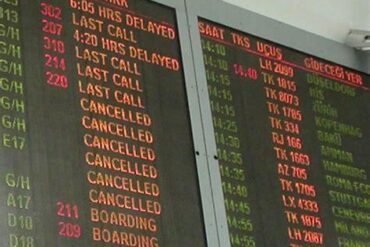
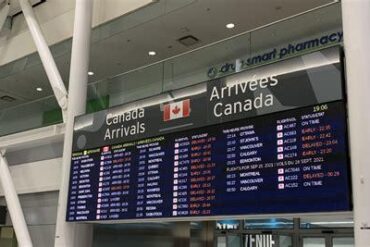
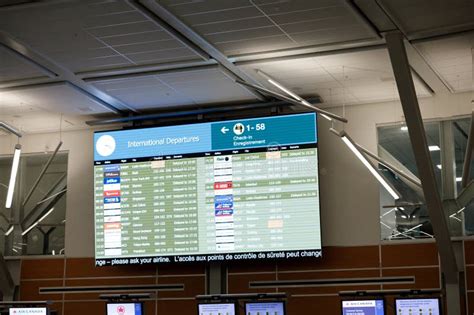
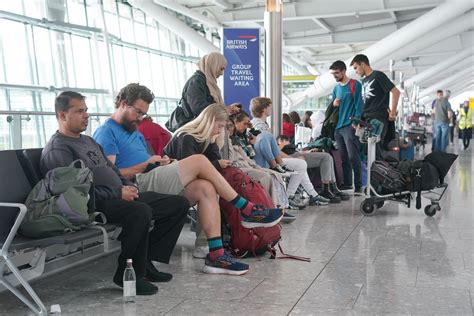
Passengers at Pearson described scenes of frustration and confusion. Long queues snaked around check-in counters, security lanes were gridlocked, and departure screens flashed wave after wave of new ETAs. With aircraft parked at gates and awaiting clearance, many incoming international flights were held in the air or diverted.
Montreal-Trudeau: Thunderstorms Force Ground Stops
Montreal-Trudeau International Airport (YUL) was another casualty of the atmospheric instability, recording 62 flight delays and 10 cancellations. Fast-moving thunderstorm cells and intense wind gusts moved across southern Quebec throughout the day, causing frequent lightning alerts that forced airport staff off the tarmac and triggered multiple ground stops.
Jazz Aviation once again saw the sharpest impact, with 11 delays and 7 cancelled flights, hampering intra-Quebec and Eastern Canada travel. Air Canada’s operations in Montreal were also affected, with 18 delayed flights and 1 cancellation. Porter Airlines, which relies on Montreal-Trudeau for Eastern seaboard access, logged 3 delays and 2 cancellations.
International operations at Montreal were no less affected. Flag carriers such as British Airways, Royal Air Maroc, Tunis Air, and Air France faced difficulty adhering to scheduled departure slots due to both outbound and inbound constraints. Lightning protocols meant even boarding and baggage handling operations had to be suspended periodically.
For smaller carriers servicing remote communities — such as Air Creebec, Canadian North, and Envoy Air — delays meant isolation for passengers in northern and Indigenous regions, where reliable air connectivity is crucial.

Vancouver: Persistent Rain Hampers Operations
Out west, Vancouver International Airport (YVR) escaped the thunder and lightning but was no less impacted by the heavy, relentless rain and low cloud cover. Poor visibility and waterlogged tarmacs resulted in 74 delayed flights and 2 cancellations as ground operations slowed to a crawl.
Air Canada topped the list with 17 delayed flights, followed by WestJet and WestJet Encore with over a dozen combined delays. Jazz Aviation was again affected, logging 7 delays and 1 cancellation, while Air India scrubbed a major departure to Asia.
Global airlines also struggled to adapt. Japan Airlines, Philippine Airlines, ZIPAIR, Korean Air, and China Airlines all faced varying degrees of delay. Some wide-body aircraft remained at gates hours past scheduled departure times due to delayed fueling, crew timeouts, or clearance from air traffic control.
Even low-cost and regional carriers such as Flair Airlines, Pacific Coastal, and Cargojet were snarled in the disruption. With reduced throughput on runways, even routine short-haul flights turned into logistical challenges. The worsening visibility made taxiing and gate reassignments a puzzle, especially during the evening peak when multiple international flights were converging.
Cross-Border Ripple Effect Impacts U.S. Routes
The impact of Canada’s weather chaos didn’t stop at the border. Major U.S.-bound routes from Canadian hubs were severely affected, adding to the pain for both travelers and airlines. At Pearson alone, 45 delayed flights and 7 cancellations were connected to U.S. routes.
Airlines like American Airlines, JetBlue, Delta, and United were forced to adjust departure windows or even cancel flights entirely. The Federal Aviation Administration (FAA) issued temporary flow control measures at key U.S. hubs like Chicago O’Hare, JFK, Boston Logan, and San Francisco International, reducing arrival rates for Canadian-origin flights.
Montreal saw 16 cross-border delays, while Vancouver logged 26. As a result, international connections became even more precarious. Some passengers were left in limbo after missing connecting flights abroad — creating bottlenecks at customs zones, especially in Toronto and Montreal where U.S. preclearance operations added another layer of complexity.
Global Airlines Tangle with Weather-Driven Delays
Long-haul international carriers found themselves at the mercy of Canada’s volatile skies. Flagships such as Lufthansa, British Airways, and Air France faced cascading disruptions as aircraft missed tightly scheduled turnaround slots. With many of these carriers operating multiple stops across continents, a single delay in Toronto or Montreal could ripple across routes to Europe, Asia, and the Middle East.
Japan Airlines, Korean Air, EVA Air, Etihad Airways, Qatar Airways, Philippine Airlines, and others had to make operational decisions on the fly — ranging from gate changes to rescheduling flight crews. ZIPAIR, which recently increased its footprint in Canada, saw some of its late-evening departures pushed into the next operational day.
The logistical strain was compounded by airport congestion. Gate availability became a premium resource, especially in Toronto and Montreal, where arriving aircraft had to wait for a clear jet bridge or reroute to remote parking stands.
Airports and Airlines Mobilize Emergency Protocols
Facing widespread passenger disruption and operational disarray, Canadian airports initiated emergency protocols. Staff were redeployed to manage terminal congestion, digital signage displayed real-time updates, and airline communication teams issued push alerts and SMS messages to affected passengers.
Fee waivers were activated across the board, allowing flexible rebooking and same-day changes without penalty. Airlines such as Air Canada and WestJet also opened customer service hotlines 24/7 and increased front-line support staff in terminals.
Airport authorities encouraged travelers to:
- Arrive earlier than usual, especially for international departures
- Download airline and airport apps for live updates
- Bring snacks, water, and essential medications in carry-on baggage
- Maintain flexibility as weather conditions continue to evolve
Despite the proactive response, delays in customer service and longer lines at help desks led to frustration, with social media channels flooded by complaints, especially from families traveling with children and elderly passengers.
Uncertain Weather Outlook Could Prolong Chaos
Meteorological forecasts for the coming days suggest that weather volatility is far from over. Systemic pressure changes and jet stream instability could bring additional thunderstorms and wind shear events, particularly over Southern Ontario and parts of British Columbia.
This poses an ongoing risk for further delays and cancellations, especially as summer traffic builds and airline load factors climb. Airport officials are urging carriers to implement buffer periods between turnarounds and prepare alternate contingency plans for rerouting or aircraft repositioning.
As Canada’s aviation infrastructure continues to evolve under pressure, this latest episode serves as a powerful reminder of how quickly weather can unravel even the most sophisticated air travel systems — especially during periods of maximum capacity.
Total Flights Affected: Over 300
Major Airports: Toronto Pearson (YYZ), Montreal-Trudeau (YUL), Vancouver (YVR)
Primary Causes: High Winds, Thunderstorms, Heavy Rain, Low Visibility
Key Airlines Impacted: Air Canada, WestJet, Delta, United, Lufthansa, British Airways, Air France, Japan Airlines, and more
With forecasts remaining unstable, passengers are advised to remain vigilant, monitor flight status continuously, and consider travel insurance when booking critical trips during the peak travel months.