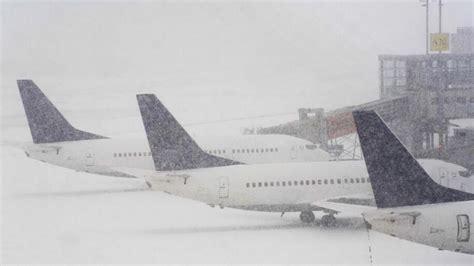
The latest severe winter storm to sweep across Canada has brought widespread disruption to transatlantic travel, grounding aircraft and stranding thousands of passengers as airports in Toronto, Vancouver, and Montreal struggled to maintain operations. Airlines from Germany, the UK, France, the Netherlands, Switzerland, Turkey, and beyond faced significant delays and cancellations, with ripple effects cascading through global flight networks.
The weather event, marked by freezing rain, strong winds, and low visibility, crippled Canada’s major airports just as peak summer travel season approached, leaving international connections between Canada and Europe severely impacted.
European Airlines Bear the Brunt at Toronto Pearson International Airport
Toronto Pearson International Airport (YYZ), Canada’s busiest aviation hub, quickly became a focal point of the disruption. The airport logged 283 flight delays and 36 cancellations, as the severe conditions made it nearly impossible for ground crews to de-ice aircraft or maintain timely gate operations.
Notably, Lufthansa, one of Europe’s largest carriers, saw a staggering 75% delay rate on its flights, with routes to Frankfurt and other major German cities experiencing hours-long holds. British Airways, Virgin Atlantic, and Air France all reported multiple delays, as their European-bound services struggled to adhere to schedules.
Flights to Amsterdam and Zurich, operated by KLM Royal Dutch Airlines and Swiss International Air Lines respectively, also faced significant setbacks. Aircraft were forced into holding patterns or delayed altogether, as runway and taxi conditions deteriorated.
Vancouver International Airport Faces High Winds and Ground Delays
Out on Canada’s west coast, Vancouver International Airport (YVR) was similarly overwhelmed, reporting 277 flight delays and 23 cancellations. European carriers were again disproportionately affected.
British Airways, operating direct flights to London Heathrow, experienced a 62% delay rate, while Condor Airlines and Edelweiss Air AG, both serving German and Swiss markets, reported near-complete disruption to their schedules.
Turkish Airlines, known for its long-haul operations from Istanbul, was unable to maintain its timetable, with high winds, icy runways, and disrupted departure slots causing extensive delays.

The storm’s intensity in Vancouver created a domino effect across the European network, with inbound and outbound services facing hours of uncertainty.
Montreal-Trudeau International Airport Struggles Under Snow Squalls
The impact was no less severe at Montreal-Trudeau International Airport (YUL), which experienced 186 delays and 20 cancellations. With snow squalls reducing visibility and complicating ground handling, flights to Europe suffered significant delays.
Air France, Lufthansa, Swiss, and KLM flights faced sluggish turnarounds, while passengers aboard Virgin Atlantic’s London service endured long queues, last-minute gate changes, and limited rebooking availability.
Smaller carriers, including Condor, Edelweiss, and regional Mediterranean operators such as Tunis Air, Royal Air Maroc, and Air Algerie, also reported delays, underscoring the breadth of the disruption across both traditional and Euro-Mediterranean routes.
Full Scope of European Airline Disruptions Across Canada
In total, over 1,100 flight disruptions were reported across Toronto, Vancouver, and Montreal, with European airlines among the hardest hit. Affected carriers included:
- Turkish Airlines – 1 delayed flight
- Lufthansa – 3 delayed flights (75% delay rate)
- British Airways – 5 delayed flights (62% delay rate in Vancouver)
- Air France – 3 delayed flights
- KLM Royal Dutch Airlines – 2 delayed flights
- Swiss International Air Lines – 1 delayed flight
- Condor – 3 delayed flights across Toronto and Vancouver
- Edelweiss Air AG – 2 delayed flights (100% delay rate)
- Virgin Atlantic – 1 delayed flight
- Tunis Air – 2 delayed flights
- Royal Air Maroc – 2 delayed flights
- Air Algerie – 3 delayed flights
While no outright cancellations of transatlantic flights were reported for these airlines, the scale of delays placed considerable strain on schedules, particularly for long-haul routes where recovery windows are limited.
Meteorological Conditions: Why Canada’s Storm Disrupted Europe’s Skies
The weather system that swept through central and eastern Canada was characterized by a dangerous cocktail of freezing rain, gusting winds exceeding 60 km/h, and patches of icy fog, making conditions hazardous not only for takeoffs and landings but also for taxiing and de-icing operations.
Runways at Pearson, Vancouver, and Montreal became temporarily unusable, forcing aircraft into holding patterns and ground delays. For European carriers, heavily reliant on tight transatlantic schedules, these interruptions created a cascading wave of knock-on delays across their global networks.
Aircraft operating in and out of Canadian airports faced missed slots, forced diversions, and extended ground times, all of which placed immense logistical pressure on airlines already navigating summer capacity constraints.

Stranded Passengers Face Lengthy Waits and Limited Rebooking Options
For passengers, the impact was immediate and frustrating. Reports from Toronto and Montreal detailed scenes of crowded terminals, exhausted travelers, and hours-long waits for customer assistance.
Travelers with Lufthansa, British Airways, and Air France described being stuck onboard aircraft for extended periods, only to disembark and face long queues at rebooking counters. Some were provided with meal vouchers or hotel accommodations, but many struggled to secure new itineraries as availability evaporated.
Airport apps, airline kiosks, and call centers were inundated, leaving many without clear answers or timely updates. Social media channels lit up with complaints, with travelers venting frustrations over communication gaps and delays.
Outlook: How Long Will It Take to Normalize Operations?
Although meteorological forecasts predict clearing skies over the next 48 to 72 hours, aviation experts warn that the operational recovery could take up to a week, particularly for long-haul flights requiring precise crew rotations and aircraft repositioning.
European airlines are now working closely with Canadian airport authorities to manage aircraft backlogs, avoid crew timeouts, and gradually restore regular schedules. However, passengers traveling to or from Europe via Canadian hubs should expect ongoing disruptions.
Travel advisories recommend:
- Checking airline apps and websites frequently for real-time updates
- Arriving at airports early to accommodate long security and rebooking queues
- Monitoring connecting flights, especially for transatlantic itineraries
- Staying informed about evolving weather conditions in both Canada and Europe
Conclusion: Canada’s Weather Sends Shockwaves Across European Travel
The recent Canadian storm once again highlights the global interconnectedness of the aviation industry, where weather thousands of miles away can ripple across continents. With over 1,100 flights disrupted and European carriers scrambling to stabilize operations, the storm’s effects have underscored the vulnerability of international air travel to extreme weather events.
As Canada recovers from this latest meteorological blow, airlines and passengers alike are bracing for days of logistical challenges, rebookings, and delayed journeys across the Atlantic. The travel chaos serves as a stark reminder that even in the modern aviation era, nature can ground the world’s most advanced aircraft—and strand thousands—in a matter of hours.