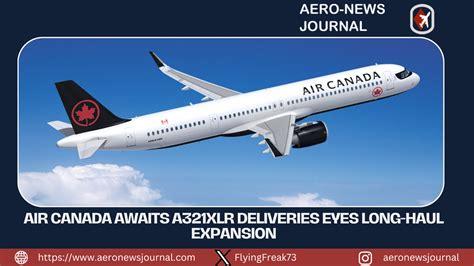
Air Canada’s imminent arrival of the Airbus A321XLR is quietly reshaping the airline’s long-haul strategy, and two transatlantic routes now stand out as particularly well-suited for the aircraft’s strengths. With first delivery expected in the coming months and the first revenue flight scheduled for early May, the carrier is preparing to deploy the XLR on Toronto–Manchester and Toronto–Copenhagen, signaling a decisive shift toward lower-risk, high-flexibility long-haul flying.
This move is not happening in isolation. Across the industry, airlines are increasingly leaning on long-range narrowbodies to unlock thinner routes, stabilize winter schedules, and preserve premium yields without the cost exposure of widebody aircraft. Air Canada’s choices reflect this broader recalibration—and reveal a carefully edited network plan rather than a tentative experiment.
The A321XLR’s appeal lies in its blend of range, economics, and right-sized capacity. With 182 seats in Air Canada configuration, it sits in a sweet spot: large enough to sustain premium demand, yet small enough to maintain profitability when seasonal demand softens. On routes where widebodies struggle outside peak months, the XLR becomes an enabling aircraft rather than a compromise.
Why the A321XLR Changes the Toronto–Manchester Equation
Air Canada’s relationship with Manchester has historically been seasonal, reflecting demand volatility and competitive pressures. Cirium Diio data shows no evidence of a sustained year-round operation in the past two decades, with the last consistent winter service likely dating back to the 1990s. That pattern is about to change.
From October 25, aligning with the IATA winter slot season, Air Canada will introduce the A321XLR on Toronto–Manchester, converting the route into a year-round service for the first time in modern history. Flights will operate four times weekly, complementing Air Transat’s existing year-round presence and reinforcing Toronto’s connectivity to northwest England.
The timing is notable. Aer Lingus recently confirmed the closure of its Manchester base, subtly altering competitive dynamics at the airport. While Aer Lingus does not serve Canada, its exit reduces transatlantic seat supply and heightens the strategic value of efficient, right-sized aircraft. The A321XLR allows Air Canada to step into that gap without exposing itself to widebody-level risk.
In the peak summer season, Air Canada will still rely on Boeing 787-8 and 787-9 aircraft, operating up to three times weekly. Winter, however, is where the XLR earns its keep. With lower trip costs, fewer seats to fill, and strong cargo capability for its size, the aircraft transforms Manchester from a seasonal gamble into a stable, repeatable market.
Toronto–Copenhagen: A Strategic Downgauge With Alliance Implications
Copenhagen presents a different, more nuanced case. The route has traditionally supported widebody operations during peak periods, but year-round sustainability has proven elusive. Beginning October 27, Air Canada will switch Toronto–Copenhagen to the A321XLR for the winter season, operating three times weekly on Tuesdays, Thursdays, and Saturdays.
This decision coincides with SAS’s departure from Star Alliance to SkyTeam, a shift that subtly alters traffic flows and alliance-driven feed. Despite the alliance change, SAS continues to serve Toronto using its 157-seat A321LR, a high-premium, low-capacity configuration that underscores how well narrowbodies perform on this sector length.
Air Canada’s response is pragmatic rather than defensive. The XLR allows the airline to maintain a presence in Copenhagen without oversupplying the market, while preserving flexibility to reintroduce widebodies when conditions warrant. During the upcoming summer peak, the route will still see 787-8, 787-9, and A330-300 aircraft, operating up to five times weekly. The narrowbody shift is therefore a seasonal optimization, not a retreat.
Operationally, pairing Manchester and Copenhagen is elegant. The schedules allow one aircraft to cover both routes efficiently, maximizing utilization while minimizing fleet complexity. That kind of network choreography is exactly what the A321XLR was designed to enable.
A Growing XLR Footprint in Toronto and Beyond
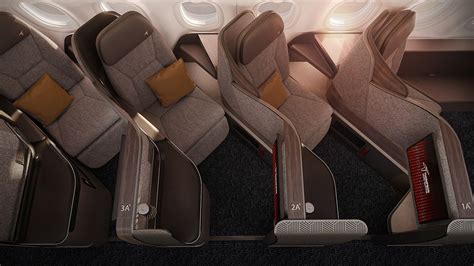
With Manchester and Copenhagen added, Air Canada now plans three A321XLR routes from Toronto, alongside a temporary deployment to London Heathrow announced earlier this year. The Heathrow service is particularly revealing, as the airline has long explored the idea of reinstating a daytime flight. The XLR’s economics make that ambition suddenly viable, even at one of the world’s most slot-constrained airports.
Toronto is only part of the picture. From Montreal, Air Canada has already mapped out nine XLR routes, including Berlin, Dublin, Edinburgh, Porto, and Toulouse. The aircraft’s first long-haul mission will launch on May 15, flying to Dublin and Toulouse, marking a milestone in the airline’s narrowbody evolution.
Taken together, these deployments illustrate a clear philosophy. The A321XLR is not a niche tool or a stopgap. It is becoming a core long-haul asset, used to stabilize secondary markets, extend seasonal routes into year-round operations, and fine-tune capacity with surgical precision.
In an era where demand patterns are less predictable and cost discipline matters more than ever, Air Canada’s selective use of the A321XLR on Toronto–Manchester and Toronto–Copenhagen looks less like a temptation—and more like an inevitability.