Few aircraft in the world command the mystique, power, and political symbolism of Air Force One. Though most civilians recognize the name as the plane that carries the President of the United States, fewer understand its full capabilities—or its limitations. One of the most common questions asked is deceptively simple: What is the top speed of Air Force One? The answer uncovers not just numbers, but the complex balance between power, prestige, and presidential safety.
The Truth About Air Force One’s Maximum Speed
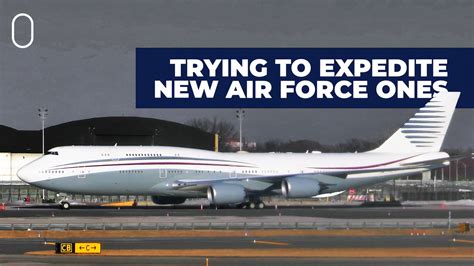
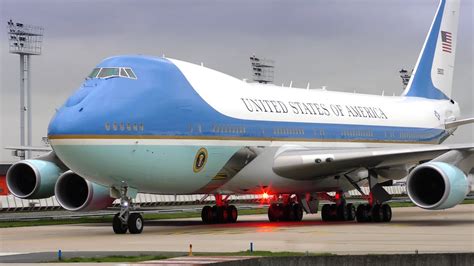
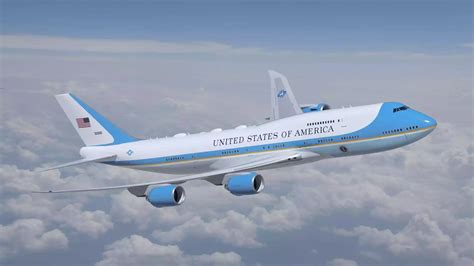
Despite its commanding name and intimidating presence, Air Force One is not the fastest aircraft in the sky. The current iteration of the aircraft is technically the VC-25A, a heavily customized military version of the Boeing 747-200B. It operates under tail numbers 28000 and 29000, and when the U.S. President is on board, the aircraft adopts the call sign “Air Force One.”
According to the U.S. Air Force, the VC-25A is capable of reaching a top speed of Mach 0.92, which translates to approximately 630 mph (1,014 km/h) at cruising altitude. That’s fast—but it pales in comparison to both modern commercial jets and military aircraft.
How Air Force One Compares to Modern Commercial Jets
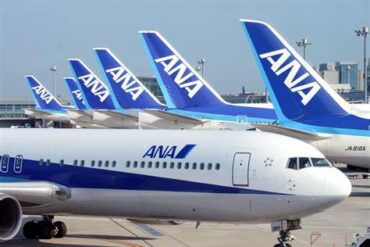
It might come as a surprise to many that several commercial airliners are actually faster than Air Force One. Boeing, the manufacturer behind the VC-25A, also produces some of the world’s most advanced commercial jets:
- Boeing 747-400: Up to 614 mph
- Boeing 777: Up to 644 mph
- Boeing 787 Dreamliner: Around 646 mph
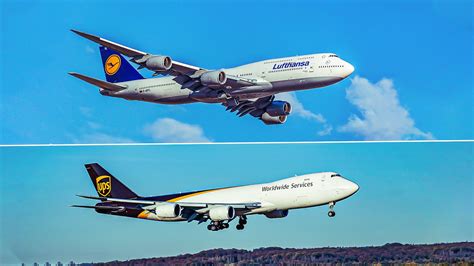
- Boeing 747-8i: Up to 706 mph, the fastest in the company’s fleet
All of these outpace the presidential aircraft in raw speed. In terms of high-altitude performance and commercial efficiency, they demonstrate how technological advancements in civilian aviation have quietly overtaken the VC-25A in recent decades.
Speed vs. Security: A Strategic Design Tradeoff
The reason Air Force One lags behind isn’t due to a lack of engineering prowess. It’s a result of strategic prioritization. The VC-25A is not designed to outpace enemy jets or commercial liners—it’s engineered to survive and function in nearly any imaginable emergency.
The aircraft features an arsenal of classified defense systems, including:
- Electronic countermeasures to jam enemy radar
- Flares and chaff to confuse heat-seeking missiles
- Nuclear event shielding, protecting internal electronics and communications from EMPs
- Secure satellite communication systems, turning it into a flying command center
- Air-to-air refueling capabilities, enabling the plane to stay airborne for up to 20 hours or more
There’s also an on-board medical suite with operating tables and life-support equipment, as well as living quarters, meeting rooms, and communications offices. Every feature is aimed at continuity of government operations, not breaking speed records.
Fighter Jets vs. Air Force One: The Need for Escorts
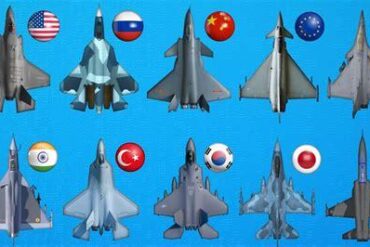
If you’re wondering how Air Force One would fare in the event of an aerial threat, consider this: some military aircraft are so fast that they could circle the presidential plane multiple times before it reaches cruising speed.
For instance:
- Mikoyan-Gurevich MiG-25 Foxbat: Up to 2,170 mph (Mach 2.83)
- Mikoyan MiG-31 Foxhound: Around 2,171 mph, at high altitude
Clearly, the VC-25A wouldn’t stand a chance in a speed-based evasion scenario. That’s why Air Force One usually travels with military escort jets, particularly during sensitive missions or visits to high-threat areas. These escorts, often F-15 Eagles or F-22 Raptors, provide the rapid-response defense capability that the larger, slower aircraft cannot.
A Legacy of Symbolism and Secrecy
While the aircraft’s speed is a technical detail, the symbolic role of Air Force One extends far beyond its performance metrics. Since President John F. Kennedy’s tenure, the aircraft has stood as an airborne extension of the U.S. presidency. It’s often the first visual signal that American power has arrived—whether on humanitarian missions, peace talks, or during conflicts.
Before the current VC-25As took flight in the 1990s under President George H.W. Bush, earlier presidential aircraft such as the VC-137C (SAM 26000) were used. That aircraft was present for key moments in U.S. history, including transporting President Kennedy’s body after his assassination and hosting the swearing-in of Lyndon B. Johnson onboard.
The aircraft’s interior configuration remains largely classified, though a few public details have surfaced over the years. The layout is said to include:
- Conference room and situation room
- Presidential suite with a fold-out bed
- Press area for accompanying journalists
- Kitchen galleys capable of preparing meals for 100 people
Its self-sufficiency in the air reinforces its importance during crises when ground infrastructure might be compromised.
Modernization: The Future VC-25B Is Coming
Recognizing that the current VC-25As are more than 30 years old, the U.S. Air Force has commissioned a next-generation replacement, known as the VC-25B. This updated version is based on the Boeing 747-8i, the same platform that holds the current speed record among commercial jets.
Expected features include:
- Advanced avionics and communication systems
- More efficient engines with reduced fuel consumption
- Improved defense systems and EMP protection
- Modernized presidential accommodations
Although the VC-25B may not drastically surpass the 706 mph threshold, it will benefit from new materials, digital architecture, and streamlined maintenance. More importantly, it will ensure that the symbolic and functional role of Air Force One continues well into the 21st century.
Pop Culture and Public Perception
The mystique of Air Force One isn’t just rooted in geopolitics—it also holds a prominent place in global pop culture. Whether in films like Air Force One starring Harrison Ford, or referenced in video games like GTA 5, the aircraft has become an icon. The term even lent its name to Nike’s Air Force 1 sneakers, which debuted in 1982 and remain a fashion staple.
This cultural saturation underscores the aircraft’s unparalleled brand recognition. Very few other military tools or transport vehicles enjoy the same global cachet.
A Symbol of Power, Not a Speed Demon
Ultimately, while Air Force One may not top speed charts, its real strength lies in what it represents. It’s a flying fortress, a mobile White House, and a beacon of American influence. The fact that it cannot outrun a MiG-25 is not a flaw—it’s a tradeoff for the ability to govern, survive, and communicate from the skies, even in the face of nuclear war.
In a world where optics, symbolism, and national security converge, Air Force One is far more than an airplane. It’s a testament to how function, design, and diplomacy take flight—at 630 mph.