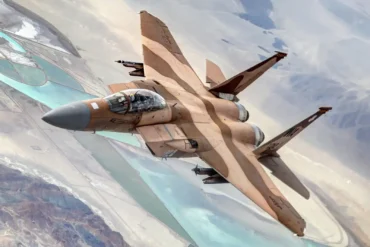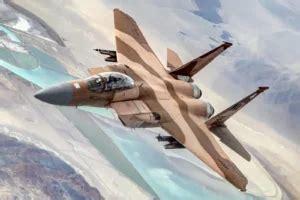
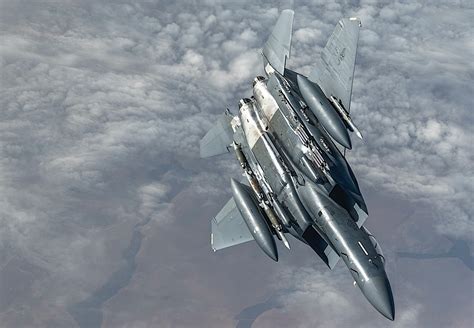
The F-15 Eagle isn’t just another fighter jet. It is the embodiment of American air superiority, engineered with such ruthless precision and overwhelming firepower that even decades after its debut, few aircraft can stand against it. Born in the Cold War era as a direct answer to increasingly advanced Soviet jets, the F-15 was created with a single objective: absolute dominance in aerial combat.
Its legacy is built on decisive victories, unmatched kill ratios, and revolutionary aerodynamics that redefined what air superiority means. This aircraft was never designed to be second best — and in the air, it never was.
The moment the Eagle took flight, it changed the balance of power in the skies. And here’s why everyone, from seasoned fighter pilots to military planners around the world, fears the F-15 Eagle.
Supersonic Muscle: The Power That Bends Physics
The F-15 is not just fast — it is terrifyingly fast. With twin Pratt & Whitney F100 afterburning turbofan engines, it generates a combined 48,000 pounds of thrust. This monstrous output allows the jet to break the sound barrier vertically, a feat few aircraft in history can replicate.
At top speeds exceeding Mach 2.5, the Eagle remains one of the fastest fighter aircraft the U.S. has ever produced. The engines are assisted by computer-controlled variable-geometry air intakes, adjusting airflow for peak efficiency and thrust across every flight condition. Whether low-altitude dogfights or high-altitude intercepts, the F-15 remains lethal.
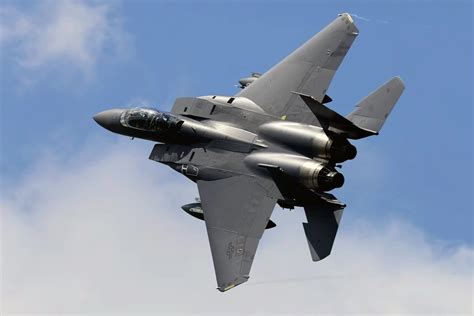
Such thrust-to-weight superiority isn’t just about raw speed. It’s what grants the F-15 its greatest tactical edge: the ability to dictate the terms of any engagement. It can chase, disengage, or reposition faster than almost any opponent.
Flight Beyond Limits: Aerodynamic Mastery and Maneuverability
Speed alone doesn’t win air battles. Maneuverability does. Unlike earlier jets like the F-4 Phantom, which sacrificed turning capability for speed, the F-15 embraced a revolutionary low wing-loading design. The broad wings and aerodynamic profile meant this bird could turn sharper, climb faster, and evade better.
Its agility is further enhanced by a high thrust-to-weight ratio, giving it superior energy retention during intense maneuvers. The F-15’s frame was forged for dynamic aerial combat. A dogfight wasn’t a weakness — it was a domain the Eagle dominated.
Eyes in the Sky: Superior Avionics and Situational Awareness
Victory in modern air warfare depends on who sees whom first — and the F-15 ensured it always had the advantage. Engineers designed its cockpit high in the fuselage, giving pilots a commanding 360-degree view. Add to that a bubble canopy free of canopy bow obstructions, and the F-15 pilot could visually track threats like no other.
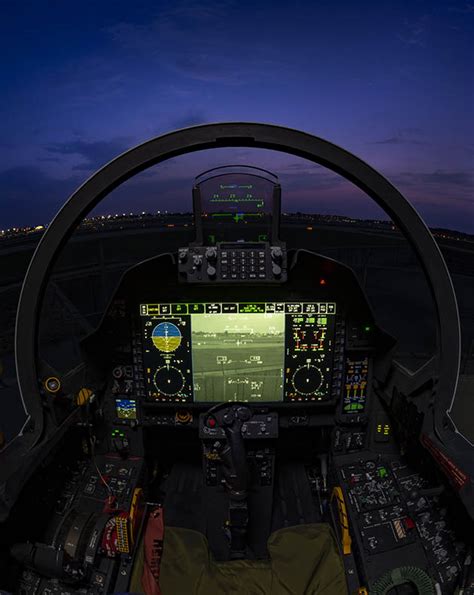
But visual range was just the beginning. The Eagle featured a digital heads-up display (HUD) synced with a sophisticated radar and avionics suite, allowing pilots to lock onto targets without ever looking down. Information was fed directly into the pilot’s field of vision, allowing reaction times measured in milliseconds.
This perfect fusion of man and machine meant pilots were always a step ahead — and that’s often all it takes to win a fight.
Armed to the Teeth: An Arsenal for Every Battle
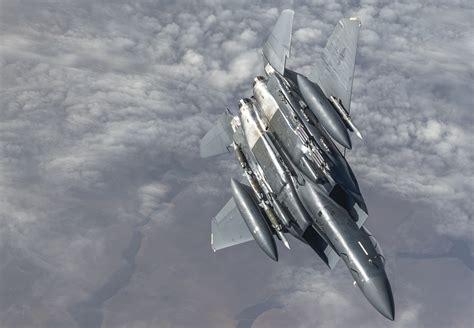
The F-15 Eagle carries an intimidating array of weapons. Its primary loadout consists of up to eight air-to-air missiles, including:
- AIM-7 Sparrow — medium-range radar-guided
- AIM-9 Sidewinder — short-range infrared-guided
- AIM-120 AMRAAM — active radar-guided, used in later variants
Mounted under the wings and fuselage, this missile armament allowed the F-15 to engage multiple targets at various ranges simultaneously.
When the dogfight gets personal, the F-15 switches to a 20mm M61 Vulcan Gatling gun, capable of firing 6,000 rounds per minute. This cannon delivers devastating firepower, enough to shred enemy aircraft in seconds.
The weapons systems are controlled through integrated radar fire control, enabling beyond-visual-range kills while still maintaining close-in lethality.
Unmatched Combat Record: Why Pilots Trust the Eagle
The F-15 doesn’t just look threatening — its combat record is legendary. It boasts an astonishing kill ratio of over 100:0 in air-to-air engagements. Not a single F-15 has ever been lost to enemy aircraft in aerial combat.
From its first deployment in the late 1970s through the Gulf War and beyond, the F-15 has consistently outperformed expectations. In Operation Desert Storm, F-15s were responsible for the majority of coalition air-to-air kills. Israeli Air Force pilots flying F-15s racked up dozens of kills without a loss, solidifying its reputation as a dogfighting godsend.
Built for War: Engineering Survivability Into Every Inch
The F-15 wasn’t just designed to kill — it was built to survive.
Engineers implemented triple-redundant hydraulic systems, ensuring control even if two systems failed. Flight controls were engineered with low-vulnerability components, protecting against shrapnel and system loss. Its airframe is reinforced with titanium and composite materials, giving it superior structural integrity under stress.
Even in worst-case scenarios, the jet is designed to bring pilots home. And in the world of fighter jets, coming home is everything.
Evolution and Legacy: Variants That Keep Dominating
The original F-15 was just the beginning. Over the decades, it evolved into several advanced versions:
- F-15C/D: The definitive air-superiority variants with upgraded avionics.
- F-15E Strike Eagle: A multi-role variant capable of carrying heavy ground-attack payloads.
- F-15EX Eagle II: The latest generation, boasting advanced radar, avionics, and digital backbone systems ready for modern warfare.
Despite the rise of stealth jets like the F-22 and F-35, the F-15 continues to hold a vital role in U.S. and allied air forces. Its speed, payload, and reliability give it advantages even in the 21st-century battlespace.
Fear Is Earned: The Psychological Edge of the F-15
Fighter jets aren’t just machines — they’re symbols. The F-15 represents undeniable superiority. It intimidates adversaries before missiles even leave the rails. Enemy pilots know that engaging an Eagle means facing a machine with a flawless legacy and a pilot who knows it.
The presence of an F-15 in the theater is often enough to force enemy aircraft to avoid engagement altogether, denying them operational space. It has become more than a tool of war — it is a psychological weapon, feared across generations of combat pilots.
Conclusion: The Legacy That Still Dominates the Skies
The F-15 Eagle isn’t just feared because of its technology. It’s feared because it delivers results. With over 40 years of operational excellence, unmatched kill ratios, blistering speed, precision avionics, and combat adaptability, it redefined what air superiority meant.
Even in an age of stealth and drones, the F-15 continues to fly — and continues to terrify.
To fear the F-15 is not irrational. It’s a calculated respect for a weapon that has proven again and again: when it comes to air dominance, the Eagle still rules the sky.