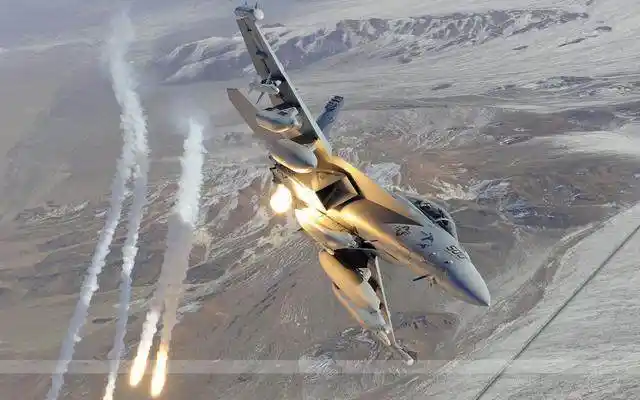
The McDonnell Douglas F/A-18 Hornet, a twin-engine, multirole combat aircraft, has earned a formidable reputation in air-to-air combat, particularly in dogfighting scenarios. Originally developed from the YF-17 Cobra, which lost to the F-16 Fighting Falcon in the U.S. Air Force’s Lightweight Fighter competition, the F/A-18 found new life in the U.S. Navy as a carrier-capable fighter. While often compared to the F-16, the F/A-18 has carved its niche in naval aviation, excelling in low-speed maneuverability and high-angle-of-attack engagements.
Evolution of the F/A-18 Hornet
The YF-17 may have lost the U.S. Air Force competition, but its design principles proved highly attractive to the U.S. Navy. The Navy required a carrier-based fighter capable of both air superiority and strike missions, and the YF-17’s design was adapted into what became the F/A-18 Hornet. Unlike its competitor, the F-16, the F/A-18 featured a twin-engine configuration, essential for naval operations where reliability and redundancy were critical.
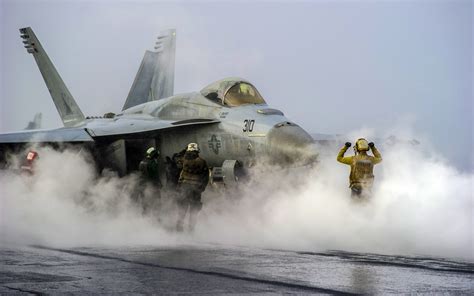
Despite its twin engines, the F/A-18 Hornet has often been criticized for its thrust-to-weight ratio, which is inferior to that of the F-16. This limitation impacts both acceleration and top speed, especially when carrying external ordnance. However, the Hornet’s superior aerodynamic design offsets this drawback in close-quarters combat, where raw speed is less critical than maneuverability and control at high angles of attack (AOA).
Dogfight Performance: Strengths and Weaknesses
Thrust-to-Weight Ratio & Speed Limitations
One of the biggest drawbacks of the F/A-18 Hornet in a dogfight is its relatively lower acceleration and top-end speed compared to aircraft like the F-16 Fighting Falcon or MiG-29. When heavily loaded with external stores, the Hornet struggles to reach supersonic speeds, unlike the F-16, which maintains better performance under similar conditions. This means in high-speed engagements, an F/A-18 pilot must rely more on tactical positioning rather than brute speed.
High Angle of Attack (AOA) Capability
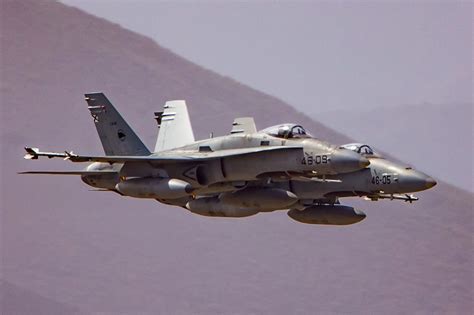
What sets the F/A-18 apart in a dogfight is its superior high-AOA performance. The aircraft’s design allows for controlled flight at extreme angles of attack, reaching up to 65 degrees AOA. This capability enables pilots to execute maneuvers like the Cobra even with external ordnance attached, a feat few other aircraft can match.
In close-quarters engagements, where speeds are reduced and maneuverability is key, the F/A-18 thrives. Its ability to maintain control in high-alpha scenarios allows pilots to point the nose at an enemy fighter even when moving at low speeds. This capability is crucial for gun kills and short-range missile launches, making the F/A-18 an elite dogfighter in a turning fight.
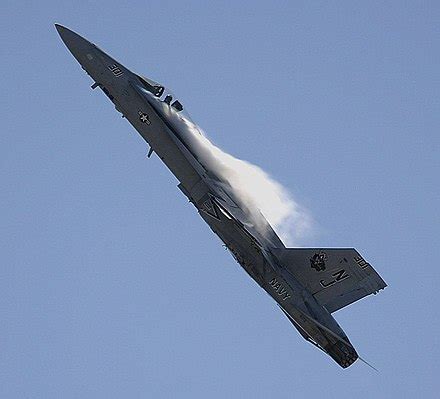
Carrier Landing & Low-Speed Handling
Another key advantage of the F/A-18’s aerodynamic design is its low-speed control, a necessity for carrier-based operations. Unlike land-based fighters that can afford to prioritize speed and range, naval aircraft must be optimized for short takeoff and carrier landings. The Hornet’s leading-edge extensions (LEX) and small wing sweep angle improve lift and control at low speeds, making it one of the most forgiving aircraft to land on an aircraft carrier.
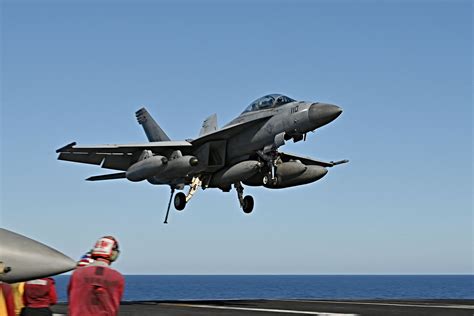
Tactical Considerations in F-18 Dogfights
Avoiding High-Speed Engagements
Given its thrust limitations, F/A-18 pilots typically avoid high-speed, high-energy fights against aircraft like the F-15 or Su-27. Instead, they seek to force engagements into the low-speed regime, where the Hornet’s maneuverability gives it a distinct edge. Tactics such as rolling scissors, flat turns, and vertical spirals play to the F/A-18’s strengths.
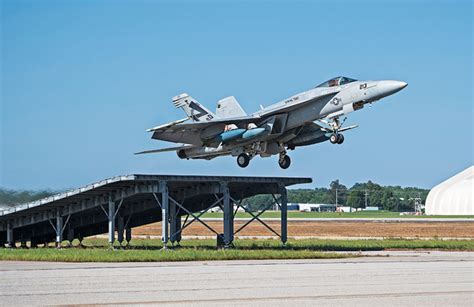
Exploiting Super Maneuverability
Many adversary aircraft struggle at extreme angles of attack, leading to departure from controlled flight or stall conditions. The F/A-18, however, maintains full control at these angles, allowing pilots to exploit opponent mistakes in close-in dogfights. This is why many aggressor squadrons use the F/A-18 to train against fourth and fifth-generation fighters.
Weapons Employment
The F/A-18 Hornet is armed with a 20mm M61 Vulcan cannon, along with a variety of air-to-air missiles, including the AIM-9 Sidewinder and AIM-120 AMRAAM. In a dogfight, the Sidewinder is the primary short-range missile, capable of engaging enemy fighters at off-boresight angles, further complementing the Hornet’s high-AOA capabilities.
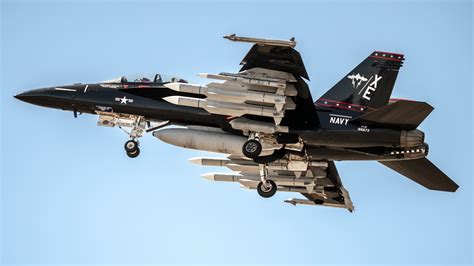
Conclusion
While the F/A-18 Hornet may not match the raw speed or climb rate of some adversaries, its low-speed maneuverability, high-AOA control, and naval adaptability make it one of the most formidable dogfighters in modern air combat. Pilots trained in leveraging the Hornet’s strengths can decisively outmaneuver opponents in close-range engagements, proving that superiority in the air isn’t just about speed, but also about precision and control.
FAQ
How does the F/A-18 compare to the F-16 in a dogfight?
The F/A-18 excels in low-speed, high-angle-of-attack engagements, whereas the F-16 has superior thrust-to-weight ratio and acceleration. In sustained turning fights, the F/A-18 can hold its own, but in high-speed engagements, the F-16 has the edge.
Can the F/A-18 perform the Cobra maneuver?
Yes, the F/A-18 Hornet is capable of executing the Cobra maneuver, even with external ordnance. Its high-AOA stability allows for controlled nose pointing, a critical advantage in dogfighting.
Why does the U.S. Navy prefer the F/A-18 over the F-16?
The U.S. Navy requires twin-engine reliability, carrier compatibility, and superior low-speed handling, all of which the F/A-18 Hornet provides. The F-16, while an excellent land-based fighter, lacks the structural modifications needed for carrier operations.