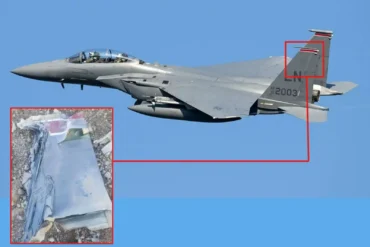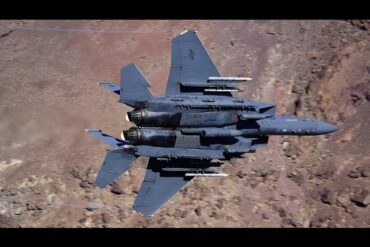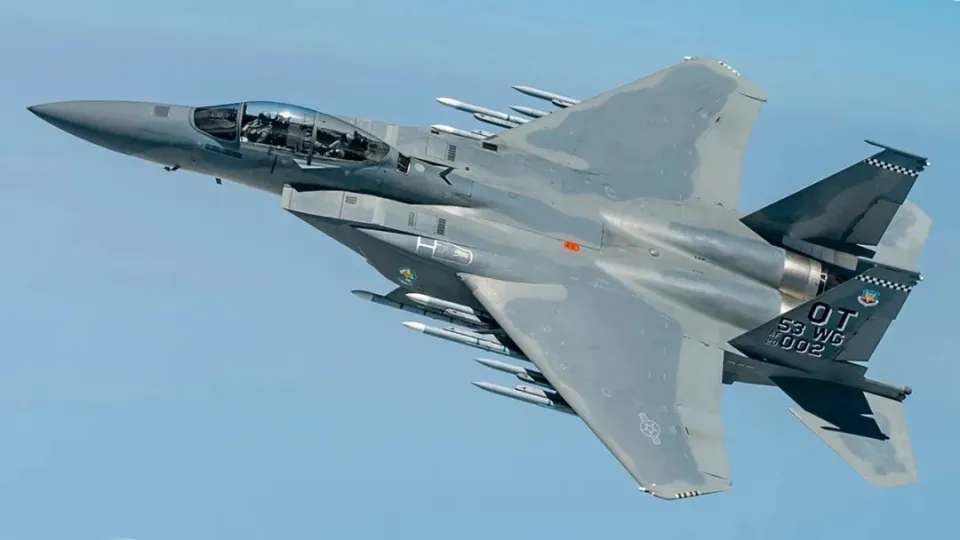
The F-15E Strike Eagle, an advanced evolution of the legendary F-15, is primarily a dual-role fighter-bomber designed for air-to-ground dominance. However, despite its focus on strike missions, it inherits formidable air-to-air combat capabilities from the original F-15 air superiority fighter. This article explores its dogfighting potential, evaluating its maneuverability, weaponry, operational history, and tactical advantages in air combat scenarios.
Aerodynamics and Maneuverability
The F-15E Strike Eagle maintains the high thrust-to-weight ratio and low wing loading that made the F-15 series one of the most maneuverable fighters of its time.
- Thrust-to-weight ratio: With Pratt & Whitney F100-PW-229 engines, the Strike Eagle achieves a ratio of approximately 1.07 when in clean configuration, ensuring superior acceleration and the ability to maintain energy in vertical engagements.
- Low wing loading: The large wing area and all-moving horizontal stabilizers contribute to rapid roll rates and sustained high-G turns, critical for dogfighting scenarios.
- Flight control systems: The aircraft features a triple-redundant digital fly-by-wire system, ensuring stability and responsiveness even during aggressive maneuvering.
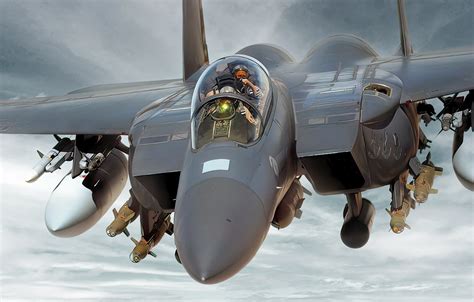
- Weight limitations: When configured for strike missions, the heavy payload (up to 24,500 lbs of ordnance) reduces agility, making it less effective in sustained turning engagements.
Weapon Systems for Air Combat
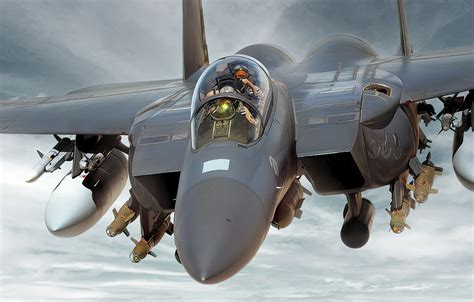
The F-15E retains a lethal suite of air-to-air weaponry, allowing it to engage enemy fighters at multiple ranges:
- M61A1 20mm Vulcan cannon: The internal six-barrel Gatling gun carries 940 rounds, enabling it to be lethal in close-range engagements.
- AIM-9 Sidewinder missiles: The Strike Eagle is equipped with AIM-9L/M and AIM-9X Block II infrared-guided missiles, essential for dogfights requiring high off-boresight targeting.
- AIM-120 AMRAAM: The advanced medium-range air-to-air missile provides beyond-visual-range (BVR) capability, allowing engagements before the enemy can enter a dogfight.
- Sensor fusion and target tracking: The AN/APG-82(V)1 AESA radar and LANTIRN targeting system enhance the pilot’s ability to detect, track, and engage enemy aircraft in complex environments.
Combat Performance and Historical Engagements
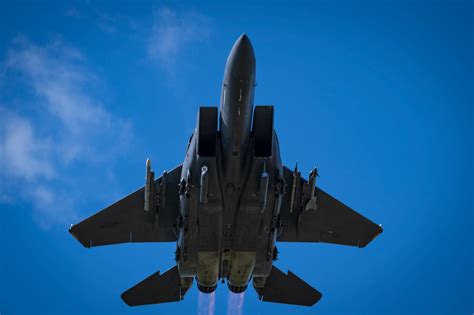
While designed primarily as a strike aircraft, the F-15E has demonstrated its air-to-air combat capability in real-world conflicts:
- Desert Storm (1991): F-15Es focused primarily on ground attack missions, but successfully engaged Iraqi fighters in self-defense, leveraging AIM-9 and AIM-7 missiles.
- Operation Iraqi Freedom (2003): Despite its role in precision strikes, the F-15E remained a capable self-defense platform, with pilots trained for Basic Fighter Maneuvers (BFM).
- Syrian Airspace (2010s-Present): In recent years, F-15Es have operated in heavily contested airspace, demonstrating their situational awareness and survivability against emerging threats.
Dogfighting Strengths and Weaknesses
Advantages
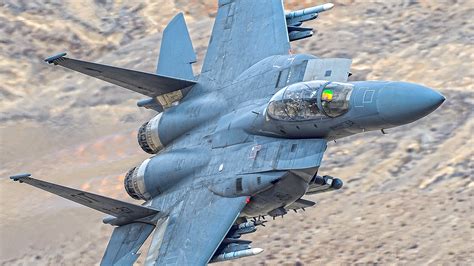
- Energy Retention: The powerful engines and large control surfaces allow the F-15E to maintain speed in vertical combat, giving it an edge in boom-and-zoom tactics.
- Weapon Systems Officer (WSO) Advantage: Unlike single-seat fighters, the rear-seat WSO can manage sensors, weapons, and countermeasures, allowing the pilot to focus on maneuvering and combat tactics.
- AESA Radar Superiority: The AN/APG-82(V)1 radar ensures long-range target detection, crucial for situational awareness in dynamic air combat environments.
Limitations
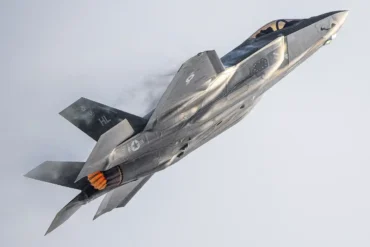
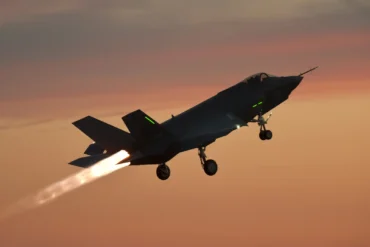
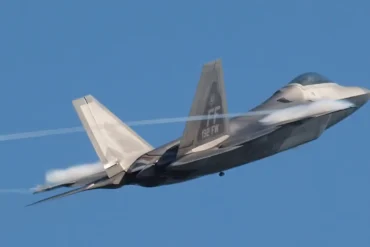
- Lack of Stealth: Unlike fifth-generation fighters such as the F-22 Raptor and F-35 Lightning II, the F-15E’s large radar cross-section (RCS) makes it vulnerable to beyond-visual-range missile engagements.
- Payload Impact on Agility: When carrying a full complement of ground-attack munitions, the Strike Eagle’s maneuverability decreases, making it less competitive against dedicated air superiority fighters.
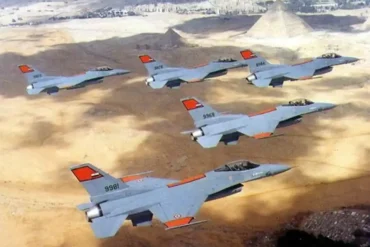
- Not Optimized for Close Quarters: While still highly capable, the F-15E is heavier than lighter dogfighters like the F-16, meaning it may struggle in prolonged, slow-speed turning fights.
Modern Upgrades and Future Viability
Despite its age, the F-15E Strike Eagle has received significant upgrades to maintain relevance in modern air combat:
- AIM-9X Block II integration: Features high off-boresight targeting, allowing pilots to engage threats using helmet-mounted displays (HMDs).
- Advanced electronic warfare systems: The Eagle Passive/Active Warning and Survivability System (EPAWSS) improves survivability against enemy radars and missiles.
- Enhanced networking: The integration of Link-16 and advanced data-sharing capabilities allows the F-15E to coordinate with stealth aircraft and AWACS for improved situational awareness.
Conclusion: Can the F-15E Hold Its Own in a Dogfight?
The F-15E Strike Eagle remains a formidable air combat platform, capable of defending itself against enemy fighters when necessary. While not optimized for air superiority like the F-22 Raptor, its powerful engines, advanced sensors, and lethal weapons loadout make it a credible threat in dogfighting scenarios. However, against stealth aircraft or in prolonged turn-based engagements, its effectiveness diminishes.
Its true strength lies in energy-based tactics, boom-and-zoom engagements, and long-range missile warfare, ensuring that even in an air combat role, the F-15E remains a potent adversary.
FAQ
1. How does the F-15E compare to the F-22 in a dogfight?
The F-15E is a heavier, multi-role fighter, while the F-22 Raptor is a stealth air superiority fighter with thrust-vectoring nozzles for unmatched agility. In a dogfight, the F-22 has a decisive advantage due to its stealth, maneuverability, and superior avionics.
2. Can an F-15E defeat a modern stealth fighter?
While the F-15E can engage stealth fighters, its lack of stealth makes it vulnerable to beyond-visual-range (BVR) missile attacks from aircraft like the F-35 or J-20. However, with modern radar, electronic warfare systems, and long-range weapons, it remains a formidable opponent.
3. What air combat tactics are best suited for the F-15E?
The F-15E excels in energy-based combat, favoring boom-and-zoom tactics where it can utilize its high speed and vertical maneuverability to attack and reposition. It is less suited for sustained turn-based engagements against lighter fighters like the F-16 or Rafale.