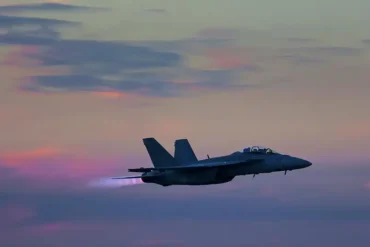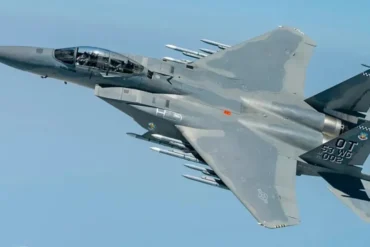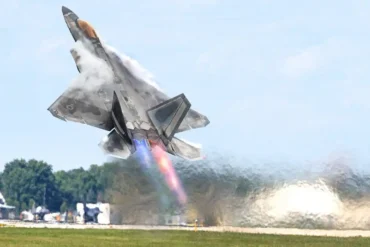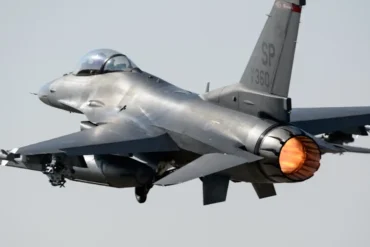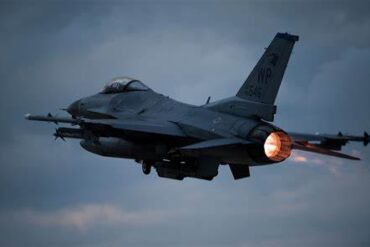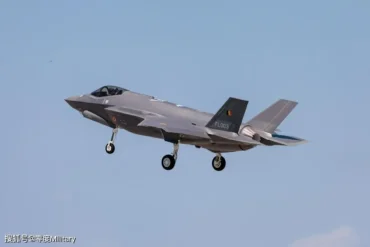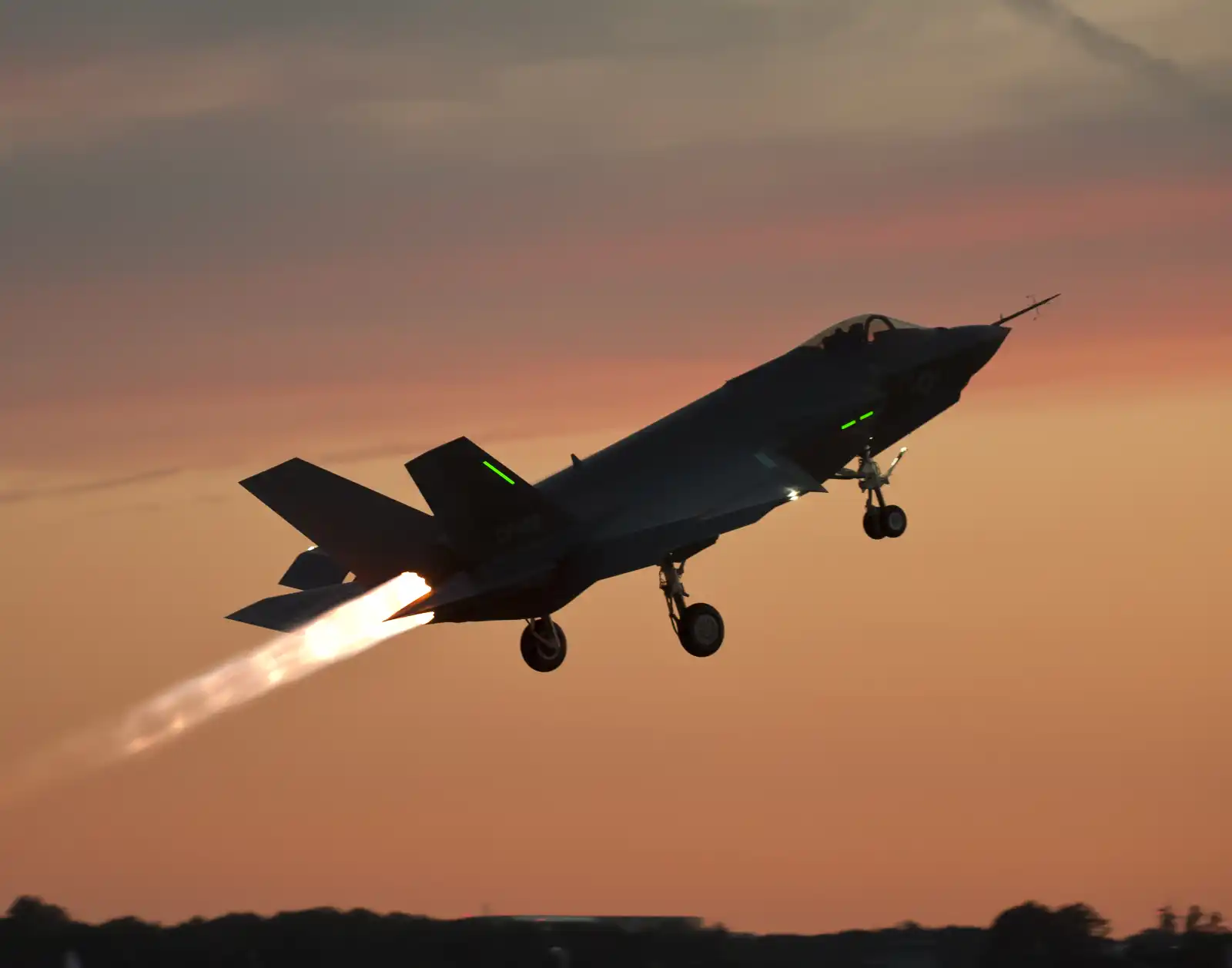
The F-35 Lightning II stands as a pinnacle of modern fighter aircraft technology, integrating cutting-edge stealth, avionics, and propulsion systems. A crucial component of its propulsion is the afterburner in the Pratt & Whitney F135 engine, enabling bursts of extreme speed when needed. While offering significant thrust, the afterburner presents stealth, structural, and operational trade-offs that influence the F-35’s combat effectiveness.
Engineering and Performance of the F-35 Afterburner
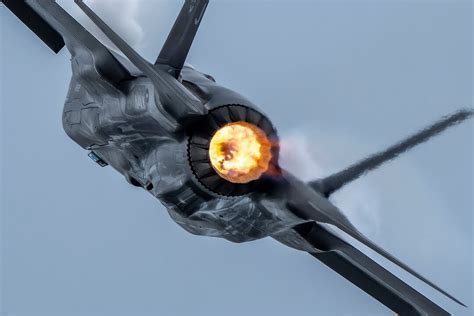
The F135 engine’s afterburner delivers an exceptional 191 kN (18.5 tons) of thrust, pushing the F-35 to a top speed of Mach 1.6. This power, however, comes with an intricate balance between stealth and performance. Unlike traditional jet fighters, the F-35’s afterburner is designed with low observable (LO) features to minimize detection risks:
- Axial-Symmetric Nozzle: Optimized for reduced radar cross-section (RCS), improving stealth capabilities.
- Ceramic Radar-Absorbing Materials (RAM): Applied to exhaust components to reduce infrared (IR) signature and radar reflection.
- Intelligent Thrust Vectoring: The F135 integrates an advanced computer-controlled nozzle that dynamically adjusts angles, optimizing aerodynamics and reducing infrared detectability.
These design choices ensure that while the F-35 benefits from supersonic speed, it does not compromise its primary stealth mission.
Usage Limitations and Structural Risks
Despite its powerful afterburner, the F-35 faces operational constraints due to fuel efficiency and heat stress. The afterburner consumes approximately 1,500 kg of fuel per minute, limiting its practicality for prolonged engagements.
Supercruise Limitations
Unlike the F-22 Raptor, which can achieve supercruise (sustained supersonic flight without afterburner), the F-35 relies entirely on its afterburner for supersonic speeds, reducing efficiency and endurance. The absence of supercruise:
- Increases fuel consumption, reducing operational range.
- Compromises stealth due to heightened infrared and radar signature.
- Requires careful mission planning, as excessive afterburner use can force early refueling.
Heat Stress and Airframe Durability
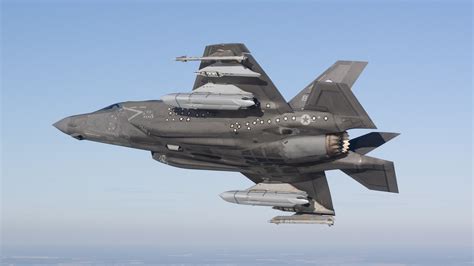
Extended afterburner use poses structural risks, particularly affecting the F-35B and F-35C variants. Testing in 2019 revealed damage to rear airframe components when maintaining supersonic speeds for extended durations.
- The F-35B and F-35C have a strict 40-80 second limit for continuous afterburner use.
- Prolonged use can cause stealth coating degradation and tail-section stress fractures.
- The US military introduced strict flight protocols to mitigate risks, emphasizing short afterburner bursts in operations.
Impact on Stealth and Combat Effectiveness
While the afterburner enhances maneuverability and speed, it also compromises stealth, increasing the F-35’s vulnerability:
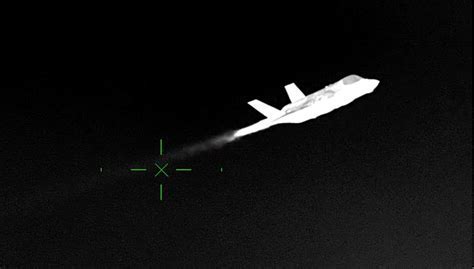
- Infrared Exposure: High-temperature exhaust makes the jet more susceptible to infrared-guided missiles.
- Radar Signature Boost: The superheated exhaust plume produces detectable radar reflections, temporarily negating stealth advantages.
- Tactical Constraints: The F-35’s preferred engagement strategy is to remain undetected rather than engage in high-speed dogfights.
For this reason, afterburner activation is largely reserved for emergency scenarios, such as missile evasion or high-speed interception.
Comparison with Other Fighter Jets
F-35 vs. F-22 Raptor
The F-22 Raptor, with its F119 engine, provides supercruise at Mach 1.8, eliminating reliance on afterburners for supersonic flight. This gives the F-22 a distinct advantage in fuel efficiency, stealth, and sustained combat capability. In contrast:
- The F-35 must engage its afterburner to surpass Mach 1, increasing fuel burn and detectability.
- The F-22 has superior thrust-to-weight ratio, enhancing agility.
- The F-35, however, excels in sensor fusion and electronic warfare, compensating for its propulsion limitations.
F-35 vs. Su-57 Felon
The Russian Su-57 Felon features the Izdeliye 30 engines, theoretically capable of supercruise at Mach 1.6. However:
- F-35’s stealth is significantly superior, while the Su-57 suffers from higher radar cross-section (RCS).
- Su-57’s afterburner provides greater thrust, but at the cost of even higher fuel consumption.
- Operational doctrine differs, as the Su-57 emphasizes agility, whereas the F-35 prioritizes networked warfare.
Future Developments: Adaptive Cycle Engines
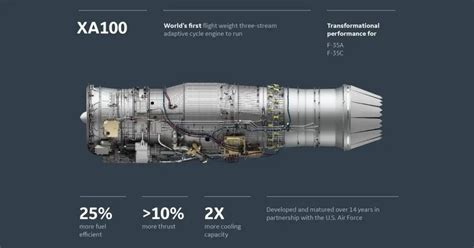
To address the limitations of the F135 afterburner, future propulsion solutions are under development. The XA100 and XA101 adaptive cycle engines, being developed by General Electric and Pratt & Whitney, aim to:
- Increase thrust while reducing fuel consumption.
- Enable limited supercruise, mitigating dependence on afterburners.
- Improve thermal management, reducing afterburner-induced structural wear.
These advancements may revolutionize the F-35’s performance, allowing longer supersonic flight durations without compromising stealth or airframe durability.
Conclusion
The F-35’s afterburner is a critical component of its supersonic capability, but it introduces stealth, endurance, and durability challenges. While essential for combat maneuvers and high-speed engagements, its use is heavily restricted due to fuel burn rates and heat stress. As future engine upgrades emerge, the F-35 may eventually gain supercruise capabilities, addressing its reliance on the afterburner for sustained speed.
FAQ
1. Can the F-35 sustain supersonic speeds without an afterburner?
No, unlike the F-22 Raptor, the F-35 does not possess supercruise capability. It requires an afterburner to exceed Mach 1, significantly increasing fuel consumption and heat output.
2. How does the F-35’s afterburner affect its stealth capabilities?
Engaging the afterburner increases infrared emissions and radar detectability, temporarily reducing its stealth effectiveness. For this reason, pilots use it sparingly, primarily in combat emergencies.
3. What future improvements are planned for the F-35’s engine?
The XA100 and XA101 adaptive cycle engines are being developed to enhance fuel efficiency, thrust, and thermal durability, potentially reducing afterburner dependence and improving overall performance.