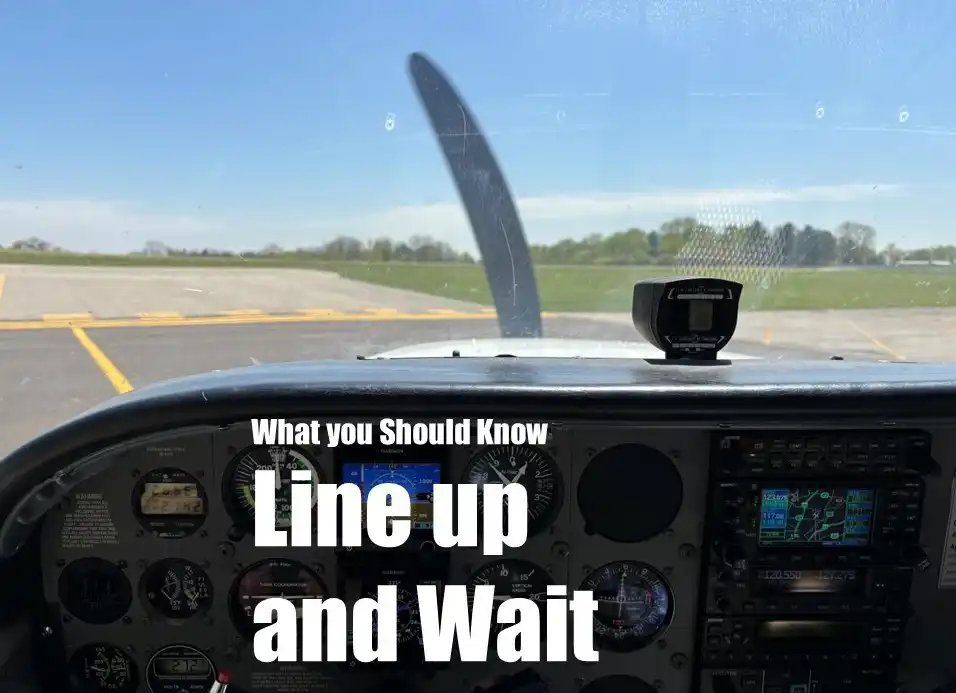
In the complex world of air traffic control (ATC), few instructions generate as much discussion and debate as Line Up and Wait (LUAW). As a critical phraseology in runway operations, LUAW serves as a strategic tool to position aircraft for imminent departure while maintaining separation and operational flexibility. However, its use raises a key question among controllers: Should traffic advisories be issued when another aircraft or vehicle is crossing the runway during LUAW clearance?
This question sparked extensive discussion among experienced controllers, with viewpoints shaped by regulatory interpretation, operational experience, and a shared emphasis on safety.
LUAW is defined under FAA Order JO 7110.65 as an instruction for an aircraft to taxi onto the runway and hold in position without takeoff clearance. This instruction is particularly employed to position departures in anticipation of release or to expedite departures in congested airspace. However, LUAW carries inherent risks if situational awareness is compromised, especially when another aircraft or vehicle is crossing downfield.
One core argument supporting traffic advisories is rooted in “painting the picture” for the pilot. Controllers emphasize that by issuing a traffic advisory, such as “(Callsign), Runway 27, line up and wait, traffic crossing downfield,” they communicate not just procedural compliance but also situational context. This phrase explicitly signals to the pilot that another entity is occupying or traversing the runway, reinforcing that the aircraft is not cleared for takeoff despite being in position.
Several controllers argue that while FAA Order 7110.65 Section 3-9-4a stipulates the issuance of traffic information, the clause about visibility applies narrowly to arriving or departing aircraft that are plainly visible to the LUAW aircraft. This has led to confusion over whether vehicles or aircraft crossing downfield meet the criteria for mandatory traffic notification. Some believe visibility negates the need for an advisory, while others assert that visibility should never preclude clarity.
The debate extends into the realm of semantics, with some suggesting that “traffic” only applies to airborne aircraft. However, seasoned controllers reject this interpretation, highlighting that “traffic” in operational phraseology includes any aircraft or vehicle moving on or across the active runway. This broad definition ensures that pilots remain aware of any potential obstructions or conflicts, airborne or not.
A prevailing consensus among veteran controllers is that issuing a traffic advisory, even when not explicitly required, provides a safety margin. As one controller remarked, “There’s literally no reason not to say it.” This pragmatic approach recognizes that a brief advisory could prevent misunderstanding or premature takeoff, particularly in busy or complex environments.
Critics of mandatory traffic advisories for crossing vehicles argue that adding unnecessary calls can clutter frequency traffic and potentially lead to confusion, especially if the advisory is overly specific. For example, saying “traffic crossing Runway 27 at Taxiway Bravo” might overwhelm or distract the pilot with unnecessary granularity. Instead, many advocate for a simpler phrasing like “traffic crossing downfield,” balancing brevity with clarity.
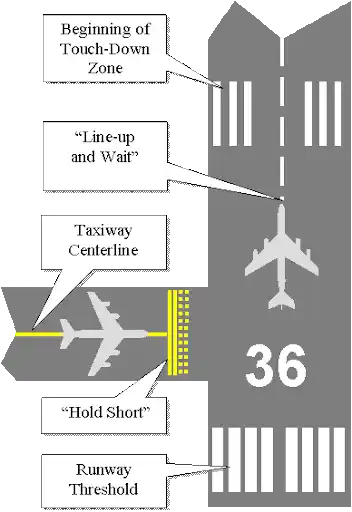
Beyond regulatory interpretation, the human factors perspective cannot be overlooked. Controllers recognize that pilots process information based not only on direct observation but also on auditory cues from ATC communications. A well-timed advisory reinforces situational awareness, reducing reliance on assumptions or incomplete visual scanning, particularly in reduced visibility or nighttime operations.
In environments with intersecting runways or high-volume traffic, the importance of issuing traffic advisories gains further weight. According to FAA guidelines, controllers must “exchange traffic information between aircraft authorized to LUAW, depart, or arrive on intersecting runways.” This reinforces that traffic coordination is integral to runway safety, regardless of whether the aircraft are airborne or surface-bound.
Controllers also factor in legal and liability implications. Should an incident occur involving an LUAW aircraft and a crossing vehicle or aircraft, the omission of a traffic advisory could be scrutinized by investigators or enforcement bodies. As one controller noted, “When you have an aircraft accident that was not your fault, one way to make it your fault is to leave out required phraseology.”
Operationally, issuing a brief traffic advisory requires minimal controller workload but yields significant benefits in pilot comprehension. Controllers are trained to prioritize clarity over brevity when necessary, recognizing that a moment of misunderstanding at the threshold can have catastrophic consequences. For many, the motto remains: “Say it, even if it feels redundant.”
Some dissenting voices argue that routine traffic advisories may condition pilots to disregard them as noise, diluting their effectiveness in critical situations. However, most controllers counter that pilots are well-trained to discern context and treat each advisory as situationally relevant. Furthermore, omitting an advisory under the assumption of pilot awareness introduces unacceptable ambiguity.
Ultimately, the discussion surrounding LUAW and traffic advisories reflects a broader tension in ATC between procedural compliance and operational judgment. While FAA Order 7110.65 provides a framework, its application inevitably involves controller discretion, tailored to local procedures, traffic volume, and environmental factors.
In practice, best practices converge around a proactive, safety-first mindset. Controllers agree that clear communication is the cornerstone of effective runway operations. Whether or not a traffic advisory is legally mandated in every scenario, issuing it when another aircraft or vehicle is crossing the runway offers an added layer of situational clarity.
For pilots, hearing “traffic crossing downfield” reinforces the hold instruction inherent in LUAW and alerts them to potential runway occupancy. For controllers, it closes the loop of situational briefing, ensuring no implicit assumptions underlie their clearances.
The discussion underscores that ATC phraseology is not merely regulatory compliance but a form of collaborative situational awareness between controllers and pilots. As air traffic systems grow more complex, with intersecting runways, mixed-use taxiways, and heightened demands for efficiency, these nuanced communications play an outsized role in maintaining safety margins.
In conclusion, we advocate for the consistent use of traffic advisories during LUAW clearances when another aircraft or vehicle is crossing the runway. This practice aligns with regulatory intent, operational best practices, and safety-first principles. It supports pilot awareness, reduces ambiguity, and safeguards against preventable incidents. While some may view it as an optional courtesy, we affirm it as a professional standard that embodies the highest values of air traffic control.