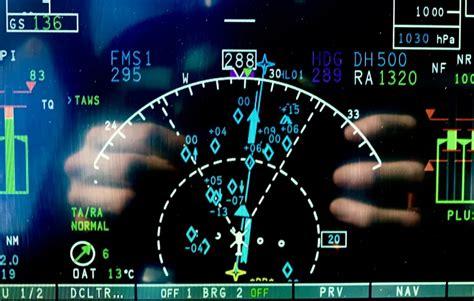
The Traffic Collision Avoidance System (TCAS), also internationally recognized as Airborne Collision Avoidance System (ACAS), stands at the technological frontier of aviation safety. Its core mission is critical: to prevent mid-air collisions between aircraft by functioning independently of ground-based control. TCAS does this by detecting nearby aircraft equipped with transponders, analyzing potential threats, and advising pilots with real-time voice and display alerts.
TCAS operates on a foundation of real-time transponder interrogation, creating a 3D situational map of surrounding aircraft to warn pilots of imminent danger. Through two alert types—Traffic Advisories (TA) and Resolution Advisories (RA)—it prompts awareness and action, offering a last line of defense against collision. This system is not merely advisory; it commands priority over ATC (Air Traffic Control) in moments of potential threat.
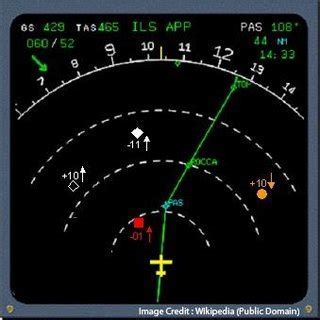
The Origin and Evolution of Collision Avoidance
The conceptual roots of TCAS reach back to the 1950s, but the catalyst came in 1956, when a catastrophic mid-air collision over the Grand Canyon claimed 128 lives. This tragedy illuminated the limits of human coordination and drove agencies to explore onboard automated systems. By the mid-1970s, researchers leveraged ATCRBS (Air Traffic Control Radar Beacon System) signals to enable aircraft-to-aircraft interrogation.
The modern development of TCAS began earnestly in 1981, when the Federal Aviation Administration (FAA) launched a formal program. The system matured throughout the 1980s, with experimental deployments on Piedmont Airlines’ Boeing 727s between 1984 and 1987. Key industry players, including Bendix/King and Honeywell, refined the system through live trials. Full-scale implementation of TCAS II for commercial jets commenced by the end of the decade, with operation in both VMC (Visual Meteorological Conditions) and IMC (Instrument Meteorological Conditions).
Anatomy of a TCAS System
At the heart of TCAS lies a set of components that collectively perform surveillance, threat detection, and advisory issuance:
- TCAS Computer Unit: Executes tracking algorithms, predicts collision trajectories, and issues advisories.
- Directional Antennas: Typically mounted on the top and bottom of the aircraft, these antennas interrogate on 1030 MHz and receive on 1090 MHz.
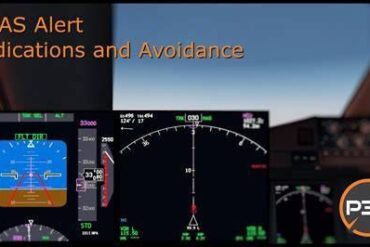
- Cockpit Displays: These can be integrated into existing avionics or standalone, showing traffic positions and resolution commands.
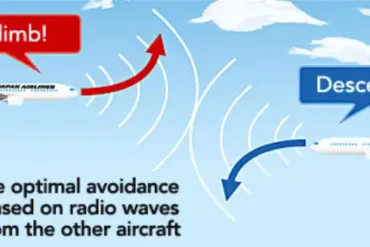
The system continuously interrogates surrounding aircraft and computes range, bearing, and altitude. When an aircraft encroaches upon a defined protected volume, it prompts one of two alerts: a TA, urging pilots to look out visually, or an RA, commanding an immediate climb or descent to avoid a collision.
Operating Modes and Alert Structure
TCAS operates under four principal modes:
- Standby – System is powered but inactive.
- Transponder Only – Passive operation, no advisories.
- TA Only – Traffic Alerts are enabled, but no RAs issued.
- Automatic (TA + RA) – Full active monitoring with coordinated RAs.
When an RA is triggered, it overrides ATC clearance. Pilots are trained to respond instantly to commands such as:
- “Climb, climb now”
- “Descend, descend now”
- “Level off, level off”
Once clear of threat, a final “Clear of conflict” command is issued, signaling the return to standard flight protocols.
Notable Incidents and Lessons Learned
Despite its powerful role in aviation safety, TCAS has been central in several dramatic events, underscoring both its capabilities and its limitations:
- 1996 Charkhi Dadri Collision: A Kazakh Ilyushin and a Saudi Boeing 747 collided near New Delhi. The Kazakh crew’s failure to follow TCAS commands was cited as a causal factor.
- 2002 Überlingen Disaster: A DHL Boeing 757 and a Bashkirian Tupolev Tu-154 collided due to conflicting ATC instructions and misinterpreted TCAS RAs.
- 2006 Gol Flight 1907: A mid-air collision over Brazil involving a Boeing 737 and Embraer Legacy jet; investigation highlighted transponder misconfigurations.
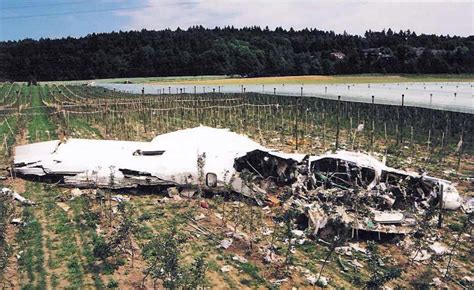
These events catalyzed major upgrades to TCAS software, particularly with the release of Version 7.1, which introduced RA reversals—a critical feature allowing dynamic resolution changes if the intruder aircraft does not comply with the initial maneuver.
TCAS vs TAS and ADS-B: Comparative Technologies
While TCAS is the gold standard for commercial aviation, there are adjacent systems worth noting:
- TAS (Traffic Advisory System): A simplified form of TCAS I, providing only TAs without RA capability. Often used in general aviation.
- ADS-B (Automatic Dependent Surveillance–Broadcast): A newer, satellite-based system enabling aircraft to broadcast their own GPS-derived positions and receive others’. When combined with TCAS, it enhances detection range and precision.
Hybrid models integrating ADS-B with TCAS are now in development. These solutions promise reduced radio interrogations, earlier detection, and advanced threat labeling, further improving airspace safety.
Versions, Mandates, and Implementation
Two primary TCAS versions are in operational use today:
- TCAS I: Used on smaller aircraft, only offers TAs.
- TCAS II: Standard for commercial jets, offers TAs and RAs with coordinated advisories.
In 2008, Version 7.1 was released, refining RA behaviors and allowing reversals during non-compliance situations. The International Civil Aviation Organization (ICAO) mandated ACAS II (equivalent to TCAS II Version 7.1) for all new aircraft by January 2014, with retrofit requirements extending through January 2017. Compliance across the U.S. and Europe has been enforced under Technical Standard Orders (TSOs) since 2009.
System Safety and Cybersecurity Considerations
TCAS has been statistically shown to reduce mid-air collision risk by up to five times. However, it’s not without vulnerabilities. False or missed advisories may result from:
- Faulty Mode C transponder data
- Pilot misinterpretation
- Abrupt evasive maneuvers introducing new conflicts
Ground proximity alerts, particularly during final approach phases, override TCAS advisories, adding complexity to split-second decision-making. More recently, researchers demonstrated that TCAS could be spoofed using malicious signals within a 4.2 km radius, highlighting emerging threats in avionics cybersecurity.
Limitations and the Road Ahead: Toward ACAS X
Despite its effectiveness, TCAS remains limited to vertical maneuvers and can be rendered ineffective by data errors, high workload, or uncoordinated airspace participants.
The future lies in ACAS X, a next-generation collision avoidance system currently under development. With predictive algorithms, probabilistic threat modeling, and the capacity for lateral maneuvering, ACAS X aims to surpass TCAS in both precision and flexibility. Moreover, it is designed to integrate seamlessly with the NextGen Air Traffic System, enabling real-time coordination with both ground controllers and satellite-based traffic systems.
As global air traffic continues to grow, especially in congested skies, the evolution of airborne collision avoidance remains not just a technical priority—but a moral imperative.
The Traffic Collision Avoidance System is not merely a box in the cockpit; it represents decades of hard-won progress in making the skies safer. It is a living, adapting technology—born of tragedy, refined through experience, and poised to meet the challenges of tomorrow’s airspace.