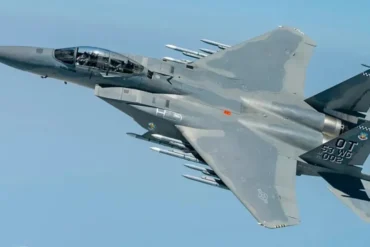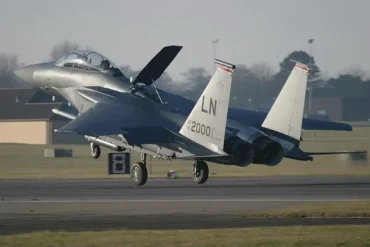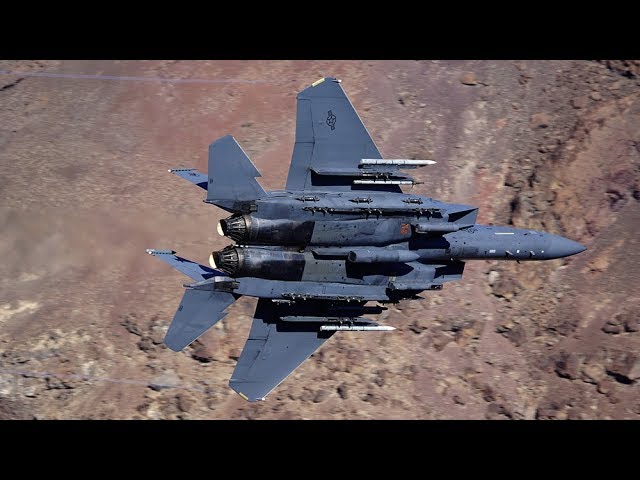
The F-15 Eagle is one of the most formidable multi-role fighter aircraft ever developed by the United States Air Force (USAF). Among its many operational capabilities, its effectiveness in canyon operations stands out as a crucial aspect of modern aerial warfare. The F-15E Strike Eagle, an advanced variant, has been specifically engineered to execute high-risk, low-altitude penetration missions through rugged terrain, including deep canyon environments. This article provides an in-depth analysis of its tactical capabilities, combat history, and future advancements in canyon warfare.
Low-Altitude Penetration and Terrain-Following Capabilities
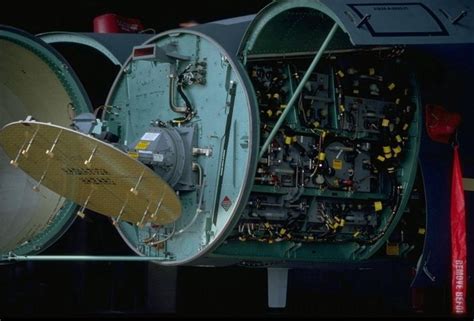
One of the defining features of the F-15E Strike Eagle is its exceptional low-altitude penetration capability. To operate effectively in canyon environments, the aircraft is equipped with the AN/APG-70 radar and a sophisticated terrain-following system. This technology enables the aircraft to automatically adjust its altitude while maintaining high speeds, allowing it to evade enemy radar detection and surface-to-air threats.
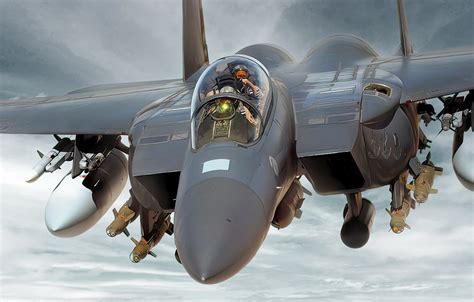
- The digital flight control system (CAS) ensures stability and maneuverability, even during rapid course adjustments in tight canyon passages.
- A large speed brake on the upper fuselage, capable of a maximum 35-degree deployment, allows for precise speed regulation and control in confined airspace.
- The aircraft’s low-observable flight profile enables it to remain undetected while executing deep penetration strike missions.
These features allow the F-15E to maintain supersonic speeds at treetop level, an essential tactic for avoiding enemy radar locks in mountainous and canyon-heavy battle zones.
Power and Survivability in Canyon Environments
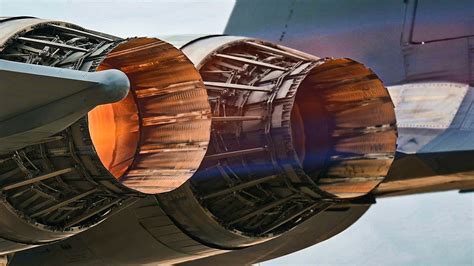
The F-15E is powered by two F110-GE-129 turbofan engines, each generating an impressive 129 kN (29,000 lbf) of thrust with afterburner. This powerful propulsion system enables the aircraft to rapidly accelerate and climb out of a canyon when necessary, mitigating threats posed by enemy surface-to-air missiles (SAMs) and interceptors.
- The titanium-alloy airframe provides structural resilience, allowing the aircraft to withstand damage in combat scenarios.
- The composite material vertical stabilizers, reinforced with boron fibers, contribute to both weight reduction and increased durability.
- Even in the event of severe damage, including partial wing loss, the aircraft maintains a high likelihood of returning to base—a capability demonstrated in a 1983 mid-air collision incident where an F-15 successfully landed despite losing a wing.
These design elements ensure that the F-15E Strike Eagle remains combat-effective even in the most demanding operational conditions.
Weapons and Mission Adaptability
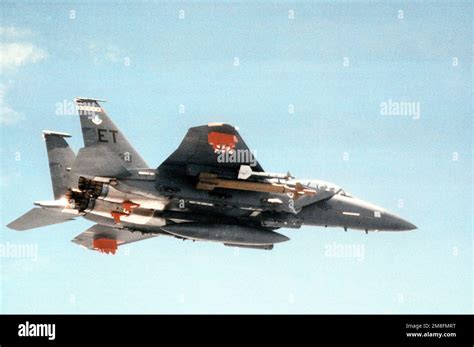
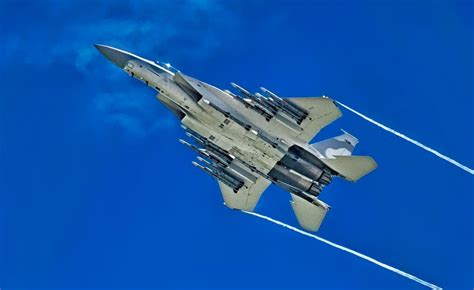
The F-15E Strike Eagle is not only designed for survivability but also for superior firepower and mission versatility. Its conformal fuel tanks (CFTs) reduce aerodynamic drag while simultaneously increasing payload capacity, allowing it to carry up to 7,300 kg (16,000 lbs) of ordnance.
Key Weapon Systems for Canyon Operations:
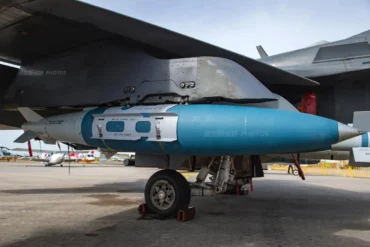
- GBU-28 Bunker Buster: Ideal for deep penetration strikes against fortified enemy positions hidden within mountainous terrain.
- AIM-120 AMRAAM: Provides beyond-visual-range (BVR) engagement capabilities in air-to-air combat scenarios.
- Legion Pod Infrared Search and Track (IRST): Enhances target detection capabilities in low-visibility environments where radar performance is limited.
These weapon systems, combined with advanced sensor fusion, make the F-15E a lethal force in both offensive and defensive canyon warfare operations.
Combat Effectiveness in Real-World Operations
The F-15E has been battle-proven in numerous conflicts, demonstrating its ability to exploit canyon terrain for tactical advantage.
Gulf War (1991):
- Objective: Penetrate Iraqi air defenses and neutralize strategic assets.
- Tactics: Utilized canyon routes to avoid detection and strike enemy radar installations and command centers.
- Outcome: Successfully cleared air corridors, allowing allied forces to achieve air superiority.
Lebanon Operations (Israeli Air Force):
- Objective: Ambush enemy fighter aircraft in mountainous terrain.
- Tactics: Used canyons to conceal approach vectors, surprising enemy MiG and Sukhoi fighters.
- Outcome: Over 90 enemy aircraft were downed, solidifying the F-15’s dominance in aerial combat.
Modern Upgrades for Future Conflicts
The latest F-15EX variant introduces enhanced electronic warfare (EW) capabilities and data-link integration, making it even more effective in modern battlefields.
- AN/APG-82(V)1 AESA Radar: Provides superior target tracking and jamming resistance.
- Eagle Passive/Active Warning Survivability System (EPAWSS): Increases situational awareness and countermeasure effectiveness.
- AI-Assisted Tactical Processing: Enhances real-time threat assessment and decision-making for pilots in high-speed canyon engagements.
These advancements ensure that the F-15 remains a dominant force in low-altitude strike operations for the foreseeable future.
Conclusion
The F-15 Eagle’s ability to conduct high-speed, low-altitude operations in canyon environments is a testament to its superior aerodynamic design, cutting-edge avionics, and powerful engine performance. Its track record in combat—coupled with ongoing upgrades—ensures that it remains one of the most lethal air superiority and strike platforms in modern aerial warfare. As technology advances, the F-15EX will continue to adapt, reinforcing its strategic role in the evolving battlespace.
Frequently Asked Questions (FAQ)
1. How does the F-15E avoid enemy radar detection in canyon environments?
The AN/APG-70 radar and terrain-following system allow the aircraft to fly at extremely low altitudes while maintaining high speed. This minimizes radar cross-section exposure, making detection significantly more difficult.
2. What makes the F-15E suitable for deep penetration strikes?
The powerful F110-GE-129 engines, conformal fuel tanks (CFTs), and a diverse weapons payload enable it to conduct long-range precision strikes even in heavily defended enemy territory.
3. How has the F-15 performed in real combat situations?
The F-15E has proven its capabilities in multiple conflicts, including the Gulf War and Middle Eastern operations, successfully engaging and neutralizing both ground-based and aerial threats.
The F-15 Eagle remains a symbol of air dominance, excelling in canyon warfare and beyond, ensuring its place as one of the most capable multi-role fighters of all time.