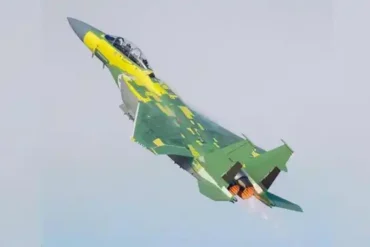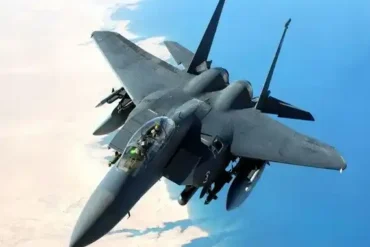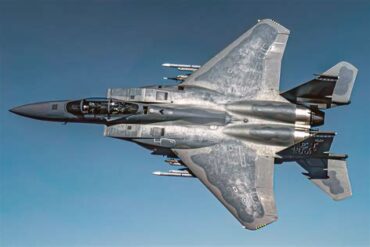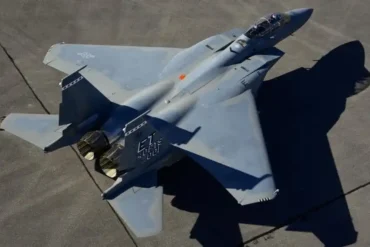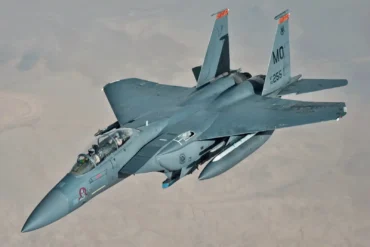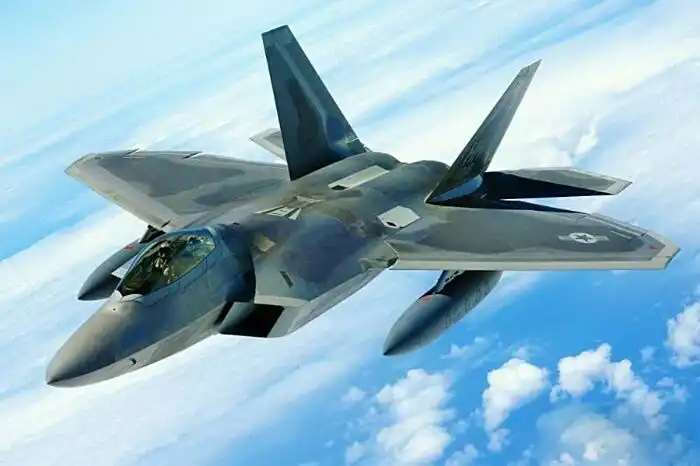
The F-22 Raptor and F-15EX Eagle II are two of the most advanced fighter aircraft in the U.S. Air Force, each with distinct characteristics that cater to specific strategic needs. As both aircraft play critical roles in modern air combat, understanding their capabilities, strengths, and limitations is crucial for assessing their respective positions in the evolving landscape of aerial warfare. This detailed analysis will provide an in-depth comparison of the F-22 Raptor and F-15EX Eagle II, focusing on their stealth capabilities, weapon loadouts, avionics, costs, and future roles.
1. Stealth and Air Combat Superiority: F-22 Raptor vs F-15EX Eagle II
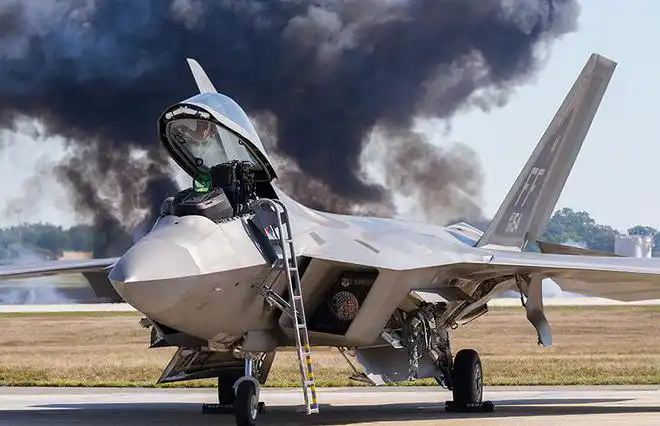
F-22 Raptor: Unmatched Stealth and Tactical Superiority
The F-22 Raptor, as the world’s first fifth-generation stealth fighter, boasts advanced stealth features that make it nearly invisible to radar. With a radar cross-section (RCS) of only approximately 0.0001 square meters, the Raptor is built for penetration of heavily defended airspaces and conducting first-strike operations. The aircraft’s stealth capabilities are complemented by supercruise—the ability to maintain supersonic speeds (above Mach 1.6) without using afterburners, thus conserving fuel and maintaining a low heat signature. This combination of stealth and speed gives the F-22 an overwhelming advantage in air-to-air combat.
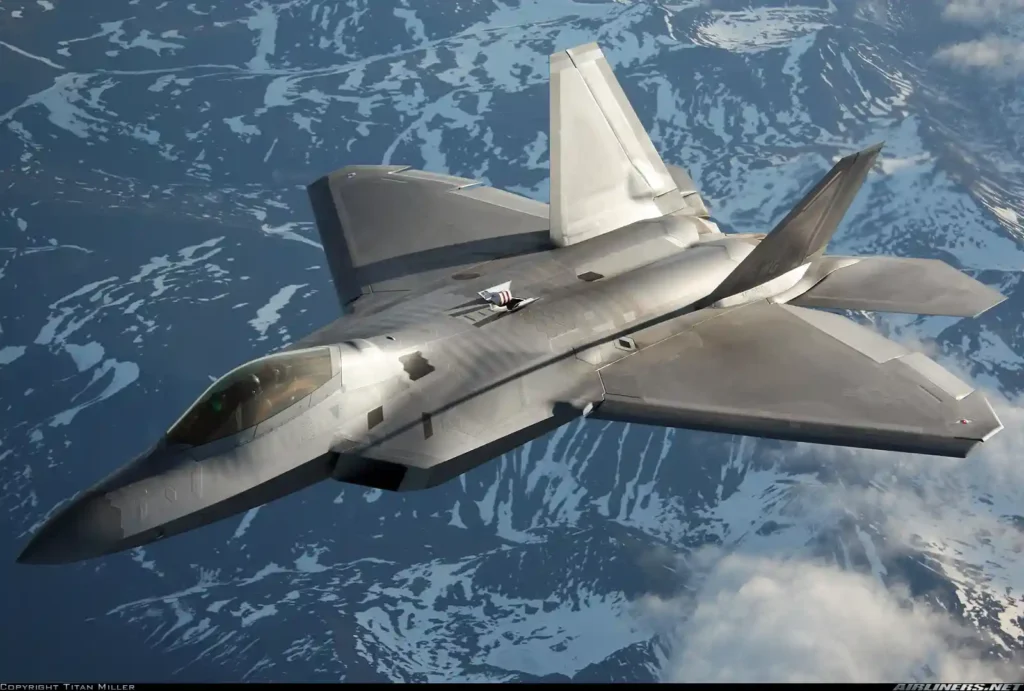
Equipped with internal weapon bays, the F-22 can carry AIM-120 AMRAAM medium-range missiles and AIM-9X Sidewinder short-range missiles while maintaining its stealth profile. The internal configuration ensures that the aircraft remains undetected by radar even while engaging adversaries, enabling the F-22 to strike first in contested airspaces.
F-15EX Eagle II: Lacking Stealth, but Benefitting from Technological Advancements
In contrast, the F-15EX Eagle II, a fourth-generation-plus fighter, lacks the stealth capabilities of the F-22. With a significantly higher RCS of around 4.5 square meters, the F-15EX is more vulnerable to enemy radar detection. However, the F-15EX compensates for this deficiency through its advanced avionics and electronic warfare systems, such as the EPAWSS (Evolved Physical Attack Weapon System), which integrates AI-driven threat analysis and robust countermeasures to protect the aircraft from enemy detection and interception.
Despite its lack of stealth, the F-15EX’s ability to work in conjunction with stealth aircraft like the F-22 allows it to perform well in complex, multi-role operations. The F-15EX can engage adversaries at long range and provides significant firepower in support of stealth aircraft that lack sufficient payload capacity.
2. Weapon Loadouts and Multirole Capabilities
F-22 Raptor: Specialized Air Superiority
The F-22 Raptor is specifically designed for air superiority missions. Its weapon capacity is limited by its internal storage bays, which restrict the aircraft’s payload to a maximum of 6.5 tons. While this may seem modest compared to older platforms, the F-22’s payload is highly specialized for air-to-air combat. The aircraft is primarily equipped with air-to-air missiles such as the AIM-120 AMRAAM and the AIM-9X Sidewinder, providing it with lethal engagement capabilities against both enemy aircraft and missiles in all operational environments.
F-15EX Eagle II: Multirole Flexibility and Firepower
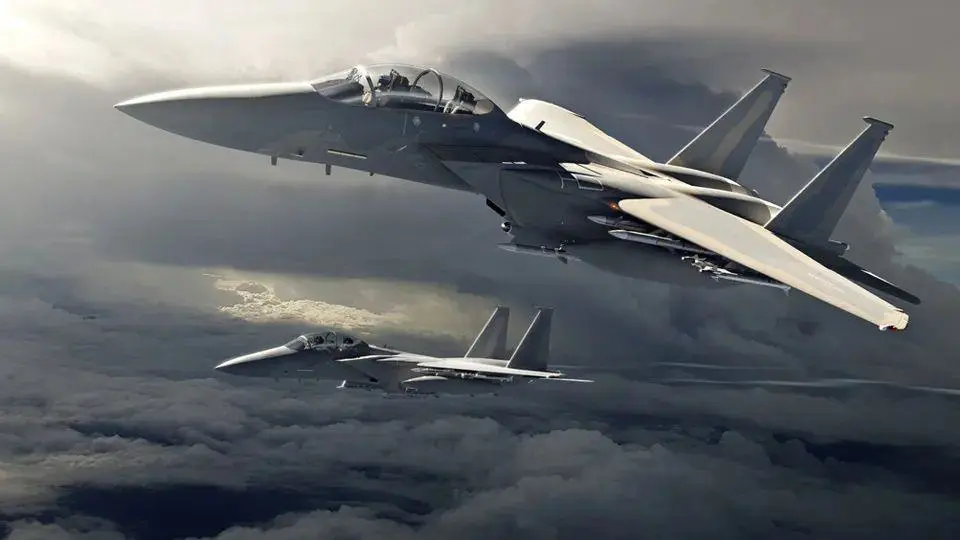
The F-15EX, on the other hand, is a true multirole fighter that can carry a much larger payload, up to 13.5 tons. This capability allows the F-15EX to perform both air-to-air and air-to-ground operations effectively. The aircraft can carry a wide variety of weapons, including AGM-183 hypersonic missiles, small-diameter bombs (SDB), and 22 air-to-air missiles. Its open architecture design also enables the integration of future weapon systems, enhancing the F-15EX’s versatility.
The F-15EX has been dubbed the “bomb truck” due to its extensive weapon capacity and ability to perform saturation strikes against targets, making it a critical asset in joint strike missions. The aircraft’s dual-role capability allows it to support both air superiority and ground attack missions, filling gaps in the U.S. Air Force’s strike capacity, especially when used in coordination with other fifth-generation aircraft like the F-35.

3. Avionics and Electronic Warfare Systems
F-22 Raptor: Advanced Sensors and Stealth-Optimized Systems
The F-22 Raptor is equipped with cutting-edge avionics designed to maximize its air combat effectiveness. One of the standout features of the F-22 is its AN/APG-77 radar, a highly advanced active electronically scanned array (AESA) radar system that provides long-range detection and tracking of enemy aircraft. The radar, combined with the F-22’s other sensors, gives the aircraft superior situational awareness, enabling it to locate and engage adversaries at significant distances.
However, despite these advanced features, the F-22’s older models, such as the Block 20, suffer from limited data-sharing capabilities and lack compatibility with newer technologies like the EOTS (Electro-Optical Targeting System). This limits the aircraft’s ability to fully integrate into modern network-centric warfare environments.
F-15EX Eagle II: Cutting-Edge Electronics and Future-Proof Design
The F-15EX Eagle II represents a quantum leap in avionics and electronic warfare technology. It features the AN/APG-82(V)1 AESA radar, which offers greater range and resolution than its predecessors. The radar’s enhanced capabilities allow the F-15EX to detect and track enemy aircraft and missiles in high-density environments. In addition, the F-15EX’s EPAWSS provides a comprehensive electronic attack suite, capable of performing electronic jamming, deception, and anti-radiation missions.
Moreover, the F-15EX is designed with an open mission system (OMS), allowing for rapid integration of new technologies such as quantum communication and laser defense systems. This future-proof architecture ensures that the F-15EX can evolve alongside advancements in electronic warfare and provide electronic dominance in contested airspaces.
4. Cost and Maintenance Efficiency: A Comparison
F-22 Raptor: High Cost, High Maintenance
The F-22 Raptor is one of the most expensive fighter jets ever produced, with an estimated unit cost of around $150 million. Additionally, its maintenance costs are significant, with special requirements for stealth coating upkeep and dedicated hangars for maintenance. The limited production of the F-22, with only 125 operational aircraft in service, has also contributed to higher per-unit costs. The F-22’s high operating costs are a result of its cutting-edge technologies and stealth features, which require specialized maintenance and support.
F-15EX Eagle II: Affordable and Efficient
In comparison, the F-15EX is significantly more cost-effective, with a unit cost of approximately $80 million. The aircraft’s modular design, based on the proven F-15 platform, allows for easier and cheaper maintenance. The F-15EX also benefits from high availability rates, with a reported 90% mission capable rate. Furthermore, its open architecture allows for easy upgrades and integration of new systems, ensuring that it remains relevant in the face of emerging threats.
5. Strategic Role and Future Prospects
F-22 Raptor: Strategic Air Superiority and High-End Missions
The F-22 Raptor is best suited for high-end, contested environments, where it can utilize its stealth, superior maneuverability, and advanced sensors to gain air superiority. Its primary role is to penetrate enemy air defenses and establish air dominance in regions where low observability and first-strike capabilities are essential. However, the limited number of F-22s and their high operating costs make it impractical for large-scale operations. As a result, the F-22 is strategically deployed in key hotspots, such as the Middle East and Eastern Europe, where air superiority is paramount.
F-15EX Eagle II: Multirole Flexibility and Regional Deterrence
In contrast, the F-15EX Eagle II is positioned as a force multiplier and regional deterrent. Its ability to carry a large weapons payload and perform multirole missions makes it invaluable in forward-deployed operations, especially in regions like the Indo-Pacific, where tensions with adversaries such as China are high. The F-15EX can work in coordination with fifth-generation aircraft like the F-35 to perform saturation strikes and support long-range deterrence missions.
The future role of the F-15EX will likely involve close integration with other air platforms, leveraging its advanced avionics, electronic warfare systems, and multirole flexibility to maintain air superiority in regions facing high-intensity conflicts.
Conclusion: A Complementary Partnership in Modern Warfare
In conclusion, the F-22 Raptor and F-15EX Eagle II serve complementary roles within the U.S. Air Force strategy. The F-22 remains the king of air superiority, with unmatched stealth and first-strike capabilities, but is constrained by its high costs and limited numbers. The F-15EX, on the other hand, offers a cost-effective solution for multirole operations, with its ability to carry significant weapon payloads and operate in high-intensity environments.
The future of aerial combat will likely see these two aircraft working together in a highly integrated combat architecture, with the F-22 Raptor serving as the stealthy penetrator and the F-15EX providing fire support and area denial. Their cooperation will ensure the U.S. Air Force maintains air dominance well into the future, adapting to new threats and strategic challenges in an increasingly complex global landscape.