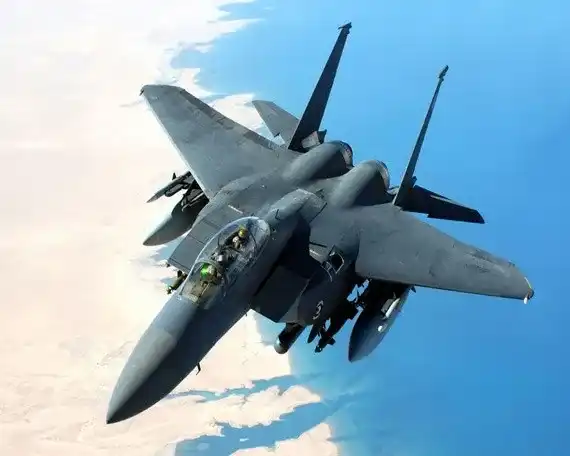
The McDonnell Douglas F-15 Eagle has long been a symbol of American air superiority, achieving an unparalleled combat record. However, with evolving threats and advancements in warfare technology, the Boeing F-15EX was introduced as a modernized and versatile successor. This article explores the key differences between these two formidable fighters, focusing on design philosophy, avionics, performance, payload, and strategic roles.
Design Evolution and Purpose
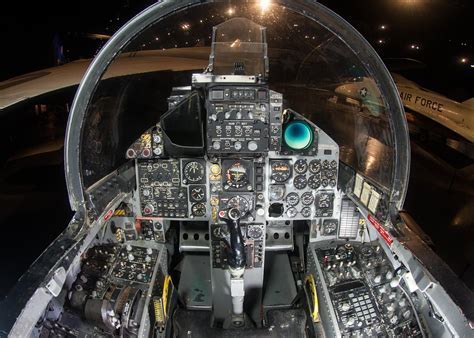
F-15 Eagle: The Pure Air Superiority Fighter
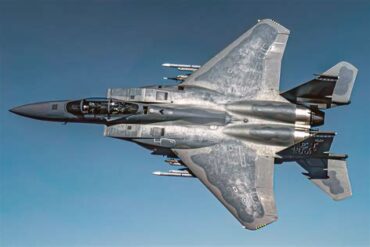
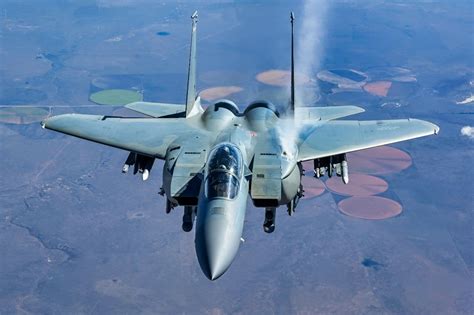
Developed in the 1970s, the F-15 Eagle was designed under the doctrine of “not a pound for air-to-ground,” emphasizing total air superiority. It featured exceptional speed, agility, and advanced radar capabilities, making it an unmatched dogfighter.
- Mach 2.5 speed, ensuring superior engagement capability.
- AN/APG-63 radar with a 160 km target detection range.
- 104:0 kill ratio, demonstrating absolute dominance in air combat.
The F-15 Eagle proved its worth in battles such as the 1982 Israeli-Syrian air war and the 1991 Gulf War, securing its legacy as one of the most successful fighter jets in history.
F-15EX: The Multi-Role Powerhouse
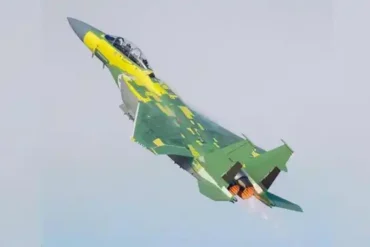
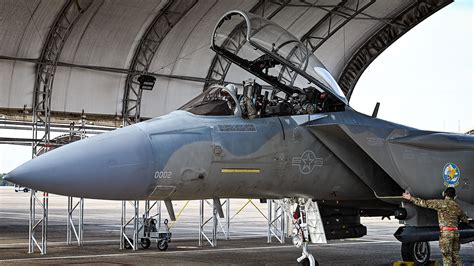
Unlike its predecessor, the F-15EX is designed for multi-role operations, seamlessly integrating air-to-air, air-to-ground, and electronic warfare capabilities. It was developed to replace aging F-15C/D models while complementing fifth-generation fighters like the F-35.
- Payload-focused design with increased weapons capacity.
- Network-centric warfare integration, allowing advanced connectivity.
- Extended operational lifespan, projected to serve until the 2040s.
Avionics and Sensors
F-15 Eagle: Legacy Systems with Upgrades
The early F-15 models relied on mechanical radars, such as the AN/APG-63, which, while advanced for its time, lacked modern stealth detection and electronic warfare countermeasures. Upgraded C/D models introduced better electronic warfare systems, but still fell behind newer fighter aircraft.
F-15EX: Cutting-Edge Sensor Fusion
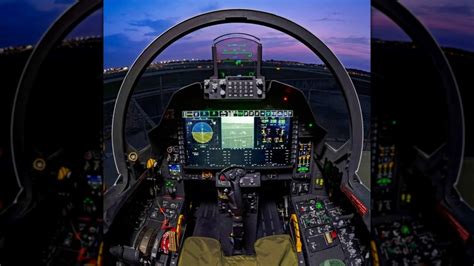
The F-15EX significantly improves upon its predecessor with the AN/APG-82(V)1 AESA radar, providing:
- 360-degree situational awareness, essential for modern battlefields.
- Enhanced jamming resistance, reducing vulnerability to electronic warfare.
- Legion Pod IRST system, enabling passive stealth target detection.
Furthermore, its Open Mission Systems (OMS) architecture ensures compatibility with future hypersonic weapons and software-driven warfare enhancements.
Engine and Performance
F-15 Eagle: Proven Speed and Maneuverability
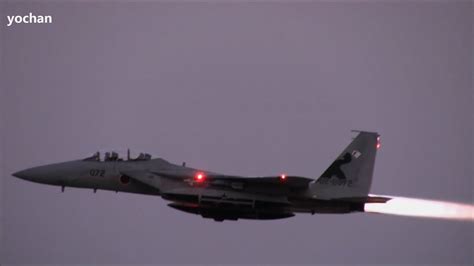
The F-15 Eagle is powered by Pratt & Whitney F100-PW-220 engines, producing 23,770 lbf of thrust each. This gives the Eagle an excellent thrust-to-weight ratio, allowing it to perform advanced aerial maneuvers such as the “Vertical Climb” and “Cobra Maneuver”.
F-15EX: More Power, More Efficiency
The F-15EX features General Electric F110-GE-129 engines, which provide:
- 29,000 lbf thrust per engine, a 30% increase over the Eagle.
- Improved fuel efficiency, extending mission endurance.
- Better acceleration, crucial for supersonic interception.
These enhancements allow the F-15EX to sustain higher speeds for longer durations, improving its survivability in modern combat scenarios.
Weapons and Payload Capacity
F-15 Eagle: A Traditional Air-to-Air Platform
The F-15 Eagle’s design limited its weapons payload to 8-10 air-to-air missiles, such as the AIM-7 Sparrow and AIM-120 AMRAAM. While effective for air superiority missions, its ability to carry air-to-ground ordnance was minimal.
F-15EX: The Ultimate Missile Truck
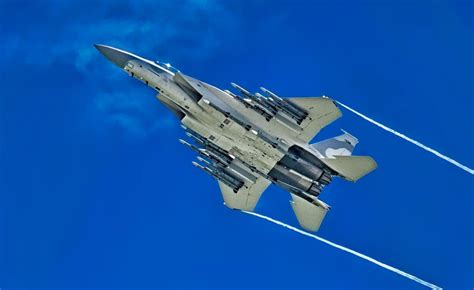
The F-15EX redefines payload capacity with 22 hardpoints, enabling it to carry up to 13.4 tons of ordnance. It supports:
- Up to 15 air-to-ground weapons, including AGM-158 JASSM-ER stealth cruise missiles.
- Hypersonic weapons like the AGM-183A ARRW.
- Massive air-to-air loadouts, functioning as a missile carrier for stealth fighters.
This makes the F-15EX a force multiplier, capable of overwhelming enemy defenses with superior firepower.
Cost, Maintenance, and Longevity
F-15 Eagle: Aging but Expensive
The F-15C/D models faced rising operational costs, averaging $40,000 per flight hour. Structural fatigue issues led to significant fleet reductions, particularly after the 2007 grounding incident.
F-15EX: Cost-Effective Longevity
The F-15EX is designed for affordability and longevity:
- Unit cost: $80 million, significantly lower than the F-35’s $135 million.
- 70% parts commonality with older F-15 models, reducing maintenance training costs.
- Service life of 20,000 flight hours, extending its operational effectiveness well beyond 2040.

Strategic Role in Modern Warfare
F-15 Eagle: Cold War Dominance
The F-15 was a Cold War powerhouse, built to counter Soviet aircraft. However, modern asymmetric warfare requires new capabilities beyond pure dogfighting.
F-15EX: Future-Proofed for Great-Power Conflicts
The F-15EX is designed for 21st-century warfare, particularly in contested environments such as the Indo-Pacific region. It integrates with AI-controlled drone swarms, enhancing battlefield coordination.
Conclusion
The F-15EX modernizes the legendary Eagle by incorporating cutting-edge avionics, unmatched payload capacity, and cost-effective enhancements. While the original F-15 revolutionized air combat, the F-15EX ensures continued dominance in an era of evolving threats.
FAQ
1. How does the F-15EX compare to fifth-generation fighters like the F-35?
The F-15EX is not a stealth aircraft but complements stealth fighters by acting as a missile truck, deploying long-range munitions while remaining networked with fifth-gen platforms.
2. Why was the F-15EX developed instead of more F-35s?
The F-15EX offers a lower cost per flight hour, greater weapons capacity, and a longer lifespan, making it ideal for roles that do not require stealth capabilities.
3. Can the F-15EX carry hypersonic weapons?
Yes, the F-15EX is designed to carry and launch hypersonic missiles, making it a crucial asset for future long-range strike missions.