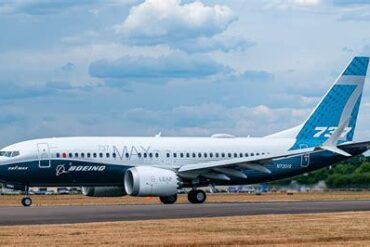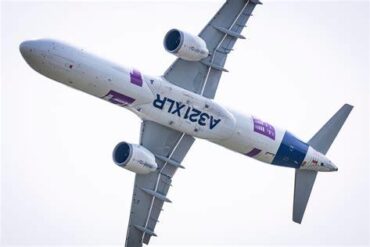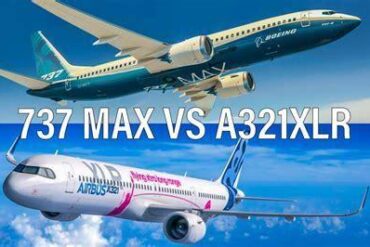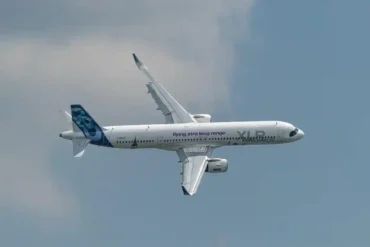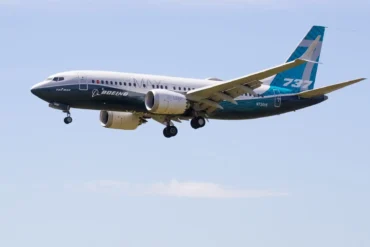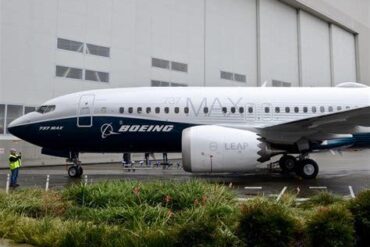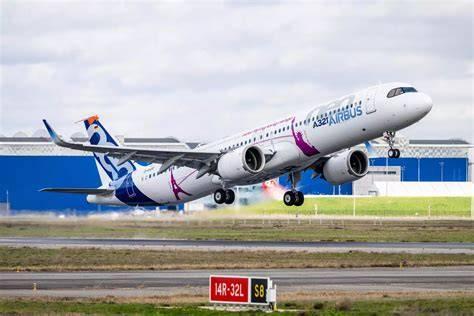
The competition between the Airbus A321XLR and the Boeing 737 MAX 10 represents one of the most important battles in the modern narrowbody aircraft market. Both jets were designed to serve airlines searching for greater efficiency, lower operating costs, and more flexibility than traditional single-aisle aircraft. Yet despite Boeing’s strong customer base and the popularity of the 737 MAX family, airlines have increasingly looked toward Airbus’s long-range A321XLR.
The reasons behind this shift are not based on a single factor. The A321XLR combines extended range, strong passenger capacity, operational flexibility, and proven availability, while the MAX 10 has struggled with certification delays that have created uncertainty for airlines waiting for deliveries. As carriers plan their future fleets, reliability of delivery schedules has become almost as important as aircraft performance itself.
The Boeing 737 MAX 10 still has significant support from major airlines, including United Airlines, Delta Air Lines, American Airlines, Ryanair, and Alaska Airlines. However, the aircraft has accumulated a large backlog without entering commercial service. Meanwhile, the Airbus A321XLR entered service in late 2024 and has already demonstrated its ability to perform missions that were previously difficult for single-aisle aircraft.
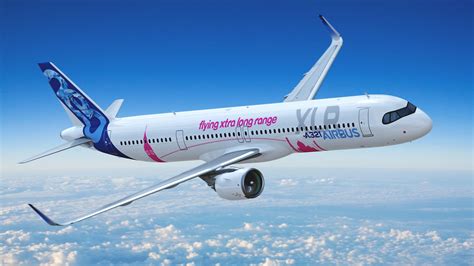
Airbus A321XLR Range Advantage Changes Airline Network Planning
The most important advantage of the Airbus A321XLR is its exceptional range capability. Modern airlines increasingly want aircraft that can open new markets without requiring the cost and capacity of a widebody jet. The A321XLR was specifically developed to address this demand.
With a range of approximately 4,700 nautical miles (8,700 kilometers), the A321XLR can fly significantly farther than the Boeing 737 MAX 10. The MAX 10 has a range of around 3,100 nautical miles (5,740 kilometers), creating a difference of roughly 1,600 nautical miles.
This additional range gives airlines opportunities to operate routes that were previously impossible or financially challenging with narrowbody aircraft. City pairs such as New York to Rome, London to Delhi, and Kuala Lumpur to Sydney demonstrate the type of missions the A321XLR can potentially support.
The aircraft achieves this capability through an advanced fuel system based on the A321LR design. Airbus added additional fuel capacity through modifications including an enlarged center wing tank and a permanent Rear Center Tank (RCT). The RCT alone provides approximately 3,400 gallons of additional fuel capacity while preserving useful cargo space.
For airlines, this capability creates a new category between traditional narrowbody aircraft and larger widebody jets. The A321XLR can offer long-range connectivity with fewer seats, allowing carriers to serve markets where demand does not justify a larger aircraft.
Boeing 737 MAX 10 Certification Delays Create Airline Uncertainty
While Airbus has been expanding A321XLR operations, Boeing’s largest 737 MAX variant has faced a different challenge: certification.
The 737 MAX 10 certification process has taken much longer than many airlines expected. The aircraft has received more than 1,000 orders, but customers have continued waiting for deliveries because Boeing has not yet completed regulatory approval.
The Federal Aviation Administration requires extensive system safety evaluations before certification. These assessments examine potential failure scenarios and ensure that aircraft systems can safely handle unusual or theoretical problems.
For a new aircraft design, these reviews can become extremely detailed. Boeing engineers have explained that even theoretical possibilities must be analyzed to demonstrate that safety requirements are fully satisfied.
The result has been a difficult situation for airlines. Carriers that placed major orders for the MAX 10 must continue operating existing aircraft longer than planned while waiting for replacement capacity. Fleet planning becomes more complicated when delivery timelines remain uncertain.
Boeing expects MAX 10 deliveries to begin after completing final certification work. However, because thousands of aircraft across Boeing’s commercial backlog are awaiting production and delivery, airlines may still face a lengthy wait before receiving their full orders.
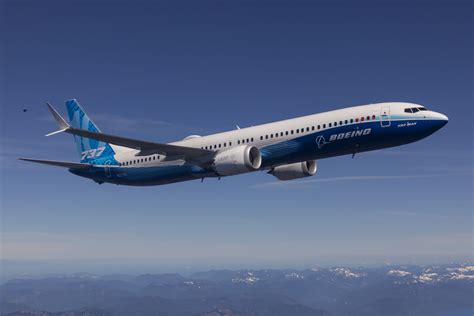
Airlines Value The A321 Family Commonality
Another major reason airlines continue choosing the A321XLR is fleet commonality. Aircraft families that share similar designs reduce training requirements, maintenance complexity, and operational costs.
The A321XLR is part of Airbus’s highly successful A320neo family. Airlines already operating A320neo and A321neo aircraft can introduce the XLR with fewer changes compared with adopting an entirely different aircraft type.
For pilots, common cockpit layouts mean easier transition training. For maintenance teams, shared systems and procedures reduce the need for new equipment and specialized knowledge. These advantages can create significant savings over the lifetime of an aircraft.
Large Airbus operators have recognized this benefit. IndiGo, one of the world’s largest low-cost airlines, has built its fleet strategy around Airbus narrowbody aircraft. The airline operates hundreds of A320neo and A321neo aircraft while also placing substantial orders for the A321XLR.
Other airlines are following similar strategies. Wizz Air has selected the A321XLR to support longer routes, while Air India converted some existing A321neo orders into A321XLR aircraft. Qantas has also expanded its commitment to the model.
By the end of March 2026, Airbus had secured more than 500 A321XLR orders. Although this number remains below the 737 MAX 10 backlog, the trend shows growing confidence in Airbus’s long-range narrowbody strategy.
The A321XLR Fills The Gap Left By The Boeing 757
The popularity of the A321XLR is closely connected to a gap in the aviation market left by the retirement of the Boeing 757.
The 757 became famous because it combined narrowbody economics with impressive range performance. Airlines used it for transatlantic flights, long domestic routes, and high-demand markets that did not require widebody aircraft.
The Boeing 737 MAX 10 offers increased capacity compared with smaller 737 models, but it does not fully replace the 757’s capabilities. Its shorter range limits its ability to perform many of the missions previously handled by the 757.
The A321XLR, however, was designed much closer to that mission profile. It can carry up to 244 passengers in a high-density configuration, while typical two-class layouts accommodate around 180 to 220 passengers.
Its combination of capacity and range makes it attractive for airlines seeking to replace older aircraft while maintaining route flexibility.
The aircraft is particularly valuable for so-called long and thin routes. These are markets where passenger demand exists, but not enough to justify a large widebody aircraft. A smaller, efficient aircraft allows airlines to maintain profitability while expanding their networks.
Airlines Are Already Using The A321XLR For Long-Haul Flights
A major advantage for Airbus is that the A321XLR is no longer just a future concept. Airlines are already operating the aircraft on demanding international routes.
IndiGo has used the A321XLR on flights between Delhi and Istanbul, demonstrating how the aircraft can support long international operations. The route previously required larger aircraft, including Boeing 777-300ER operations.
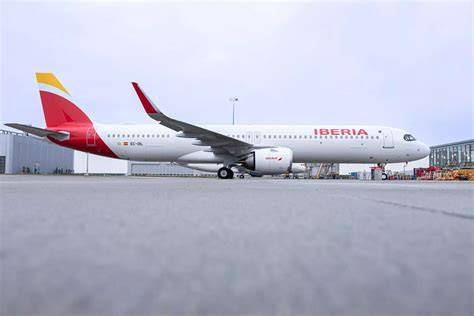
Iberia has also become one of the most visible operators of the A321XLR. The Spanish airline has used the aircraft for transatlantic services, including flights between Madrid and Washington Dulles.
The aircraft has allowed Iberia to increase connectivity while using a more efficient narrowbody platform. Routes that once required larger aircraft can now be operated with fewer seats and lower fuel consumption.
This operational experience gives airlines confidence that the A321XLR can perform beyond traditional narrowbody missions. Every successful route strengthens the aircraft’s reputation among carriers planning future networks.
Why Airlines Continue Choosing Airbus Over Boeing For Future Growth
The competition between the A321XLR and the 737 MAX 10 highlights how airline decisions are influenced by more than specifications alone. Aircraft performance, delivery reliability, operational experience, and long-term economics all play critical roles.
The Boeing 737 MAX 10 remains an important aircraft with strong airline support. Its passenger capacity and efficiency make it attractive for many high-density short and medium-haul routes. However, certification delays have weakened its position at a time when airlines want predictable fleet growth.
The Airbus A321XLR benefits from arriving at exactly the right moment. Airlines are searching for aircraft that can replace aging fleets, reduce costs, and create new international routes without moving to larger widebody jets.
Its long-range capability, A320 family commonality, and proven operational performance have made it one of the most strategically important aircraft in the narrowbody market.
As airlines continue adjusting their networks after years of industry disruption, flexibility has become a defining requirement. The A321XLR provides that flexibility by combining the economics of a single-aisle aircraft with capabilities once associated with much larger jets.
For many airlines, the choice is becoming clear: the future of long-distance narrowbody flying increasingly belongs to the Airbus A321XLR.