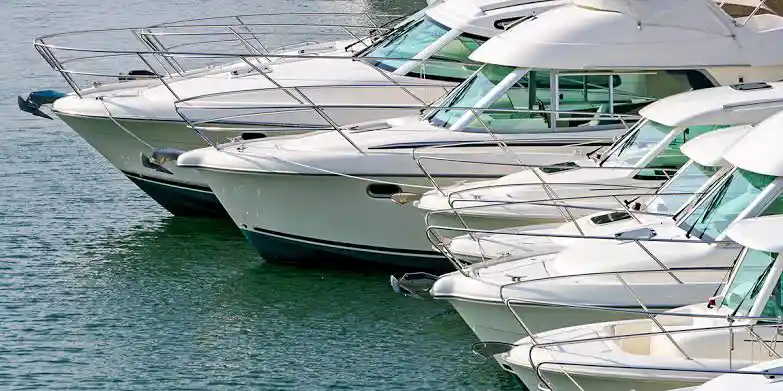
When shopping for a recreational boat, buyers may encounter the term “Yacht Certified” on a specification sheet, manufacturer website, or boat listing. The phrase can sound like a simple marketing label, but it has a more specific meaning within the U.S. recreational marine industry. Yacht Certification indicates that a boat manufacturer has voluntarily met a set of standards that go beyond the basic federal requirements enforced by the U.S. Coast Guard.
The word “yacht” itself does not necessarily describe a particular size, price, or luxury level. A yacht can range from a relatively compact recreational vessel to a massive superyacht. What matters for Yacht Certification is the way the vessel is designed and manufactured, and whether the manufacturer follows the standards established through the National Marine Manufacturers Association (NMMA) certification program.
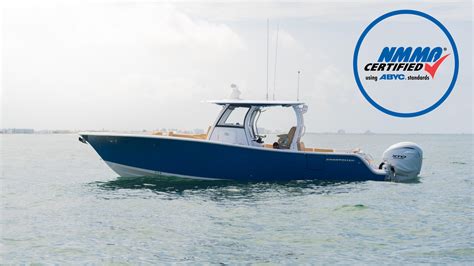
What Is Yacht Certification?
The NMMA Yacht Certification program was introduced in 2000 to encourage recreational boat manufacturers to build vessels to higher standards than the federal minimum. U.S. law establishes mandatory safety requirements for recreational boats, with enforcement handled by the Coast Guard. Yacht Certification adds another layer of industry standards developed with the American Boat & Yacht Council (ABYC) and the Coast Guard.
A boat does not have to be Yacht Certified to be legally sold in the United States. Manufacturers can produce compliant boats as long as they satisfy applicable federal requirements. However, certification demonstrates that the manufacturer has voluntarily subjected its products and manufacturing processes to more demanding standards.
What Does “Yacht Certified” Mean for Boat Buyers?
For consumers, Yacht Certification is primarily an indication of construction quality, safety practices, and manufacturing consistency. It does not mean that every certified boat is luxurious, exceptionally large, or completely free from mechanical problems. Instead, it shows that the manufacturer has met the requirements of the certification program for the relevant model year.
The standards cover more than simply the hull. They address numerous areas of boat design and construction, including fuel systems, ventilation, electrical systems, navigation lights, passenger capacity, dimensions, horsepower, and other safety-related characteristics.

Manufacturers seeking certification must register with the NMMA and satisfy the applicable requirements during construction and manufacturing. Certified manufacturers are included in the NMMA’s certification records for a particular model year and must undergo the certification process again as required.
How Is Yacht Certification Different From Federal Compliance?
The key distinction is that federal compliance represents the legal baseline, while Yacht Certification represents voluntary adherence to additional industry standards. A non-certified boat can therefore be completely legal and suitable for recreational use. Certification should not be interpreted as proof that every non-certified vessel is unsafe.
For a buyer, however, the certification can provide another useful piece of information when evaluating a boat. It suggests that the manufacturer has chosen to follow a broader and more demanding set of construction practices rather than stopping at the minimum regulatory requirements.
Why Yacht Certification Matters
Safety is one of the major reasons the certification exists. The reference material cites studies associated with the ABYC and Coast Guard indicating that higher-quality certified boats have experienced substantially lower rates of certain boating accidents and reduced operational fatality risk compared with non-certified vessels.
Those figures should not be interpreted as a guarantee for an individual boat or owner, because maintenance, operation, weather, equipment, and many other factors influence boating safety. Still, they illustrate why Yacht Certification can be meaningful when assessing overall vessel quality.
Ultimately, “Yacht Certified” is best understood as a mark of a manufacturer’s commitment to standards that go beyond the basic legal requirements. For someone purchasing a recreational boat, it can be a useful indicator when considered alongside the vessel’s age, maintenance history, equipment, design, and manufacturer reputation.