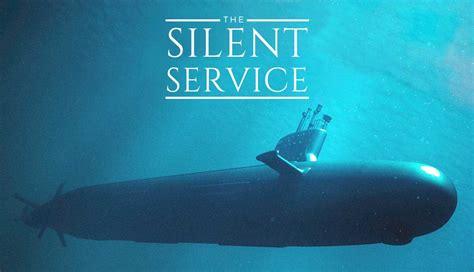
The phrase “Silent Service” has long been associated with the United States Navy’s submarine force, reflecting a culture built around stealth, secrecy, and operational excellence. Unlike aircraft carriers and destroyers that project visible military power across the oceans, submarines succeed precisely because they remain hidden. Their missions often unfold far beneath the surface, undetected by adversaries and unknown to the public, making silence one of their greatest strategic advantages.
For generations, submariners have embraced this identity as more than a nickname. It represents a commitment to operating in isolation, carrying out sensitive missions, and protecting national interests without recognition or publicity. The Silent Service continues to play a central role in modern naval strategy through intelligence gathering, deterrence, and precision strike capabilities.
Why the U.S. Navy Calls Its Submarine Force the Silent Service
The title “Silent Service” originated from the combination of stealth-based operations and the highly secretive nature of submarine missions. While warships on the surface may display flags and conduct visible patrols, submarines are designed to disappear beneath the waves, minimizing both acoustic and visual signatures.
Success depends on avoiding detection through disciplined crew procedures and advanced engineering. Every aspect of submarine operations—from propulsion systems to onboard routines—is intended to reduce noise that could reveal the vessel’s position. This emphasis on silence enables submarines to monitor hostile forces, collect intelligence, shadow enemy ships, and position themselves for strategic missions without being discovered.
For submariners, silence is not simply a tactic but a defining operational philosophy that governs every deployment.
The Historical Origins of Underwater Stealth Warfare
Long before nuclear-powered submarines existed, military planners understood the value of attacking from concealment. During the American Revolutionary War in 1776, the experimental submersible The Turtle represented one of the earliest attempts to use underwater stealth against enemy forces. Although its mission failed, it demonstrated the potential advantages of covert naval operations.
Later, during the American Civil War, Confederate innovations further advanced underwater warfare. Vessels such as the CSS David conducted surprise attacks that unsettled Union forces, while the H.L. Hunley achieved the first successful sinking of an enemy warship by a submarine despite suffering catastrophic losses itself.
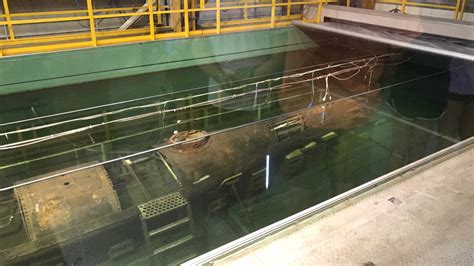
These early experiments established the importance of darkness, concealment, and quiet movement. The principles developed during these conflicts would eventually become fundamental doctrines for future submarine operations.
World War II Cemented the Silent Service Legacy
The reputation of America’s submarine fleet reached new heights during World War II, particularly in the Pacific Theater. U.S. submarines launched relentless campaigns against Japanese shipping lanes, disrupting logistics and severely weakening enemy military capabilities.
Operating independently for extended patrols, submarine crews relied on stealth to infiltrate heavily defended waters before striking merchant vessels and warships. Historical records credit American submarines with sinking 1,314 enemy ships, accounting for more than half of all Axis naval losses attributed to U.S. forces during the conflict.
Government censorship also contributed to the nickname’s popularity. Official announcements frequently highlighted enemy losses while revealing little about the submarines responsible or the missions themselves. As a result, both the public and military personnel increasingly referred to the submarine community as the Silent Service, reinforcing an image built around secrecy and effectiveness.
Modern Silent Service Missions in the Twenty-First Century
Today’s submarine force performs an extraordinarily diverse range of missions that extend far beyond traditional naval combat. Modern boats conduct intelligence collection, surveillance, reconnaissance, anti-submarine warfare, precision missile strikes, and special operations support while remaining largely invisible.
The fleet includes three principal categories:
- Attack submarines (SSNs) optimized for hunting enemy vessels, gathering intelligence, and launching cruise missiles.
- Ballistic missile submarines (SSBNs) that carry nuclear weapons as part of America’s strategic deterrent.
- Guided missile submarines (SSGNs) equipped with large numbers of conventional cruise missiles and capable of supporting special operations forces.
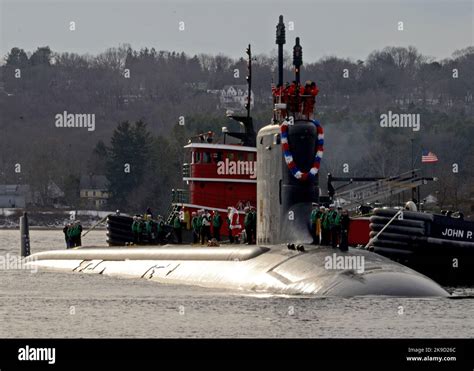
Each platform fulfills a distinct mission, yet all depend on maintaining acoustic superiority and avoiding detection throughout deployment.
Why Silence Remains a Strategic Advantage
Modern naval warfare increasingly relies on sensors capable of detecting heat, radar signatures, and underwater sound. Despite rapid technological advances, submarines retain a unique ability to operate where other military assets cannot, providing governments with flexible response options during crises.
Their hidden presence creates uncertainty for potential adversaries, forcing opponents to devote significant resources to anti-submarine warfare while never knowing exactly where these vessels may be positioned. Ballistic missile submarines, in particular, contribute to strategic stability by ensuring a survivable nuclear deterrent even under the most extreme circumstances.
The Silent Service therefore represents both a tactical capability and a psychological one, influencing calculations far beyond the battlefield itself.
The Enduring Meaning of the Silent Service
The phrase “Silent Service” captures the defining characteristics of the U.S. Navy’s submarine force: stealth, discipline, secrecy, and unwavering professionalism. From the primitive underwater craft of the eighteenth century to today’s sophisticated nuclear-powered submarines, generations of submariners have relied on remaining unseen to accomplish missions that directly affect national security.
Although their achievements rarely attract the public attention given to aircraft carriers or fighter squadrons, the Silent Service continues to operate around the globe every hour of every day. Its effectiveness is measured not by visibility but by invisibility, proving that in naval warfare, the greatest strength is often the ability to remain completely silent.