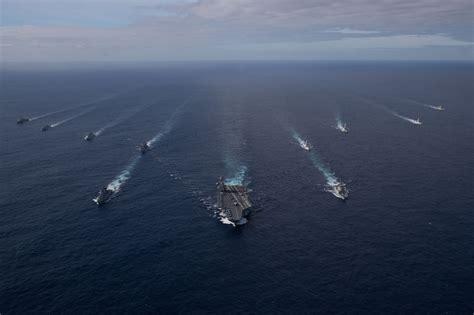
The expansion of the United States Navy’s aircraft carrier fleet is unfolding with minimal public fanfare, yet its strategic implications are immense. At a time when global maritime power competition is intensifying, the Navy is not merely adding ships—it is redefining what a carrier fleet represents in modern warfare. The push toward a 12-carrier force, combined with a radical transformation in naval aviation, signals a deliberate shift toward greater resilience, survivability, and operational dominance in contested environments.
For decades, aircraft carriers have been the centerpiece of American power projection. Today, however, their role is evolving under pressure from anti-ship ballistic missiles, hypersonic weapons, and advanced surveillance networks developed by near-peer adversaries. The Navy’s response is not reactive—it is calculated, layered, and quietly revolutionary.
The Strategic Logic Behind a 12-Carrier Fleet
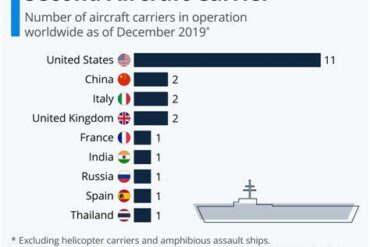
The current carrier force structure revolves around 11 operational supercarriers, but maintaining this number consistently has proven increasingly difficult. Aging hulls, maintenance cycles, and delays in next-generation platforms have created gaps that threaten readiness. By pushing toward a 12-carrier fleet, the Navy is seeking to ensure that a sufficient number of carriers remain combat-ready at any given moment, even as others undergo refueling or overhaul.
At the heart of this effort is the extension of the life of USS Nimitz, which will remain in service until at least 2027. This decision reflects more than a stopgap measure—it underscores the fragility of fleet balance during a transitional era. Without this extension, the Navy risks dipping below critical force levels before newer carriers are delivered.
The introduction of the Gerald R. Ford-class aircraft carrier is central to long-term expansion. These next-generation carriers are designed to deliver higher sortie rates, reduced crew requirements, and advanced electromagnetic launch systems. However, their integration has not been seamless. Technical delays and cost overruns have slowed deployment timelines, forcing the Navy to rely heavily on legacy platforms.
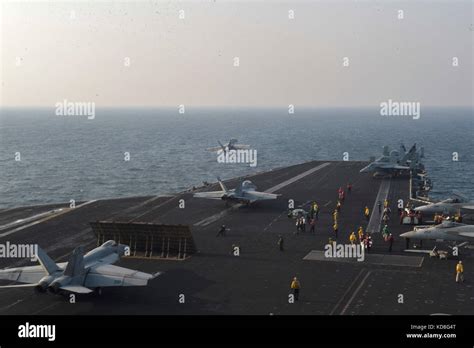
This creates a narrow operational margin. If a single carrier faces unexpected delays or maintenance issues, the entire force posture can be compromised. Expanding to 12 carriers is therefore less about excess capacity and more about ensuring continuity in global presence, particularly in high-risk theaters such as the Indo-Pacific.
Block Procurement: Building Carriers Faster and Smarter
A significant shift in procurement strategy is helping to accelerate carrier production. Instead of ordering ships individually, the Navy has adopted a block-buy approach, purchasing multiple carriers in a single contract. This method has already demonstrated substantial cost savings and efficiency gains.
The simultaneous construction of USS Enterprise and USS Doris Miller reduced engineering hours dramatically and saved billions of dollars. By maintaining a steady production line, shipbuilders can refine processes, reduce redundancies, and stabilize the workforce—factors that directly translate into faster delivery timelines and lower costs.
This strategy is now being considered for future carriers, potentially including CVN-82 and CVN-83. The implications are profound. A consistent production rhythm not only strengthens industrial capacity but also ensures that the Navy can scale its fleet in response to emerging threats without starting from scratch each time.
From Floating Airfields to Networked Warfighting Hubs
The modern aircraft carrier is no longer just a platform for launching fighter jets. It is rapidly transforming into a floating command node within a vast, interconnected combat network. This evolution is driven by the concept of distributed maritime operations, where multiple assets—manned and unmanned—operate in coordination across large distances.
The carrier’s role is shifting from a singular strike platform to a central orchestrator of combat power, integrating data from satellites, drones, submarines, and surface vessels. This transformation is critical in environments where centralized forces are vulnerable to precision strikes.
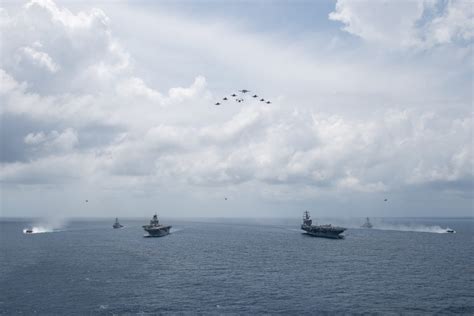
To support this shift, carriers are being equipped with advanced communication systems and data-processing capabilities. These upgrades enable real-time coordination between platforms, allowing commanders to make faster, more informed decisions. The result is a fleet that is not only larger but exponentially more capable.
The Rise of Carrier-Based Drones
Perhaps the most transformative aspect of the Navy’s expansion is the integration of unmanned systems into the carrier air wing. The introduction of the MQ-25 Stingray marks the beginning of a new era in naval aviation.
Unlike traditional aircraft, the MQ-25 operates autonomously, capable of launching, landing, and refueling other aircraft without direct human control. Its primary mission—aerial refueling—addresses a longstanding limitation in carrier operations: range.
By extending the reach of platforms like the F-35C Lightning II and the F/A-18 Super Hornet, the MQ-25 effectively doubles the strike radius of the carrier air wing. This capability is crucial in contested environments where carriers must operate farther from enemy defenses.
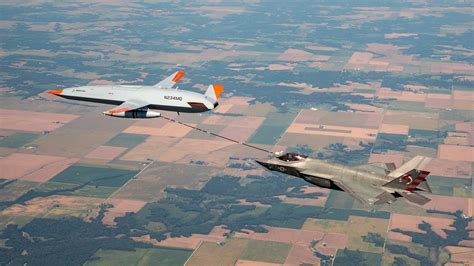
Equally important is the MQ-25’s ability to free up manned aircraft from “buddy tanking” missions. Currently, a significant portion of fighter sorties is dedicated to refueling other jets—a task that consumes resources and limits combat availability. By taking over this role, the MQ-25 allows fighters to focus on offensive and defensive operations, enhancing overall combat effectiveness.
Collaborative Combat Aircraft: The Future of Air Superiority
Beyond the MQ-25, the Navy is investing heavily in Collaborative Combat Aircraft (CCA)—a new class of autonomous drones designed to operate alongside manned fighters. These “loyal wingmen” represent a fundamental shift in how air power is generated and sustained.
Unlike traditional aircraft, CCAs are attritable, meaning they are designed to be expendable. They can undertake high-risk missions—such as penetrating heavily defended airspace or conducting electronic warfare—without risking human lives. This approach enables the Navy to increase operational mass without incurring prohibitive costs.
The integration of CCAs into carrier operations will create a hybrid air wing where unmanned systems gradually outnumber manned aircraft. Pilots will transition from direct operators to mission commanders, controlling multiple drones simultaneously through advanced interfaces.
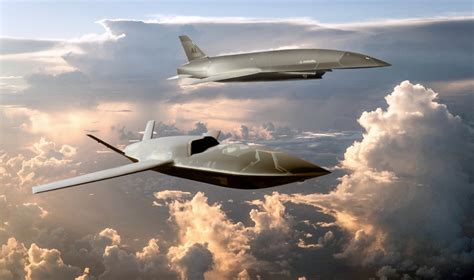
This model offers several advantages. It enhances survivability by dispersing assets, increases flexibility by enabling rapid reconfiguration of forces, and reduces long-term costs by relying on shorter-lived, lower-cost platforms. In essence, it transforms the carrier air wing into a scalable, adaptive combat system.
Reengineering the Carrier for the Drone Age
The shift toward unmanned systems is not limited to aircraft—it extends to the very design of the carrier itself. Modern carriers are being reconfigured to support a high-bandwidth, data-driven operational environment.
Flight decks, hangars, and maintenance facilities are being optimized for drones, which have different requirements than manned aircraft. At the same time, carriers are being equipped with advanced control stations that allow operators to manage multiple unmanned systems simultaneously.
The USS George H.W. Bush has already received a full suite of drone control capabilities, including a dedicated ground control station. These systems enable seamless integration of unmanned platforms into daily operations, paving the way for a future where up to 60% of the air wing could be uncrewed.
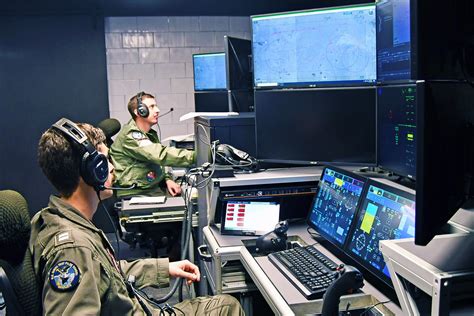
This transformation also includes the development of a “tactical cloud,” a digital network that allows drones to be controlled from multiple locations. A drone launched from one carrier could be operated by personnel on another ship—or even from a land-based command center—creating unprecedented flexibility in combat operations.
Training a New Generation of Naval Operators
As technology evolves, so too must the people who operate it. The integration of unmanned systems is driving a fundamental shift in how the Navy trains its personnel. Traditional pilots are now joined by remote operators, data analysts, and systems engineers, all working together to manage complex networks of manned and unmanned platforms.
New training programs are being developed to prepare sailors for these roles, including specialized squadrons dedicated to unmanned aviation. These units focus on mastering the unique challenges of operating drones in a maritime environment, from deck handling to mission planning.
The goal is to create a workforce that is not only technically proficient but also adaptable—capable of operating in a rapidly changing battlespace where technology and tactics evolve in tandem.
Global Implications: Power Projection in a Contested Era
The quiet expansion of the carrier fleet is not occurring in a vacuum. It is a direct response to shifting global dynamics, particularly in regions where access is increasingly contested. In the Indo-Pacific, for example, the ability to maintain a persistent carrier presence is critical to deterring aggression and ensuring freedom of navigation.
By combining a larger fleet with advanced unmanned systems, the Navy is positioning itself to operate effectively even in highly contested environments. Carriers will be able to strike from greater distances, deploy more assets, and sustain operations for longer periods—all while reducing risk to personnel.
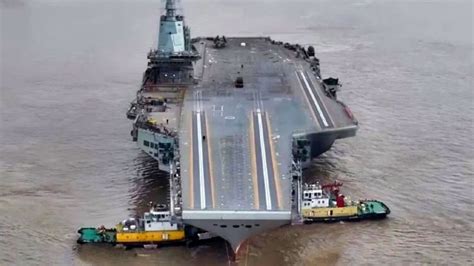
This approach reflects a broader strategic philosophy: resilience through distribution and innovation. Rather than relying on a few high-value assets, the Navy is building a force that is redundant, flexible, and difficult to neutralize.
The Silent Transformation of Naval Power
The expansion of the US Navy’s aircraft carrier fleet is not just about numbers—it is about reinvention. By integrating unmanned systems, adopting new procurement strategies, and reengineering its platforms, the Navy is preparing for a future where traditional assumptions about naval warfare no longer apply.
This transformation is happening quietly, without the dramatic announcements that often accompany major military initiatives. Yet its impact will be profound. A 12-carrier fleet equipped with advanced drones and networked systems represents a quantum leap in capability, one that will shape the balance of power at sea for decades to come.
In the end, the story is not simply about more carriers. It is about a new model of maritime dominance, where technology, strategy, and innovation converge to create a force that is greater than the sum of its parts.