The global airline industry is quietly undergoing one of its most significant strategic shifts in decades. Instead of focusing purely on increasing passenger numbers, major carriers are restructuring their aircraft cabins to prioritize a different metric entirely: revenue per seat. American Airlines, one of the world’s largest carriers, has embraced this transformation with remarkable intensity. Through a combination of new aircraft deliveries, large-scale cabin retrofits, and the introduction of entirely new seat designs, the airline is dramatically expanding its premium offering across its long-haul fleet.
This move is not merely a cosmetic refresh. It represents a structural repositioning of how American Airlines intends to compete in international markets over the coming decade. Premium cabins—particularly business class and premium economy—now generate a disproportionately large share of airline revenue on long-haul routes. As corporate travel gradually stabilizes after the pandemic while high-spending leisure travelers continue to drive demand, airlines have realized that the most valuable passenger is not necessarily the most numerous one.
American Airlines’ response has been decisive. The carrier is redesigning widebody aircraft, expanding premium seating capacity, and introducing a new flagship business class suite that aims to compete directly with the most advanced products offered by international rivals.
The Strategic Shift Toward Premium Revenue
For much of the early 2000s, airline competition focused heavily on scale. Carriers expanded route networks, added more seats to aircraft, and attempted to increase flight frequencies to capture market share. While these tactics helped drive passenger growth, they also compressed margins as economy fares remained highly competitive.
The economics of long-haul aviation gradually revealed a different truth. A relatively small number of premium passengers could generate a large portion of an aircraft’s total revenue. Business class seats often sell for several times the price of economy tickets, while premium economy provides an additional revenue tier between the two extremes.
As airlines analyzed booking data and revenue streams, a clear pattern emerged: maximizing the number of seats on an aircraft did not necessarily maximize profit. What mattered more was optimizing the mix of cabin classes.
American Airlines has now embraced this concept fully. The company plans to expand its premium seating capacity across its long-haul fleet by more than 45 percent by the middle of the decade, a dramatic increase that signals a long-term commitment rather than a short-term product refresh.
This transformation includes both new aircraft acquisitions and extensive retrofits of existing widebody jets, ensuring that the premium experience becomes a consistent feature across the airline’s international operations.
The Flagship Suite: A New Era of Business Class
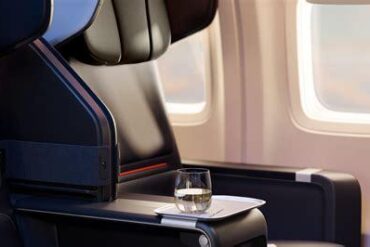
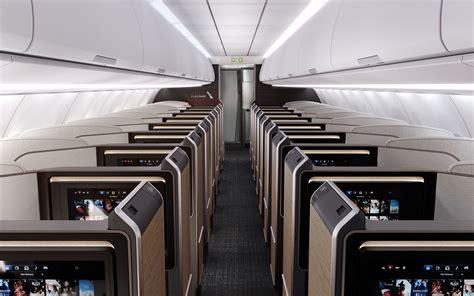
At the heart of American Airlines’ premium strategy lies its newest cabin innovation: the Flagship Suite business class seat. This product marks the airline’s most substantial upgrade to its long-haul business class offering in over a decade.
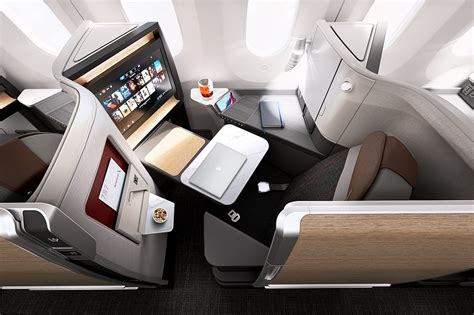
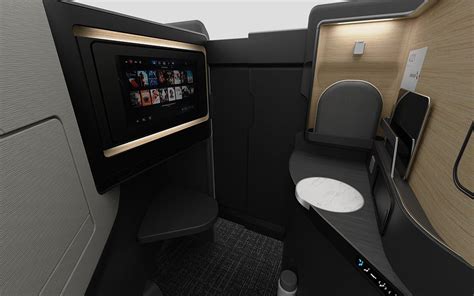
Unlike earlier designs that relied primarily on angled seating layouts or open configurations, the Flagship Suite introduces fully enclosed business class seating. Each suite features a sliding privacy door, giving passengers a personal space that resembles a compact private room rather than a traditional airline seat.
The design reflects a broader shift in passenger expectations. Privacy, once associated mainly with first-class cabins, has increasingly become a defining feature of modern business class products. Airlines around the world—from Qatar Airways to Delta Air Lines—have introduced suite-style seating, and American’s new design brings the carrier firmly into this competitive arena.
Beyond privacy, the Flagship Suite incorporates several technological and ergonomic improvements intended to enhance the long-haul travel experience:
- Wireless charging stations for personal devices
- Expanded storage compartments for laptops and travel accessories
- Chaise-lounge seating positions that allow multiple reclining configurations
- Large high-definition entertainment displays
- Improved bedding and sleep ergonomics
These elements combine to create an environment tailored to two distinct types of travelers: corporate passengers working during the flight and leisure travelers seeking maximum comfort on long journeys.
American Airlines is also improving the surrounding experience. Updated dining presentation, upgraded amenity kits, and enhanced onboard connectivity are designed to complement the physical seat itself, creating a cohesive premium experience throughout the flight.
Premium-Heavy Boeing 787-9 Dreamliners Lead the Transformation
The aircraft spearheading this transformation is the Boeing 787-9 Dreamliner, which has become the central platform for American Airlines’ next-generation cabin design.
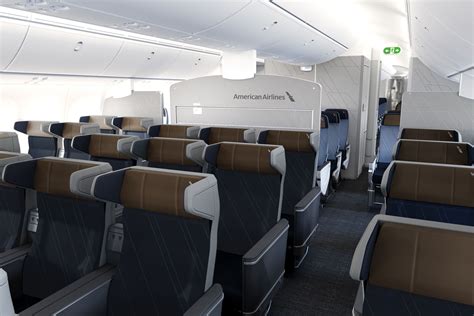
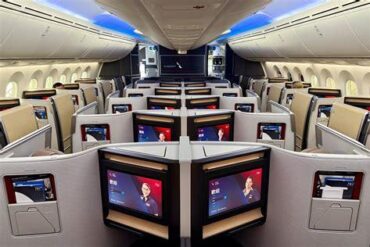
Newly delivered 787-9 aircraft arrive in what American describes as a “premium-heavy configuration.” Instead of maximizing economy seating, the airline has dramatically increased the number of premium seats onboard.
Each of these aircraft includes 51 Flagship Suite business class seats, significantly more than earlier Dreamliner configurations within the fleet. The expansion allows American Airlines to capture more high-value bookings on routes where premium demand is particularly strong.
Several major international routes already utilize these aircraft, including:
- Chicago O’Hare to London Heathrow
- Philadelphia to London Heathrow
- Additional long-haul transatlantic routes expected to follow
The Dreamliner itself provides an ideal platform for this strategy. Built largely from lightweight composite materials, the aircraft offers excellent fuel efficiency and extended range, enabling airlines to operate long-distance routes more economically than previous widebody generations.
Lower operating costs combined with higher premium seating density create a powerful financial equation. Even when economy fares fluctuate or demand softens, premium passengers can maintain strong revenue performance for the route.
Premium Economy: The Fastest-Growing Cabin Segment
While business class often receives the most attention, another cabin category is quietly reshaping airline economics: Premium Economy.
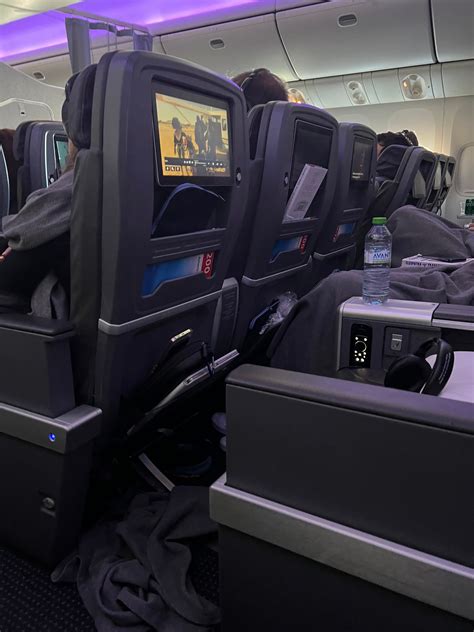
Premium Economy serves as a strategic bridge between standard economy seating and business class. Passengers receive wider seats, increased legroom, improved dining, and larger entertainment screens—without the full cost of a lie-flat seat.
This cabin class has become increasingly attractive for travelers who want additional comfort but may not justify the significantly higher price of business class. Long-haul leisure passengers, in particular, have embraced this middle-tier product.
American Airlines has expanded Premium Economy across its updated widebody fleet, introducing:
- Larger seatback entertainment displays
- Additional personal storage space
- Enhanced privacy dividers
- Upgraded cabin finishes and lighting
From a revenue standpoint, Premium Economy provides airlines with valuable pricing flexibility. It allows carriers to capture incremental revenue from passengers who might otherwise choose standard economy but are willing to pay extra for additional comfort.
In practice, this means airlines can divide demand into more pricing tiers, improving yield management across the entire aircraft.
Retrofitting the Boeing 777 Fleet
New aircraft deliveries alone cannot transform an airline’s long-haul product. American Airlines still operates a large fleet of Boeing 777 widebody aircraft, many of which were originally configured with older business class designs.
To address this, the airline has launched an extensive retrofit program that will install the new Flagship Suite interiors on existing Boeing 777-300ER aircraft.
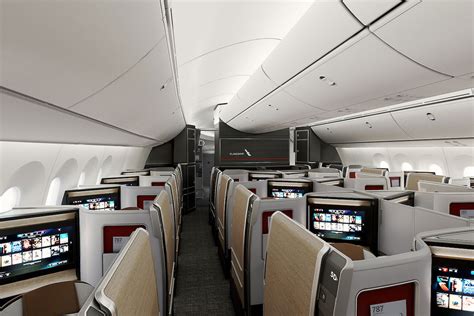
Retrofitting aircraft is a complex undertaking. Cabin interiors must be completely removed, structural mounting points reconfigured, and new electrical systems installed to support modern entertainment displays and connectivity hardware.
The benefit of this investment is long-term consistency. Frequent travelers increasingly expect a predictable onboard experience, regardless of the aircraft operating their flight. By standardizing cabin design across multiple aircraft types, American Airlines reduces the risk of product inconsistencies that could frustrate premium customers.
Once retrofits are completed, passengers flying on American’s major international routes will encounter essentially the same flagship business class experience whether they are onboard a Boeing 787 or a Boeing 777.
The Airbus A321XLR and a New Long-Haul Model
While widebody aircraft remain central to American Airlines’ international network, the airline is also exploring a new operational model enabled by the Airbus A321XLR.
The A321XLR is a long-range narrowbody aircraft capable of flying routes previously reserved for larger twin-aisle jets. Its extended range allows airlines to connect smaller markets across the Atlantic or other long-haul regions without requiring the passenger volume necessary to fill a widebody aircraft.
American Airlines will equip its A321XLR fleet with 20 Flagship Suite seats, bringing lie-flat business class to a narrowbody platform for the first time within the airline’s fleet.
Despite the aircraft’s smaller size, passengers will experience many of the same premium features available on widebody flights, including:
- Fully lie-flat seating
- Privacy doors
- Modern inflight entertainment systems
- Premium cabin finishes
This approach allows American Airlines to operate long-haul routes with lower overall capacity but higher revenue density.
For example, secondary European cities that might not support a large widebody aircraft could become profitable routes if served by a smaller aircraft with strong premium demand.
Network Flexibility and Competitive Strategy
The introduction of premium-heavy aircraft also provides American Airlines with greater flexibility in how it structures its global network.
Historically, airlines often relied on a limited number of major hubs and large aircraft to transport passengers between continents. Today’s fleet developments enable more nuanced strategies.
Smaller long-range aircraft like the A321XLR can serve thinner routes, while efficient widebodies like the 787-9 allow airlines to maintain profitability on major intercontinental corridors.
At the same time, premium seating density allows airlines to maintain strong revenue performance even if total passenger numbers fluctuate. Business travelers, luxury leisure passengers, and premium economy customers collectively create a more resilient revenue base.
This flexibility becomes especially important in highly competitive markets such as the North Atlantic, where airlines from the United States and Europe compete intensely for high-value travelers.
Responding to Delta and United’s Premium Push
American Airlines’ investment in premium cabins is also a direct response to competitive pressure. Over the past decade, both Delta Air Lines and United Airlines have invested heavily in upgraded cabin products, including suite-style business class seats and expanded airport lounge networks.
Delta introduced the Delta One Suite, featuring sliding privacy doors and premium bedding. United followed with its Polaris business class product, emphasizing improved sleep comfort and lounge experiences.
These investments reshaped passenger expectations, particularly among frequent international travelers who regularly compare airline products before booking flights.
American Airlines’ new Flagship Suite represents its answer to this evolving competitive landscape. By introducing enclosed business class seating and expanding premium capacity across its fleet, the airline positions itself more effectively against both domestic rivals and international carriers.
Why Premium Demand Is Expected to Remain Strong
The airline industry has long been sensitive to economic cycles, but premium travel has shown surprising resilience in recent years. Even as some corporate travel budgets remain below pre-pandemic levels, premium leisure travel has surged.
Affluent travelers increasingly prioritize comfort and convenience on long flights, and many are willing to spend more on upgraded seating.
Airlines have recognized that these passengers represent a more stable and profitable customer segment compared to highly price-sensitive economy travelers.
American Airlines’ fleet strategy reflects this reality. By increasing premium seating capacity while maintaining efficient aircraft operations, the airline aims to strengthen profitability even when broader market conditions fluctuate.
A Defining Moment for American Airlines’ Long-Haul Brand
American Airlines’ investment in premium cabins marks one of the most significant transformations in the airline’s modern history. Through new aircraft like the Boeing 787-9 and Airbus A321XLR, large-scale retrofits of existing widebodies, and the introduction of the Flagship Suite, the carrier is reshaping its long-haul identity around comfort, privacy, and high-yield passengers.
The strategy goes beyond simply upgrading seats. It represents a deeper shift in how airlines compete in the global aviation market. Instead of relying purely on network size or flight frequency, carriers increasingly differentiate themselves through the onboard experience.
If American Airlines successfully executes this transformation, its evolving fleet could position the airline as a stronger competitor in the premium travel segment for years to come. In an industry where margins are often razor-thin, the passengers seated at the front of the aircraft may ultimately determine the financial trajectory of the entire flight.