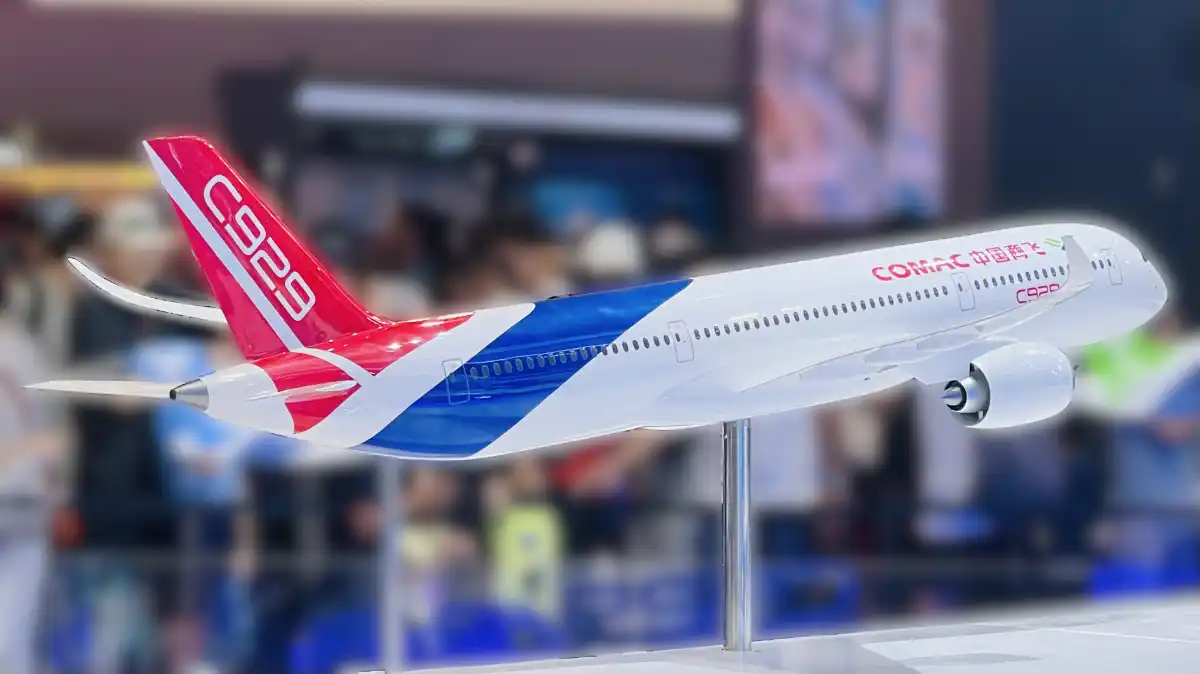
China’s aviation ambitions have entered a new and consequential phase. The development of the COMAC C929 widebody jet—a long-haul aircraft designed to compete with Boeing’s 787 Dreamliner and Airbus’s A330neo—signals more than industrial progress. It represents a deliberate strategy to challenge Western dominance in one of the world’s most complex and strategically sensitive industries. For the United States, the concern is not merely about another airplane entering service. It is about the reshaping of global aerospace influence, supply chains, regulatory leverage, and geopolitical power.
Commercial aviation has always been intertwined with national strategy. Aircraft are not just machines that carry passengers; they are products of advanced materials science, propulsion engineering, avionics software, and regulatory trust. Widebody aircraft, in particular, embody a nation’s technological maturity. When China advances into this segment, Washington pays attention.
The C929 program, now deep in its design phase, has already revealed full-scale mock-ups at major Chinese air shows. Open-source intelligence reports indicate successful high-thrust testing of the indigenous CJ-2000 turbofan engine, producing approximately 77,600 pounds of thrust. Analysts increasingly expect a maiden flight around 2030, with entry into service likely in the mid-2030s. On paper, this timeline suggests no immediate disruption. In strategic terms, however, it signals an irreversible shift.
The C929: A Widebody Challenger With Strategic Intent
China’s state-backed Commercial Aircraft Corporation of China (COMAC) designed the C929 to occupy the mid-sized widebody category. With projected seating between 280 and 400 passengers and an estimated range of roughly 6,500 nautical miles, it aligns most closely with the Boeing 787-10 and Airbus A330neo rather than the ultra-long-range variants like the A350-1000.
This range profile is not accidental. A 6,500-nautical-mile capability covers the majority of profitable long-haul routes worldwide, including transcontinental Asia-Europe flights and many Pacific segments. It does not need to surpass Western competitors. It needs to be operationally sufficient.
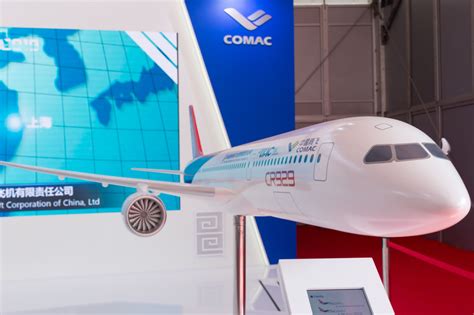
The aircraft is expected to incorporate over 50% composite materials. While this is lower than the composite-heavy Boeing 787 or Airbus A350, it still represents a dramatic leap for China’s aerospace materials capability. Composites reduce weight, improve fuel efficiency, and resist corrosion. Mastery of them signals industrial sophistication.
The C929 is also part of a larger portfolio strategy. COMAC has already fielded the regional C909 (formerly ARJ21) and the narrowbody C919, which competes with the Airbus A320 and Boeing 737 families. Future ambitions include the larger C939 to rival the A350 and 777X, and even the conceptual C949 supersonic airliner. In short, China is methodically constructing a complete commercial aircraft ecosystem.
This breadth is what unsettles Washington. The goal is not a niche aircraft. It is a vertically integrated, state-supported aerospace industry capable of standing independently from Western supply chains.
The Engine Question: Breaking Free From Western Dependence
No aircraft program can be separated from its engines. Engines are the beating heart of aerospace competitiveness, and high-bypass turbofans—the large engines that power widebodies—are among the most technologically demanding machines ever built. They must deliver immense thrust while maintaining fuel efficiency, durability, and reliability under extreme thermal stress.
Until now, China has relied heavily on Western propulsion. The C909 uses the General Electric CF34-10A, and the C919 relies on the CFM International LEAP-1C, a Franco-American design. These engines are sophisticated and proven—but they also represent strategic vulnerability.
During periods of trade friction, export licenses can be revoked. Supply chains can be disrupted. Certification support can be withheld. The United States demonstrated this leverage during trade disputes, highlighting how dependent Chinese aviation still is on Western technology.
The C929 shifts that equation. Rather than relying on an existing Western engine, China is developing the CJ-2000 high-bypass turbofan domestically. A successful 77,600-pound thrust test places it squarely within the performance envelope of the Rolls-Royce Trent 1000 and the GE GEnx, both powering the 787.
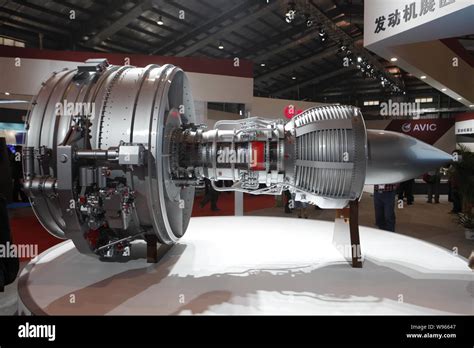
Developing such an engine is extraordinarily difficult. The engineering challenges include advanced metallurgy for turbine blades, thermal barrier coatings, precision manufacturing tolerances measured in microns, and decades of reliability data accumulation. Even if thrust targets are met, durability and maintenance cycles remain formidable hurdles.
Still, the milestone matters. It demonstrates that China is no longer content to assemble aircraft with imported cores. It aims to own the propulsion stack. If successful, this would neutralize one of Washington’s most potent industrial pressure points.
Russia’s Exit and China’s Independent Turn
The C929 did not begin as a purely Chinese project. Initially conceived as a joint venture between China and Russia, it leveraged Russia’s experience in large turbofan design, particularly through programs such as the Aviadvigatel PD-35.
However, after sanctions intensified in 2022, China quietly recalibrated. Cooperation faded. Russia, already struggling to replace Western components in aircraft like the MC-21 and Superjet, faced its own industrial constraints. China opted to proceed independently.
This shift is significant. It illustrates China’s recognition that long-term aerospace credibility cannot rest on unstable partnerships or politically constrained supply chains. Independence is not just technological—it is strategic insurance.
Meanwhile, Russia’s own attempts to “russify” its aircraft by replacing imported systems have resulted in heavier airframes, reduced range, and higher maintenance burdens. China appears determined to avoid that trap by investing deeply in domestic systems before fielding its flagship widebody.
The divergence underscores a broader point: China’s industrial base is vastly larger than Russia’s. Its manufacturing scale, domestic market size, and state-directed capital allocation create conditions that the Soviet Union never fully achieved in civil aviation.
The Domestic Market: China’s Strategic Shield
China’s aviation market is the second largest in the world and continues to expand. This scale provides a crucial advantage. Unlike smaller aerospace challengers, China does not need immediate global acceptance for the C929 to survive.
State influence over airlines allows Beijing to ensure large domestic orders. Air China has already indicated plans to support the C929 program. Hundreds of orders for the C919 illustrate how policy alignment can guarantee production volume, allowing technical maturation through operational feedback.
This mirrors Airbus’s early trajectory. European governments supported Airbus purchases during its formative decades, enabling the manufacturer to achieve scale and reliability before challenging Boeing globally.
The C929 does not need to dominate global fleets in its first decade. It needs steady domestic deployment. With a massive internal market, China can iterate, refine, and improve without relying entirely on export customers.
For Washington, this insulation complicates traditional economic pressure tactics. The U.S. cannot simply deny export approvals and expect the program to collapse.
FAA and EASA Certification: The Regulatory Gatekeepers
One of the most consequential levers available to the United States is FAA type certification. For any aircraft intended to operate on international long-haul routes—particularly to North America or Europe—approval from the Federal Aviation Administration and often the European Union Aviation Safety Agency (EASA) is essential.
Without these certifications, an aircraft’s global utility shrinks dramatically. Airlines operating worldwide networks cannot afford to field aircraft barred from key destinations.
If the C929 were denied FAA and EASA certification, its operational footprint would narrow to China, certain Asian destinations, Russia, parts of Africa, and potentially sanctioned states. While that still represents a substantial market, it excludes lucrative transatlantic and transpacific corridors.
However, certification decisions are politically delicate. Aviation safety agencies are formally independent, but geopolitical tensions inevitably influence regulatory trust. In an era of strategic rivalry, mutual recognition becomes harder.
For Boeing and Airbus, certification asymmetry acts as a protective moat. Yet it is not an eternal one. Over time, if China’s aviation regulator demonstrates robust safety oversight and builds a track record of operational reliability, international pressure for reciprocal recognition could grow.
A Fragmenting Aerospace Order
The deeper concern in Washington is not immediate market loss. It is structural bifurcation.
The world may be drifting toward a dual aerospace ecosystem. One anchored by Airbus and Boeing, dominant in North America, Europe, and aligned partners. The other anchored by COMAC, dominant in China and potentially influential in countries aligned economically or politically with Beijing.
This would resemble, in partial form, the Cold War era when Soviet aircraft like the Il-96 and Tu-204 operated primarily within the Eastern bloc. Yet China’s economic gravity is far greater than that of the Soviet Union. Its trade relationships extend across Southeast Asia, Africa, and parts of the Middle East.
Airlines such as Emirates, Qatar Airways, and Ethiopian Airlines would likely approach Chinese widebodies cautiously, especially without full Western certification. Fleet interoperability, resale value, maintenance networks, and pilot training ecosystems are powerful incentives to remain within the Airbus-Boeing duopoly.
Still, selective adoption in certain regions could chip away at market share. Even modest erosion in China’s domestic orders represents significant revenue displacement for Boeing.
Why Boeing’s Position Amplifies Concern
Boeing’s recent history compounds U.S. anxiety. The 737 MAX crises, production bottlenecks, certification delays, and development setbacks have weakened the company’s competitive posture. The 777X program has faced engine durability challenges and delivery postponements.
When a dominant incumbent shows vulnerability, challengers gain opportunity.
China’s widebody push coincides with Boeing’s strategic recalibration. If Chinese airlines increasingly favor domestic aircraft, Boeing could lose its once-prolific Chinese order pipeline. Given China’s scale, this represents not just symbolic loss but material financial impact.
Airbus, with its broader global political neutrality perception, may weather the shift more comfortably than Boeing. That asymmetry intensifies U.S. strategic concern.
Industrial Sovereignty and the Long Game
The United States understands that aerospace dominance is cumulative. It rests on decades of accumulated engineering knowledge, supplier ecosystems, regulatory credibility, and operational trust. China is now attempting to compress that timeline.
The C929 does not need to outclass the 787. It needs to be reliable enough, efficient enough, and available in sufficient numbers to meet domestic demand. From there, incremental improvement can follow.
If China succeeds in fielding a domestically powered, domestically certified, and domestically supported widebody, it establishes industrial sovereignty in one of the most elite manufacturing domains on Earth. That milestone alone carries symbolic and strategic weight.
The real story, then, is not fear of immediate displacement. It is recognition that the aerospace duopoly may no longer be structurally permanent.
The U.S. remains technologically advanced, and Boeing retains immense expertise. FAA certification still commands global trust. But the gravitational pull of China’s market and the determination behind its aerospace ambitions ensure that the competitive landscape of the 2030s will not resemble that of the early 2000s.
Commercial aircraft are steel, carbon fiber, and turbine blades. They are also instruments of national confidence. The emergence of China’s widebody fleet signals a world in which technological prestige, regulatory influence, and industrial autonomy are increasingly contested at 35,000 feet.