The military balance across the Persian Gulf has always been shaped by geography. The distance between Qatar and Iran across the narrow Gulf waters is short enough that modern aircraft and missiles can reach critical targets within minutes. For decades, however, Qatar largely maintained a defensive posture, investing heavily in missile defense systems and hosting allied forces rather than developing an independent long-range strike capability.
That strategic equation is now evolving. Through a combination of advanced fighter aircraft, standoff munitions, and missile-armed naval vessels, Qatar has quietly assembled a military toolkit capable of striking targets deep inside Iranian territory or across its coastal military infrastructure. The shift is not about mass warfare or territorial conquest. Instead, it represents a calculated transition toward precision strike deterrence—a capability designed to hold key Iranian assets at risk without deploying ground forces.
Recent regional tensions have accelerated this transformation. Following Iranian missile and drone attacks across the Gulf after strikes by the United States and Israel in February 2026, Gulf states began reassessing their ability not only to intercept incoming threats but also to retaliate with precise, limited strikes. Qatar’s modern air force and naval platforms now sit at the center of that strategic discussion.
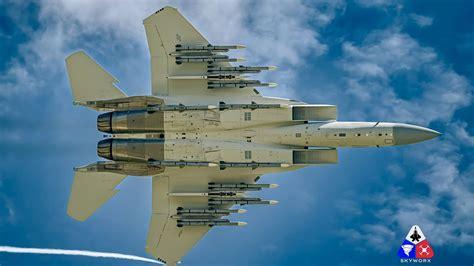
The country’s growing strike potential relies on a carefully layered system: F-15QA multirole fighters optimized for suppression of air defenses, Rafale jets carrying deep-strike cruise missiles, Eurofighter Typhoons providing air superiority and precision attack, and Al Zubarah-class corvettes armed with long-range anti-ship missiles. Together, these systems create a credible long-range strike architecture that could threaten Iranian air defenses, naval assets, and missile infrastructure.
Qatar’s Strategic Shift From Air Defense to Precision Strike
For much of the 21st century, Qatar’s defense strategy focused primarily on protecting critical infrastructure and allied facilities, particularly the massive Al Udeid Air Base, which hosts U.S. and coalition forces. Given the small size of the country and its proximity to Iran, the emphasis naturally centered on missile defense, early warning radars, and coalition integration.
Yet modern warfare increasingly demands more than interception. Missile defense can blunt attacks, but deterrence often depends on the ability to strike back with speed and accuracy. Qatar’s recent procurement strategy reflects this logic.
Rather than building a large conventional army, Doha has concentrated resources on high-technology platforms capable of delivering precision effects at long range. The objective is to disrupt an adversary’s operational systems—air defenses, missile launch infrastructure, command networks—without engaging in prolonged attritional conflict.
This approach mirrors the broader evolution of Gulf military doctrine. Instead of relying solely on passive defense, states are investing in systems capable of rapid, surgical retaliation. Qatar’s arsenal of advanced aircraft and guided weapons places it firmly within that strategic trend.
F-15QA: The Core of Qatar’s Long-Range Strike Capability
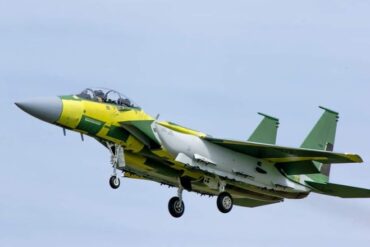
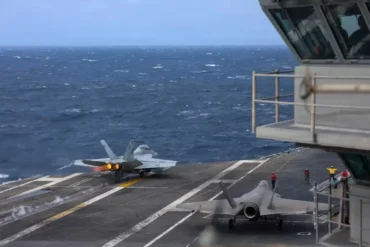
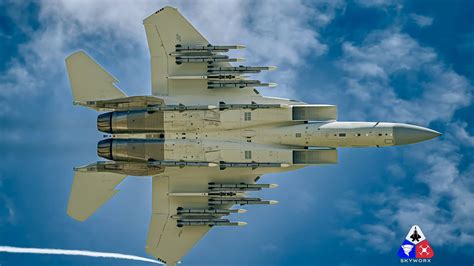
At the heart of Qatar’s offensive airpower lies the Boeing F-15QA, one of the most advanced variants of the legendary Eagle fighter. Designed specifically for the Qatari Air Force, the aircraft blends long range, heavy payload capacity, and modern sensors that enable complex strike operations in contested airspace.
The F-15QA incorporates the AN/APG-82(V)1 Active Electronically Scanned Array (AESA) radar, a system capable of tracking multiple airborne and ground targets simultaneously while resisting electronic jamming. Coupled with the Digital Electronic Warfare Suite (DEWS) and advanced missile-warning systems, the aircraft is built to survive in environments saturated with surface-to-air missile threats.
More important than the platform itself is the weapons ecosystem attached to it. Qatar’s F-15QAs can employ a range of munitions designed for different phases of a strike mission:
- AGM-88 HARM missiles for destroying enemy radar systems
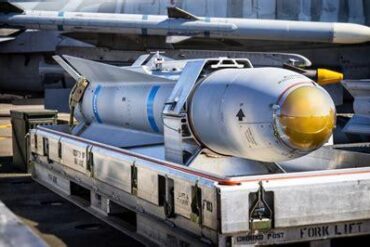
- AGM-154 JSOW glide weapons for medium-range precision strikes
- AGM-84 Harpoon missiles for maritime attack
- JDAM and Laser-JDAM guided bombs for hardened or mobile targets
This combination enables a classic Suppression of Enemy Air Defenses (SEAD) sequence. A strike package could begin by firing HARM missiles to force Iranian radar systems offline, followed by JSOW weapons targeting command nodes or missile support infrastructure from outside the most dangerous air-defense zones. Once defenses weaken, precision bombs can be delivered against exposed targets.
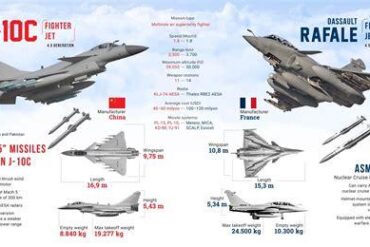
Rafale Fighters and the SCALP-EG Deep Strike Option
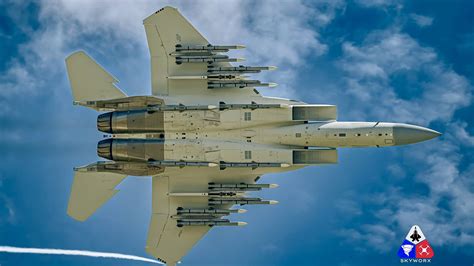
While the F-15QA provides payload and versatility, Qatar’s Dassault Rafale fighters introduce a different capability: deep standoff strike using cruise missiles.
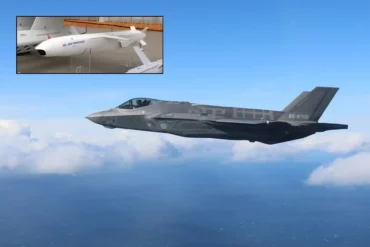
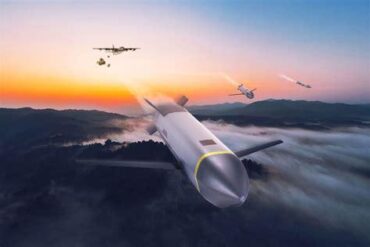
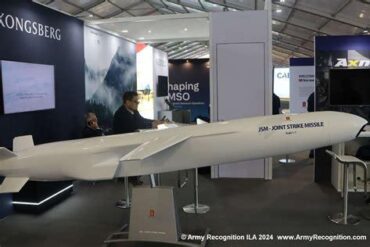
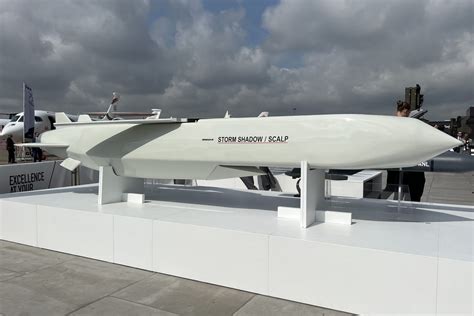
The Rafale’s most strategically significant weapon in this context is the MBDA SCALP-EG cruise missile, a long-range precision weapon designed to strike high-value targets from hundreds of kilometers away. The missile flies at low altitude, navigating terrain and avoiding radar detection before striking hardened structures with a penetrating warhead.
In a potential Gulf conflict scenario, SCALP-EG could target Iranian command bunkers, air base infrastructure, or missile production facilities without forcing Qatari aircraft to enter the densest air-defense zones. Open-source estimates typically place the missile’s range between 250 and 400 kilometers, allowing launch from relatively safe stand-off positions over the Gulf.
Beyond cruise missiles, the Rafale carries a flexible suite of precision munitions. The AASM Hammer air-to-ground weapon provides modular guidance and optional rocket propulsion, enabling strikes against moving or time-sensitive targets. Combined with the Rafale’s advanced sensors and data links, this allows rapid engagement of mobile missile launchers or radar vehicles identified through coalition intelligence.
Air-to-air capabilities are equally formidable. Equipped with Meteor and MICA missiles, Rafale jets can defend themselves while escorting strike packages, ensuring that long-range attack missions remain protected against hostile aircraft.
Eurofighter Typhoon: Escort, Air Superiority, and Precision Attack
Qatar’s acquisition of the Eurofighter Typhoon adds a third pillar to its air combat architecture. Although not primarily configured for deep strike, the Typhoon plays a critical role in maintaining air superiority and escorting strike aircraft during complex operations.
The aircraft’s most significant weapon in this role is the Meteor beyond-visual-range air-to-air missile, widely considered one of the most capable long-range aerial weapons in service. Meteor’s ramjet propulsion allows it to maintain high speed and maneuverability at long distances, making it highly effective against enemy fighters attempting to intercept strike formations.
The Typhoon also carries Brimstone precision attack missiles, designed to destroy small, mobile targets such as vehicles, missile launchers, or fast attack craft. In a Gulf conflict environment, these weapons would be ideal for targeting Iranian radar vehicles, coastal missile batteries, or swarm boats used by the Islamic Revolutionary Guard Corps Navy.
Although Qatar’s fast-jet fleet is technologically advanced, its size remains relatively limited. This reality means Typhoon aircraft often face a trade-off between defensive patrol duties and offensive strike support. Maintaining air defense over Qatari territory while also escorting long-range strike missions could stretch available aircraft during sustained conflict.
Naval Power: Exocet Missiles and Maritime Denial
Airpower is only part of Qatar’s growing strike capability. The country has also invested heavily in modern naval vessels equipped with long-range anti-ship missiles.
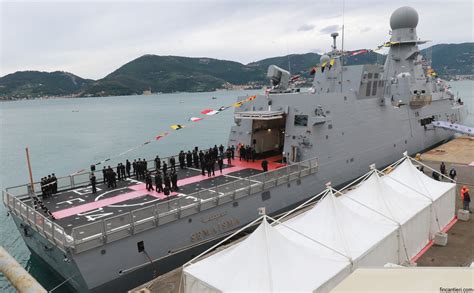
The centerpiece of this maritime force is the Al Zubarah-class corvette, a stealthy warship designed for multi-mission operations in the confined waters of the Persian Gulf. Each vessel carries Exocet MM40 Block 3 missiles, a modern anti-ship weapon capable of striking targets more than 200 kilometers away.
The missile’s range and sea-skimming flight profile make it particularly effective in the Gulf’s complex maritime environment, where shipping lanes, islands, and coastal geography create numerous opportunities for surprise attacks.
Beyond offensive weapons, the corvettes also provide strong defensive capabilities. Equipped with Aster 30 surface-to-air missiles and the Leonardo Grand Kronos naval AESA radar, they can detect and engage aircraft, drones, and incoming missiles while protecting key infrastructure or allied shipping routes.
In operational terms, this creates a mobile maritime defense bubble capable of countering Iran’s traditional naval strategy, which relies on fast attack craft, mines, and missile boats to disrupt shipping traffic.
ISR and Connectivity: The Hidden Backbone of Strike Operations
Precision strike capability depends as much on information and networking as it does on weapons themselves. Qatar has invested heavily in systems that support intelligence, surveillance, reconnaissance (ISR), and secure communications.
One notable component is the DB-110 tactical reconnaissance pod, used by Qatari fighter aircraft to capture high-resolution imagery from long distances. This sensor enables aircraft to gather reconnaissance data during missions without entering heavily defended airspace.
Satellite communications also play a critical role. Through arrangements linked to Es’hailSat, Qatar has strengthened its ability to maintain secure beyond-line-of-sight communications, ensuring that aircraft and naval vessels remain connected even during electronic warfare or cyber attacks.
This networking allows rapid retasking of strike assets, coordination with coalition forces, and near-real-time assessment of battle damage after precision strikes. In modern warfare, the ability to analyze a target, strike it, and verify destruction within minutes often determines operational success.
Uncrewed Systems: MQ-9B and the Expansion of Persistent Surveillance
Uncrewed aerial systems represent the next step in Qatar’s evolving strike architecture. The country has requested the MQ-9B remotely piloted aircraft, a modern drone capable of conducting long-endurance surveillance missions and delivering precision weapons.
The MQ-9B can carry AGM-114R2 Hellfire missiles and other guided munitions, making it suitable for engaging smaller targets such as vehicles or coastal installations. More importantly, its endurance allows it to remain airborne for extended periods, tracking maritime movement or monitoring suspected missile launch areas.
Despite these advantages, drones face clear limitations in heavily contested airspace. MQ-9B aircraft are slow and non-stealthy, making them vulnerable to advanced air defenses if operating too close to Iranian territory. Their greatest value lies in supporting operations at safer distances—tracking targets, confirming damage after strikes, and providing persistent surveillance across the Gulf.
Strategic Reality: Precision Deterrence Rather Than Total War
Qatar’s expanding arsenal of fighters, missiles, and naval platforms undeniably provides the country with a credible long-range strike capability. Yet the strategic purpose of this force is not the ability to wage a massive independent air campaign.
Instead, the design of Qatar’s military points toward coalition warfare and controlled escalation. The country’s assets are optimized for precision strikes against specific operational targets, such as radar systems, missile infrastructure, or naval threats.
Any major conflict with Iran would likely involve close coordination with allied forces operating from Al Udeid Air Base, integrating Qatari aircraft into a broader command-and-control network. In such a scenario, Qatar’s role could include SEAD operations, deep standoff strikes, and maritime denial missions designed to reduce Iran’s ability to launch follow-on missile attacks.
The broader strategic lesson is clear. Modern military power in the Gulf increasingly revolves around technology, precision, and connectivity rather than sheer numbers. Qatar’s investment in high-end aircraft and guided weapons reflects a belief that small but technologically advanced forces can shape regional deterrence.
The Persian Gulf remains one of the world’s most volatile strategic theaters, where even small shifts in capability can alter calculations on all sides. Qatar’s emerging strike architecture—combining F-15QA heavy fighters, Rafale cruise-missile platforms, Typhoon escorts, and missile-armed corvettes—adds another layer to that complex equation.
In a region defined by narrow distances and powerful weaponry, the ability to strike precisely across the Gulf has become as important as the ability to defend against incoming threats. Qatar now possesses both.