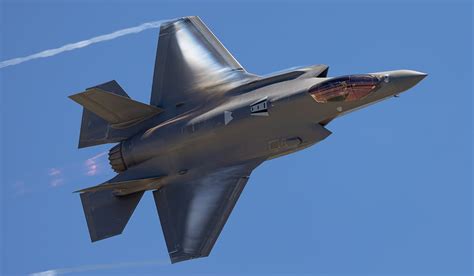
The United States Air Force has taken a decisive step in modernizing its aerial combat capabilities by awarding a $240.9 million contract to Norwegian defense contractor Kongsberg Defence & Aerospace for the acquisition of Joint Strike Missiles (JSM). This strategic investment is designed to elevate the lethality and stealth performance of the F-35 Lightning II fleet, signaling a significant evolution in U.S. airpower projection.
Precision Firepower for the Stealth Era
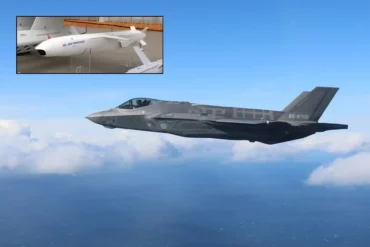
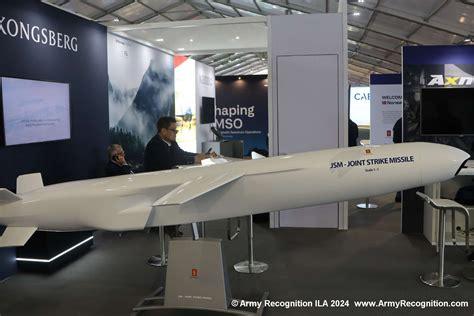
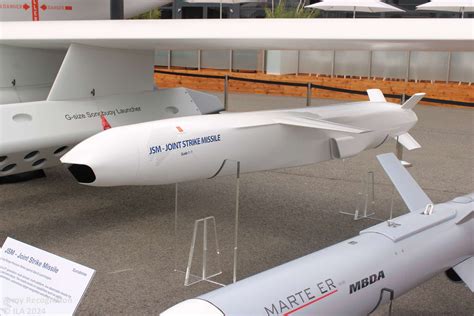
In an age where detection means defeat, the Air Force’s prioritization of low-observable munitions is a logical extension of its broader stealth doctrine. The Joint Strike Missile, engineered by Kongsberg, is a compact, precision-guided cruise missile specifically designed to operate from fifth-generation aircraft like the F-35. It offers long-range strike capabilities, terrain-hugging flight paths, and minimal radar cross-section, making it a formidable tool for striking high-value targets in contested airspace.
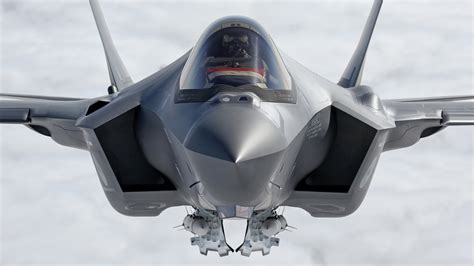
The F-35’s reputation as a next-generation stealth platform is rooted in its ability to evade radar detection. The integration of the JSM complements this by offering an armament that mirrors the same ethos: hit hard, stay hidden.
What Makes the Joint Strike Missile Exceptional?
Unlike legacy cruise missiles such as the Tomahawk, which are primarily launched from sea-based platforms or land installations, the JSM is purpose-built for air launch missions. It leverages a combination of size, design, and flight profile to elude detection:
- Stealth Optimized Shape: Carefully contoured to minimize radar signature.
- Terrain-Following Flight: Flies extremely low to the ground, weaving through valleys and skimming the earth’s surface to avoid radar sweeps.
- Subsonic Speed with Agility: Travels just below the speed of sound, balancing speed with maneuverability to evade enemy defenses.
The missile weighs 917 pounds, stands just over 13 feet long, and is compact enough to be carried within the F-35’s internal weapons bays, preserving the aircraft’s stealth profile. In contrast, the Tomahawk, while a powerful strategic weapon, is significantly larger and heavier, making it unsuitable for integration with stealth fighters.
Strategic Timing and Tactical Advantages
The procurement timeline runs through November 30, 2028, strategically aligning with the tail end of the current administration. The five-year window offers sufficient time to integrate, test, and potentially deploy these advanced munitions into full operational service.
From a tactical perspective, the deployment of JSMs enhances the F-35’s mission profiles in several ways:
- Stand-off Capability: Allows the jet to strike from beyond the range of enemy air defenses.
- Multi-Role Flexibility: Enables effective engagement of both land and maritime targets.
- Increased Survivability: Minimizes the need for aircraft to penetrate heavily defended zones.
Kongsberg’s Expanding Footprint in Western Defense
While Kongsberg Defence & Aerospace may not have the household-name status of Lockheed Martin or Raytheon in the U.S., its reputation among NATO allies is rapidly expanding. The JSM was initially co-developed with Raytheon Technologies to fit into the F-35’s constrained weapons bay, and the collaboration reflects a growing pattern of transatlantic defense integration.
Kongsberg’s broader weapons platform includes the Naval Strike Missile (NSM), a sea-launched sibling of the JSM. While the current U.S. Air Force contract is strictly for the air-launched variant, the shared design and technology base suggests potential interoperability across services. The U.S. Navy, for instance, has already embraced the NSM to enhance its Littoral Combat Ships and Frigates.
The F-35: A Multi-Trillion Dollar Platform Demands Precision Tools
The F-35 Joint Strike Fighter program is arguably the most ambitious and expensive weapons platform in history. With the total program cost projected to exceed $1.7 trillion over its lifecycle, every element added to its arsenal must provide measurable strategic value.
In this context, the JSM offers:
- High Return on Investment: Its capabilities multiply the effectiveness of each F-35 sortie.
- Synergy with Existing Systems: Seamlessly integrates into onboard fire control and avionics.
- Combat Proven Design Principles: Builds on lessons from prior engagements where stealth, precision, and speed dictated success.
Futureproofing Through Modularity and AI Integration
One of the understated strengths of the JSM is its modular architecture, enabling future upgrades in guidance systems, propulsion, or warhead configurations. This design philosophy ensures that as threats evolve, so too can the missile. Emerging technologies, particularly artificial intelligence and advanced sensor fusion, are expected to further refine the missile’s target acquisition and evasion techniques.
Moreover, its multi-platform compatibility means the JSM could eventually find homes aboard not just F-35s, but also unmanned aerial vehicles (UAVs) and rotary-wing aircraft, significantly widening the U.S. military’s options for precision strikes.
Broader Geopolitical Implications
The integration of Norwegian-designed strike missiles into America’s top fighter jet is not just a tactical decision—it’s a geopolitical signal. It underlines the deepening NATO military-industrial cooperation, at a time when global defense postures are hardening in response to rising tensions across Europe and the Indo-Pacific.
Russia’s aggressive military strategies and China’s expanding influence in the South China Sea have reemphasized the importance of long-range, precision strike weapons. The JSM offers Western forces the ability to project power with surgical precision, without exposing manned platforms to unacceptable risk.
The Road to 2028 and Beyond
With delivery set to wrap up by late 2028, the road ahead involves not just production but also integration testing, pilot training, and doctrine adjustments. The Air Force will need to adapt mission plans, targeting protocols, and logistics chains to accommodate this new capability.
Once operational, the JSM-equipped F-35s will fundamentally alter the calculus for any adversary. Their presence in the battlespace introduces a stealth-on-stealth threat—undetectable jets delivering nearly invisible missiles.
Conclusion: A Tactical Leap Forward
This $240 million contract isn’t merely an arms deal; it is a strategic upgrade that future-proofs the Air Force’s most important aircraft. The Joint Strike Missile gives the F-35 Lightning II the punch it needs to meet the evolving demands of modern warfare—stealthy, smart, and surgical.
As adversaries advance their anti-access/area-denial (A2/AD) systems, the U.S. is responding not just with superior platforms, but with superior payloads. The marriage of the JSM and F-35 reflects a commitment to staying ahead in the evolving chessboard of global air dominance, ensuring that when the moment of engagement arrives, the first strike is silent—and final.