On July 18, 2025, Belgium’s Council of Ministers approved the acquisition of Joint Strike Missiles (JSM) under the Ammunition Readiness Plan 2025–2029, a landmark move marking the nation’s first-ever cruise missile procurement. This strategic decision, presented by Defence Minister Theo Francken, reflects Belgium’s commitment to addressing structural munitions shortages, enhancing its long-range strike capabilities, and aligning more closely with NATO operational standards.
Belgium’s Ammunition Readiness Plan: A Strategic Defence Overhaul
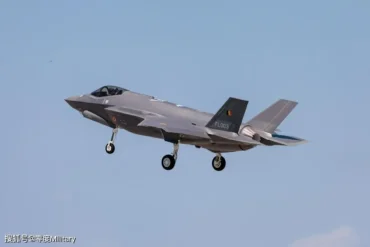
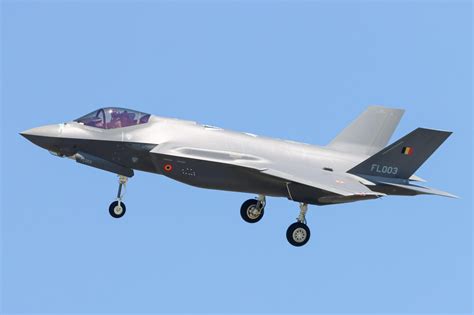
The Ammunition Readiness Plan 2025–2029 allocates an unprecedented €2.3 billion for immediate commitments within the year, making it the largest ammunition investment in Belgian history. The plan’s priorities include securing munitions with long delivery timelines and building minimal operational stockpiles across all branches of the armed forces. For the air component, the JSM acquisition represents a leap toward providing the F-35A Lightning II with a stand-off strike capability — the ability to engage targets hundreds of kilometers away while operating beyond the reach of advanced enemy air defenses.
This procurement also ties into Belgium’s Strategic Vision 2025, which updates the nation’s 2016 defence framework and sets a course for a €139 billion defence budget between 2026 and 2034. The framework focuses on balancing human resources, modernizing critical capabilities, and expanding defence-industrial partnerships, with an eye on both national autonomy and NATO interoperability.

The Joint Strike Missile: A Stealthy, Precision Strike Solution
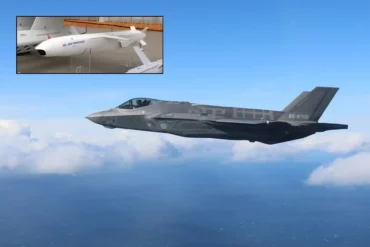
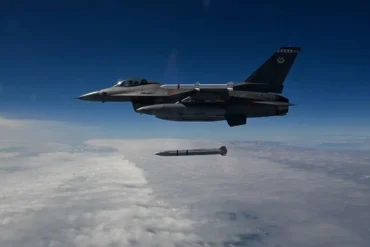
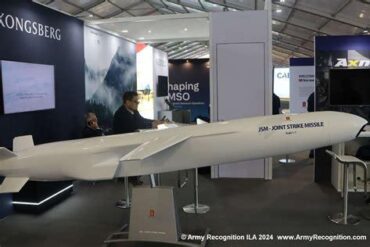
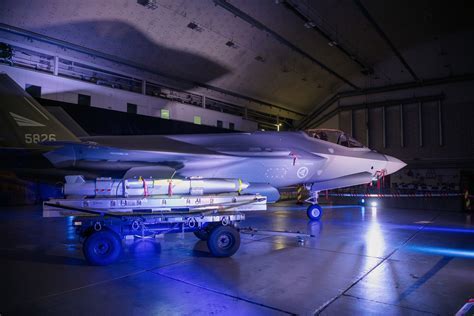
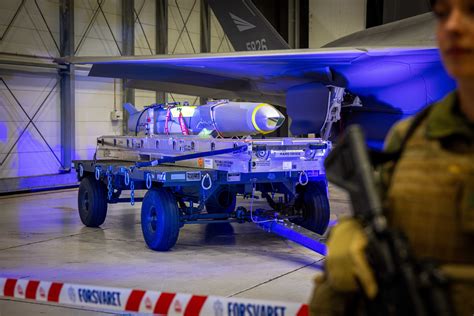
The Joint Strike Missile, developed by Kongsberg Defence & Aerospace in collaboration with Raytheon Missiles & Defense, is a fifth-generation, low-observable cruise missile derived from the Naval Strike Missile (NSM). With a mass of 416 kg, length of 4 meters, and a 120 kg blast-fragmentation warhead, the JSM combines stealth, precision, and survivability. It leverages a Williams International F-415 turbofan engine to reach targets at ranges exceeding 350 km.
Guided by GPS, inertial navigation, TERCOM, and Autonomous Target Recognition (ATR), the JSM achieves a circular error probable (CEP) of just 1 meter, ensuring devastating accuracy. It can perform terrain-hugging flight profiles (hi-hi-lo, lo-lo-lo) to evade radar detection, while its two-way communication link enables real-time in-flight updates and cooperative targeting.
Crucially, the JSM is designed for internal carriage on the F-35, preserving the aircraft’s stealth profile. The Belgian F-35A will be able to carry two missiles internally and four externally, offering operational flexibility for both high-risk and long-range strike missions.
NATO Alignment and the Expansion of the Belgian F-35 Fleet
The JSM acquisition is closely linked with the expansion of Belgium’s F-35A fleet, as the Council of Ministers also confirmed an order for 11 additional units, bringing the total procurement well beyond the initial order. These new aircraft will be manufactured in Italy, bolstering European defence-industrial cooperation and providing what Minister Francken described as a “very large economic return.”
Belgium’s investment is also driven by NATO’s evolving defence benchmarks. The country is set to meet the 2% of GDP spending requirement by the end of 2025, maintain it through 2033, and scale up to 2.5% by 2034. At the upcoming NATO summit in The Hague, members are expected to debate a new 5% GDP benchmark for combined defence and defence-related investments, with Belgium expressing support for a flexible implementation.
Global Context: Belgium Joins the JSM Operator Club
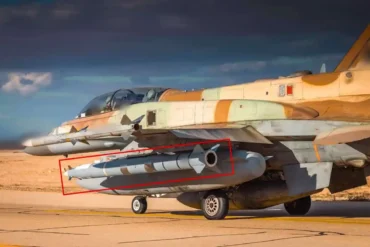
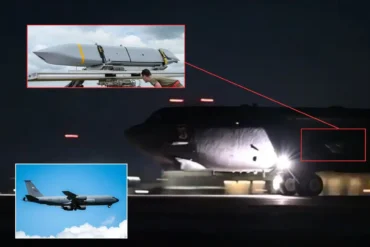
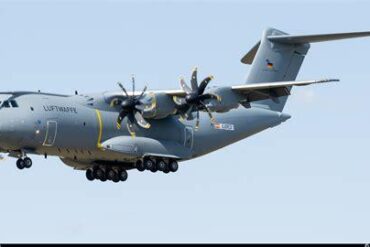
Belgium now joins an elite group of JSM operators, including Norway, the United States, Japan, Germany, and Australia. The Royal Norwegian Air Force became the first to operationalize the missile in April 2025. The U.S. Department of Defense has ordered 268 JSMs across fiscal years 2024 and 2025, while Germany signed a €478.7 million agreement with Norway in June 2025. Japan and Australia have been key early adopters, with the latter placing a NOK 1 billion order in 2024.
Belgium’s inclusion in this network facilitates shared logistics, cooperative training, and interoperability for multinational operations. Additionally, the JSM’s development roadmap includes a submarine-launched variant (JSM-SL), spearheaded by Spain with Dutch participation, expected to be fielded on Orka-class submarines by 2032.
Defence Industry Partnerships and Domestic Impact
The acquisition is part of a broader Belgian strategy to strengthen defence-industrial ties and expand domestic production capacity. The Ministry of Defence has committed to long-term procurement contracts, encouraging Belgian companies to integrate into supply chains for munitions, maintenance, and support. This is in line with the Defence Industry and Research Strategy (DIRS), which reserves 3% of the defence budget plus €30 million annually for R&D, particularly in NATO-compatible space and cyber projects.
Belgium’s defence modernization also includes investments in NASAMS and Piorun air defence systems, short-range mobile assets like Skyranger, and enhanced munitions for land and naval forces. The plan envisions new medical facilities, logistics battalions, and a restructured command framework, restoring traditional branch names such as Landmacht, Luchtmacht, Marine, and Medische Dienst, alongside a new Cybermacht branch.
Strategic Outlook: Building a Future-Ready Belgian Military
The integration of the JSM with the Belgian F-35 fleet fundamentally transforms the country’s strike capabilities. It enables preemptive, long-range precision attacks against high-value targets while reducing exposure to advanced air defence systems. This aligns with NATO’s strategy of enhancing deterrence and rapid response in an increasingly contested security environment.
Minister Francken emphasized that the Ammunition Readiness Plan is not merely about replenishment but about future-proofing Belgian defence for decades. By combining state-of-the-art munitions, expanded airpower, and strategic industrial investments, Belgium is positioning itself as a more autonomous, credible, and integrated NATO partner.
As Europe faces heightened geopolitical tensions and the rise of multi-domain threats, Belgium’s move to arm its F-35 fleet with JSMs signals a decisive shift: from a reactive military posture toward a forward-leaning, precision-strike capability designed to strike before being seen.