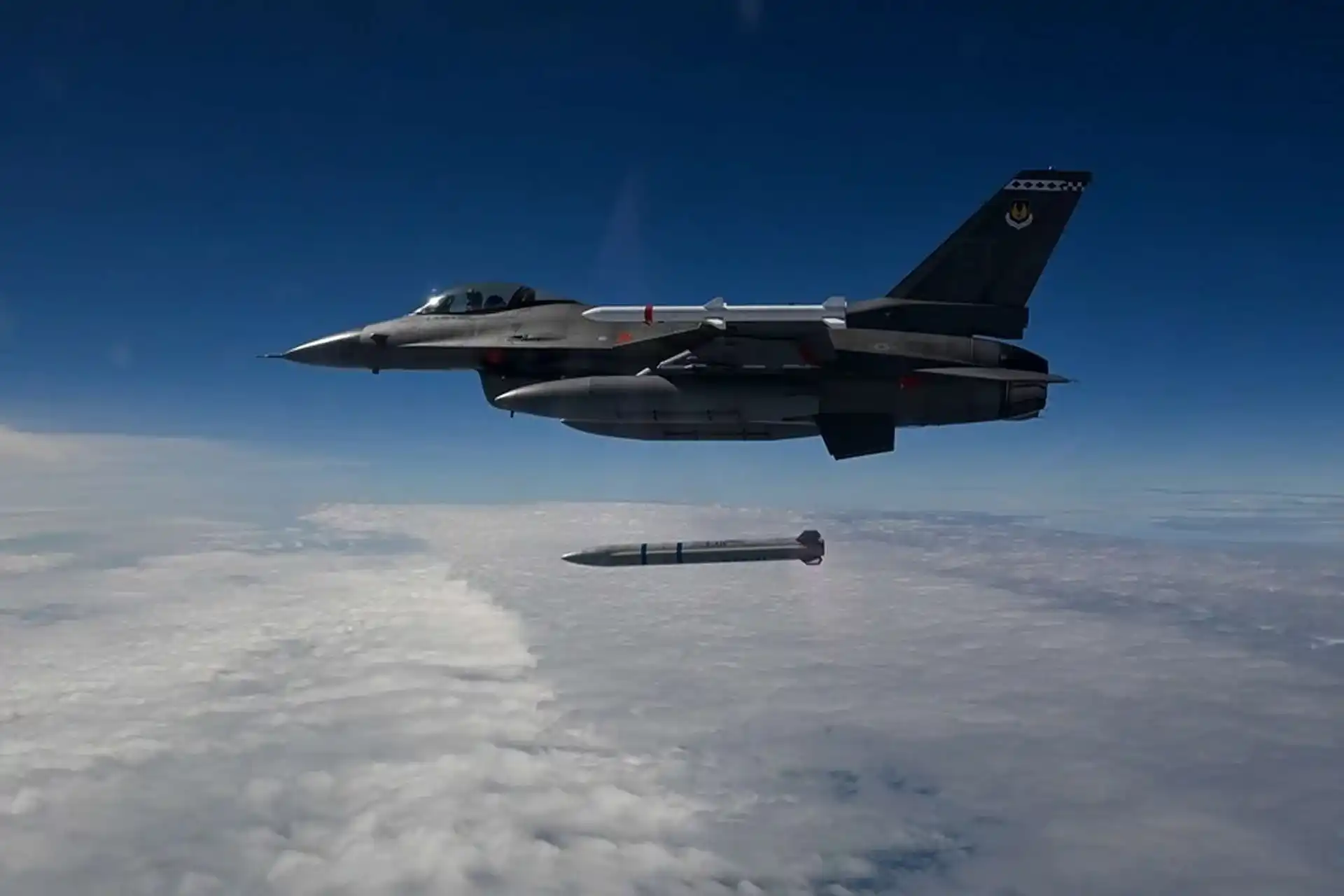
The U.S. Air Force is accelerating production plans for the Stand-in Attack Weapon (SiAW), a next-generation high-speed missile engineered to give stealth aircraft such as the F-35 Lightning II a powerful new capability: destroying mobile, time-sensitive targets inside heavily defended airspace. The move reflects a broader Pentagon strategy to prepare for conflicts against technologically advanced adversaries whose integrated air defense networks rely on mobility, electronic warfare, and deception to survive.
Rather than treating SiAW as a specialized addition to the F-35 arsenal, the Air Force is positioning the weapon as a core asset for Suppression and Destruction of Enemy Air Defenses (SEAD/DEAD) missions. A recent sources-sought notice posted on SAM.gov calls on industry partners to develop missiles with similar or superior capabilities and to establish production capacity reaching 600 missiles annually. The requirement highlights Washington’s determination to build a resilient industrial base capable of sustaining high-volume production for future conflicts.
This expansion signals a shift in how the Pentagon views modern air combat. Against anti-access/area-denial (A2/AD) systems, simply launching long-range cruise missiles from outside the threat zone is no longer enough. Highly mobile targets such as missile launchers, radar systems, jammers, and command nodes can relocate within minutes. The SiAW concept answers that challenge by allowing stealth aircraft to penetrate defended airspace and deliver rapid, high-speed strikes that compress the kill chain.
Why the SiAW Missile Matters for Future Air Combat
The Stand-in Attack Weapon occupies a unique niche in modern aerial warfare. Traditional stand-off cruise missiles provide long-range precision but are comparatively slower and best suited for fixed infrastructure targets. Legacy anti-radiation missiles, meanwhile, are optimized primarily to attack radar emitters but can struggle against adversaries that frequently shut down or relocate their systems.
SiAW bridges these gaps. The missile is designed to operate inside contested airspace, launched by stealth platforms that can approach closer to hostile defenses while remaining difficult to detect. Its mission profile focuses on high-value mobile targets, including:
- Theater ballistic missile launchers
- Land-attack and anti-ship cruise missile batteries
- Electronic warfare jammers
- Anti-satellite system components
- Integrated air defense command nodes
These targets represent the operational backbone of modern A2/AD architectures, the defensive networks designed to deny enemy forces access to critical regions. Eliminating them early in a conflict can unravel the entire system, opening corridors for follow-on air operations.
AARGM-ER Lineage Shapes the SiAW Design
Although many of SiAW’s exact specifications remain classified, its technical lineage provides strong clues about its performance characteristics. Budget documents and procurement records indicate that early development leveraged technology from the Advanced Anti-Radiation Guided Missile – Extended Range (AARGM-ER) program.
Northrop Grumman’s AARGM-ER design includes reused avionics and guidance systems from earlier anti-radiation missiles, combined with major structural changes to enhance speed and maneuverability. These changes include a larger rocket motor, removal of mid-body wings to reduce drag, and a control configuration relying primarily on tail-mounted surfaces.
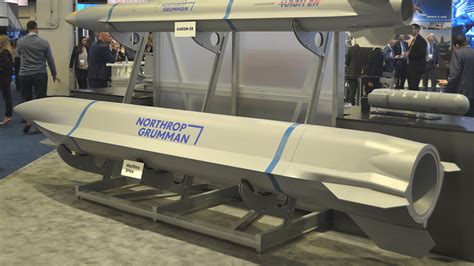
This design philosophy offers several advantages. A streamlined body reduces aerodynamic drag and allows supersonic flight with rapid acceleration, shortening the time between launch and impact. The missile’s architecture also enables internal carriage within the F-35’s weapons bay, preserving the aircraft’s low-observable stealth profile.
Maintaining stealth during the approach phase is essential. External weapons increase radar cross-section and reduce the survivability of fifth-generation aircraft operating inside dense air defense environments. By fitting neatly within the F-35’s internal bays, SiAW allows the aircraft to remain difficult to detect until the moment of launch.
Advanced Guidance Designed to Defeat Air Defense Tactics
Modern air defense operators employ sophisticated techniques to evade anti-radiation weapons. One common tactic involves shutting down radar emitters as soon as they detect incoming missiles, effectively removing the signal that guides traditional anti-radiation seekers.
The SiAW program addresses this challenge through multi-mode guidance and advanced counter-countermeasure logic, technology derived from the AARGM-ER’s sensor architecture. Instead of relying solely on radar emissions, the missile can continue tracking targets using inertial navigation, GPS guidance, and onboard sensors capable of identifying the target’s last known location or physical signature.
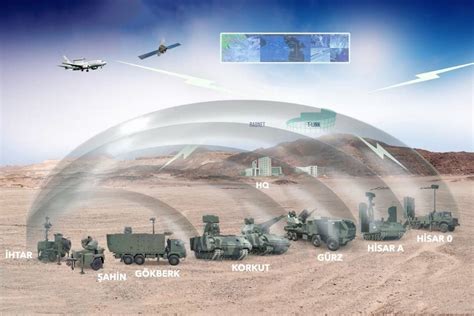
This approach dramatically increases lethality against mobile systems such as transporter-erector-launchers (TELs) or electronic warfare vehicles that attempt to evade detection by switching off their emitters. Even if a radar system shuts down moments before impact, the missile can still home in on the target’s position or predicted movement.
The result is a weapon specifically engineered to defeat the cat-and-mouse tactics that have defined SEAD missions for decades.
Flight Testing and Early Integration Efforts
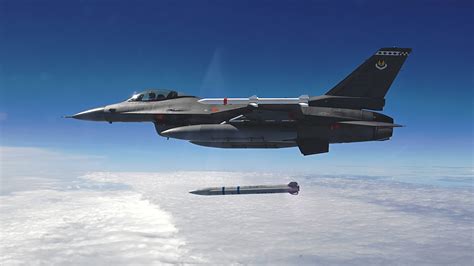
One of the earliest public demonstrations of SiAW progress occurred in November 2024, when the U.S. Air Force conducted the missile’s first release test from an F-16 aircraft. Although the test focused primarily on safe separation from the aircraft, it represented a crucial milestone in validating the missile’s integration with operational platforms.
Flight testing campaigns typically progress through multiple phases, beginning with basic separation tests before advancing toward guided flight trials, target engagement evaluations, and operational integration. Each step verifies that the missile can safely deploy from aircraft, maintain stability during flight, and accurately engage targets under realistic conditions.
Ultimately, the missile is intended primarily for fifth-generation fighters, especially the F-35. Integration with the aircraft’s Universal Armament Interface and mission planning systems allows pilots to rapidly identify targets and deploy the missile during complex missions deep inside contested airspace.
From Prototype Program to Large-Scale Procurement
The SiAW initiative began with competitive development contracts awarded in 2022 and 2023 to major defense companies including Lockheed Martin, Northrop Grumman, and L3Harris. After the early development phase, Northrop Grumman emerged as the prime contractor, later receiving a contract reportedly valued at approximately $705 million for continued development and integration work.
Budget documentation illustrates the program’s transition from experimentation toward operational fielding. Procurement numbers reveal a steady ramp-up:
- 42 missiles funded in FY2023
- 14 missiles funded in FY2024
- 128 missiles requested for FY2025
- 99 additional units budgeted in FY2026
Deliveries of the first operational rounds are expected to begin in early 2026, with production volumes increasing through 2028 and beyond.
Industrial Expansion Signals Strategic Urgency
The Air Force’s call for industry participation is not simply about producing more missiles—it reflects concern over supply chain resilience and wartime surge capacity. Modern conflicts, especially those involving large-scale peer competitors, could require thousands of precision munitions within the opening weeks of combat.
By expanding the industrial base early, the Pentagon aims to avoid a scenario in which a critical weapon becomes constrained by limited manufacturing capacity or single-supplier bottlenecks. Encouraging competition and redundancy ensures that production can scale rapidly if operational demand spikes.
This approach mirrors broader defense procurement trends emphasizing distributed manufacturing networks, diversified suppliers, and accelerated production timelines.
Preparing for High-Intensity Conflict in the Pacific
Strategically, SiAW is widely viewed as a campaign-opening weapon, particularly relevant to potential operations in the Indo-Pacific theater. In such a scenario, U.S. forces would likely face dense networks of long-range missiles, coastal defense systems, and layered radar coverage designed to keep allied aircraft and ships at a distance.
Neutralizing these networks requires the ability to strike mobile launchers and command nodes quickly, often before they can relocate or fire additional missiles. Stealth aircraft carrying high-speed weapons like SiAW could infiltrate defended zones, eliminate key components of the enemy kill chain, and create temporary gaps in the defensive network.
Once those gaps appear, follow-on forces—bombers, electronic warfare aircraft, and naval strike groups—can exploit the opening to conduct broader operations.
In this context, the SiAW missile represents more than just another precision munition. It embodies a shift toward high-speed, stealth-compatible strike weapons specifically designed for modern contested battlefields.
As production expands and integration with the F-35 progresses, the Stand-in Attack Weapon is poised to become a central tool in the United States’ strategy to dismantle advanced air defense systems and secure air superiority in future high-intensity conflicts.