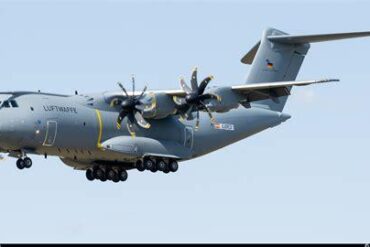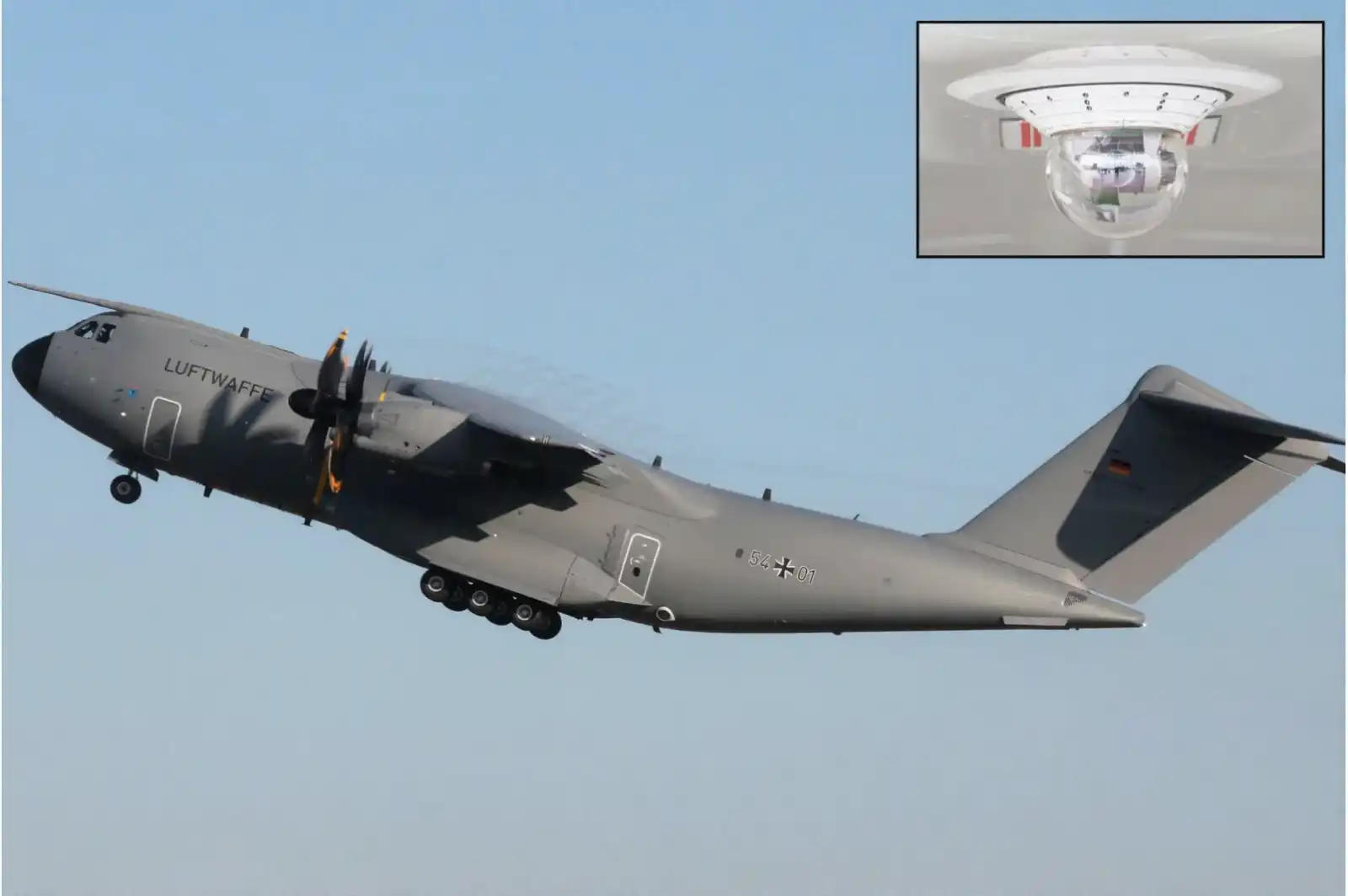
Germany has taken a decisive step in bolstering the defensive capabilities of its Airbus A400M transport aircraft fleet by signing a $260 million contract for the integration of the J-MUSIC Directed Infrared Countermeasures (DIRCM) system, produced by Israeli defence company Elbit Systems. The deal, announced on 28 July 2025, underscores Germany’s intent to ensure its military transport fleet can operate securely even in high-threat environments where infrared-guided missiles remain a persistent danger.
A Strategic Six-Year Agreement with Elbit Systems
The agreement, brokered through Germany’s Federal Office for Equipment, Information Technology and In-Service Support of the Bundeswehr (BAAINBw) and executed in partnership with Airbus Defence and Space, spans six years and encompasses both system integration and long-term support. This move represents one of the most significant upgrades to the Bundeswehr’s transport fleet in recent years. By investing in advanced airborne defence technology, Germany aims to maintain operational resilience in complex theatres of operation where asymmetric threats, such as man-portable air defence systems (MANPADS), remain prevalent.
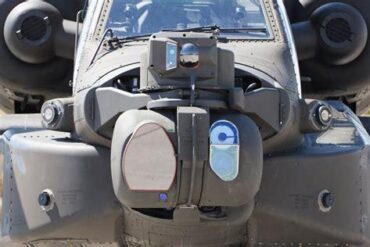
The J-MUSIC system is the most advanced iteration of Elbit’s proven MUSIC family of countermeasure solutions. Designed for autonomous, real-time defence, it uses state-of-the-art laser technology and high-performance imaging sensors to detect, track, and neutralize incoming infrared-guided missiles, effectively safeguarding aircraft and crew. Importantly, the system’s modular and scalable design allows for seamless integration with the A400M without compromising its payload capacity or performance envelope.
The J-MUSIC DIRCM System: Technology That Redefines Airborne Defence
At the heart of this upgrade lies Elbit Systems’ Directed Infrared Countermeasure (DIRCM) technology, a sophisticated defence solution specifically engineered to thwart heat-seeking missile threats. Leveraging a combination of laser-based countermeasures and real-time threat tracking, J-MUSIC autonomously disrupts the missile’s guidance system, rendering it incapable of locking onto its target.
Some of its most notable technical features include:
- Advanced laser jamming module capable of rapidly neutralizing multiple threats simultaneously.
- Real-time autonomous operation, eliminating the need for crew intervention during high-stress combat scenarios.
- Compact and lightweight architecture, minimizing impact on aircraft aerodynamics and cargo capacity.
- Platform-agnostic design, enabling integration across a diverse range of military and civilian aircraft.
Already in service with several NATO allies, including the Netherlands, Italy, and Israel, Elbit’s DIRCM systems have gained a reputation for reliability and operational effectiveness. Beyond military use, J-MUSIC is also installed on VIP aircraft, including those used by French President Emmanuel Macron, and on commercial fleets operated by carriers such as El Al and Arkia.
The Airbus A400M: Germany’s Strategic Workhorse
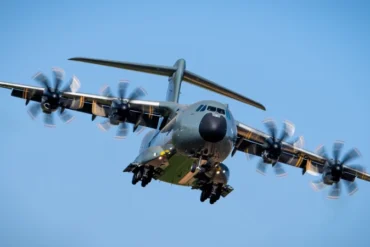
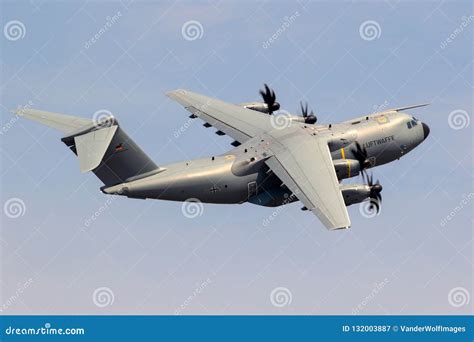
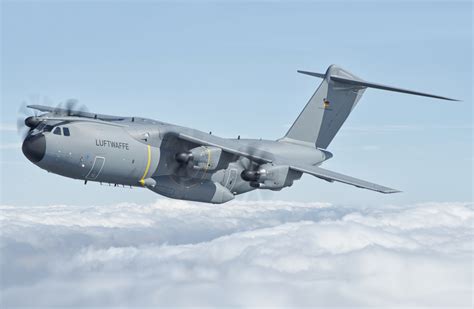
The Airbus A400M Atlas represents one of the most versatile military airlifters in service today. Designed by Airbus Military (now Airbus Defence and Space) to replace aging Transall C-160 and Lockheed C-130 Hercules aircraft, the A400M blends tactical and strategic airlift capabilities. It first took to the skies in 2007, entering service with Germany in 2013 after overcoming development delays.
Germany has committed to 53 A400M aircraft, all assigned to Air Transport Wing 62 (Lufttransportgeschwader 62) at Wunstorf Air Base in Lower Saxony. As of mid-2025, 42 units have been delivered, with the remainder expected by the end of 2026. These aircraft form a vital component of Germany’s rapid deployment capability, transporting troops, vehicles, and critical equipment to global theatres of operation.
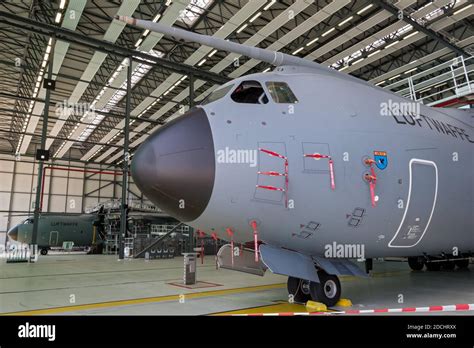
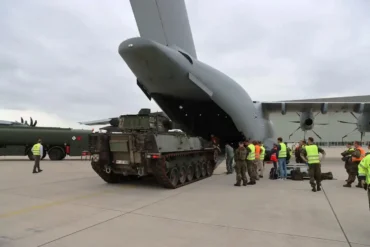
Capable of carrying up to 37 tonnes of cargo or 116 fully equipped troops, the A400M is powered by four Europrop International TP400-D6 turboprop engines, enabling it to operate from short or unprepared airstrips. Its 340-cubic-metre cargo hold accommodates outsized loads, such as armoured vehicles and helicopters, while also supporting air-drop missions. In 2019, the A400M achieved certification as a multi-role tanker, providing air-to-air refuelling for fighter jets like the Eurofighter Typhoon and transport helicopters, including the CH-53 and H145M.
The A400M’s digitally optimised cockpit features Head-Up Displays (HUDs), fly-by-wire flight controls, and night vision goggle compatibility, ensuring superior situational awareness and reducing pilot workload.
Enhancing Survivability in High-Threat Environments
Integrating the J-MUSIC DIRCM system significantly elevates the survivability profile of the A400M. As German forces continue to participate in missions across Africa, the Middle East, and Eastern Europe, where infrared-guided missile threats are commonplace, this upgrade ensures that critical airlift missions can be executed with reduced risk to personnel and assets.
Asymmetric warfare environments have evolved to include the frequent use of MANPADS, which pose a substantial risk to low-flying aircraft. The integration of DIRCM provides a layered defence mechanism that operates alongside traditional countermeasures, ensuring that the A400M remains a trusted workhorse even in contested airspace.
NATO-Wide Alignment and Future Prospects
Germany’s decision aligns with a broader NATO strategy to harden high-value transport platforms against modern threats. By incorporating DIRCM systems, the Bundeswehr joins other NATO allies in adopting standardized airborne self-protection solutions, fostering interoperability and ensuring that its aircraft remain mission-ready in coalition operations.
This partnership with Elbit Systems also underscores the increasingly global nature of defence collaboration. Israeli technology, German platforms, and Airbus integration expertise converge to create a robust, future-proof defence solution. Such cross-border defence projects will likely continue to shape the next generation of European air power.
Looking ahead, the DIRCM integration could open doors for further upgrades, including enhanced missile warning sensors, cyber-resilient avionics, and next-generation communications suites, ensuring that the A400M remains at the cutting edge of military airlift capability for decades to come.
Conclusion
The integration of Elbit Systems’ J-MUSIC DIRCM into the German A400M fleet represents more than just an equipment upgrade—it is a strategic investment in the safety, resilience, and operational superiority of the Bundeswehr’s transport capabilities. By fortifying one of Europe’s most critical airlifters against modern threats, Germany reaffirms its commitment to maintaining a capable, adaptable, and survivable military air transport fleet in an era of evolving global security challenges.