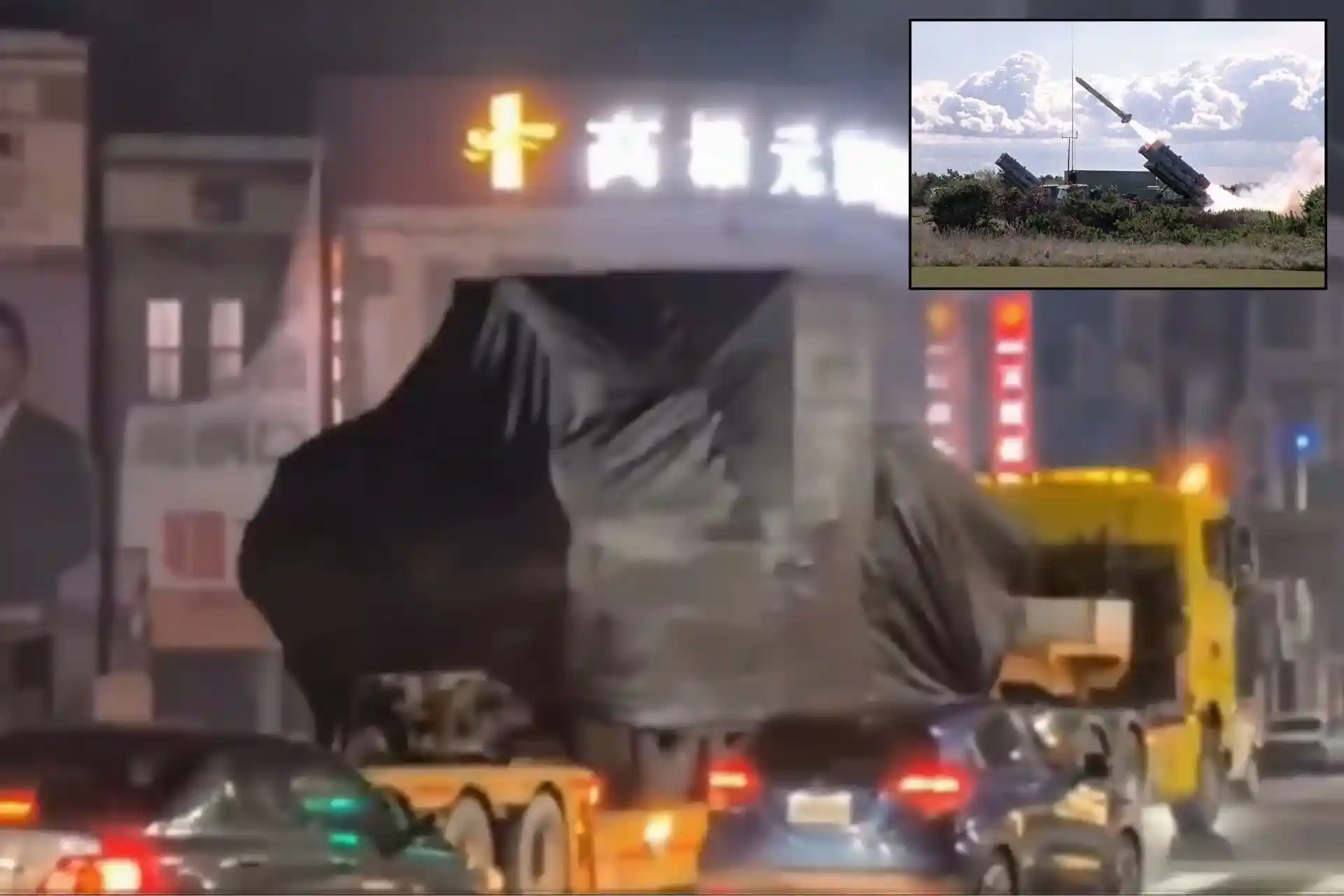
Taiwan has begun receiving the first operational elements of its U.S.-supplied land-based Harpoon Coastal Defense System, marking a visible and strategically meaningful step in strengthening the island’s maritime defenses. Convoys transporting launcher vehicles, radar units, and command-and-control platforms were observed moving across Taiwanese roads on February 5, 2026, signaling that complete system components are entering service rather than isolated test equipment. This development reflects Taipei’s determination to harden its coastline amid intensifying military pressure and persistent gray-zone activity in surrounding waters.
The arrival of the Harpoon system is not a symbolic delivery but a concrete enhancement of Taiwan’s ability to contest hostile naval movements. Unlike fixed coastal batteries, the Harpoon Coastal Defense System is designed for mobility, survivability, and rapid redeployment. Its presence introduces a new layer of uncertainty for any force seeking to operate near the island, reinforcing Taiwan’s emphasis on denial rather than control of surrounding seas.
Taiwan’s defense planners have long prioritized systems that can endure under sustained surveillance and strike pressure. The land-based Harpoon aligns precisely with that logic, providing a road-mobile anti-ship capability that can disperse, hide, and reappear along different stretches of coastline. The first convoys suggest that the system is transitioning from procurement paperwork into tangible operational reality.
Mobile Launchers Built for Survivability and Deception
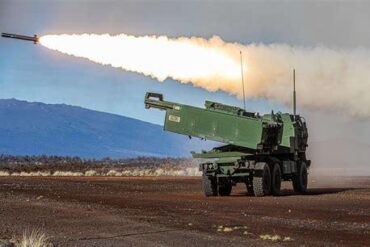
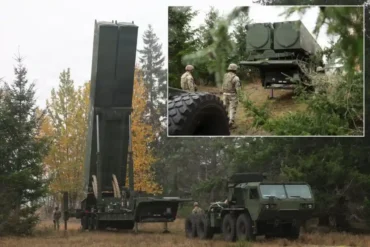
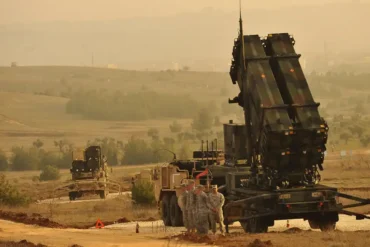
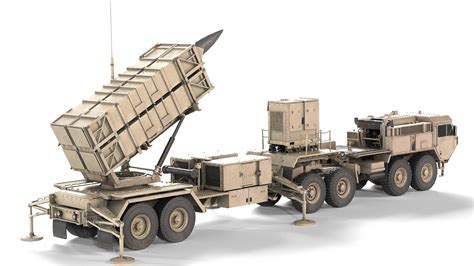
At the heart of the Harpoon Coastal Defense System are missile launchers mounted on Heavy Expanded Mobility Tactical Trucks, better known as HEMTTs. These heavy-duty vehicles are engineered to carry substantial payloads while retaining the ability to operate across diverse terrain and long road distances. For Taiwan, this translates into the capacity to move launchers quickly between coastal sectors, exploit cover in urban or mountainous areas, and reduce exposure to preemptive strikes.
The use of HEMTT platforms allows Harpoon units to avoid predictable firing positions. Launchers can be concealed in tunnels, industrial zones, or forested areas, emerging only briefly to fire before relocating. This shoot-and-scoot approach complicates adversary intelligence, surveillance, and reconnaissance efforts, forcing potential attackers to devote disproportionate resources to tracking mobile threats rather than focusing on offensive operations.
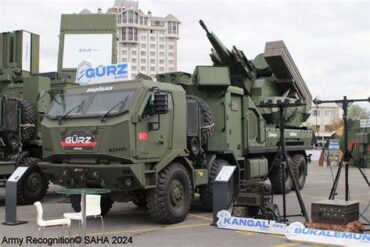
The convoys also included dedicated radar vehicles and command-and-control trucks, confirming that Taiwan is receiving integrated system elements. This integration enables missile batteries to function as coherent combat units rather than fragmented assets dependent on constant external support.
Phased Deliveries Under a Large-Scale U.S. Contract
Taiwan’s acquisition of the Harpoon Coastal Defense System stems from a Foreign Military Sales agreement with the United States covering 100 launcher sets and 400 missiles. Deliveries are structured in carefully sequenced phases intended to build capability methodically. Initial shipments prioritize training simulators, support equipment, and technical infrastructure, accompanied by U.S. instructors tasked with accelerating operational proficiency.
Only after crews and command elements reach defined readiness benchmarks do mobile launchers, radar platforms, and command vehicles arrive in quantity. Live missiles are delivered later, ensuring that systems entering frontline service are fully integrated and doctrinally sound. Under the agreed timeline, 32 complete Harpoon systems are expected to be delivered by the end of 2026, with the remaining 68 scheduled to arrive by 2028.
This phased approach reflects lessons learned from earlier arms deliveries, where rushed fielding sometimes created capability gaps. In this case, Taiwan and Washington appear aligned on prioritizing durability and effectiveness over speed alone.
Radar and Command Vehicles Enable Autonomous Operations
A critical feature of the Harpoon Coastal Defense System is its organic sensor and command architecture. The integrated radar vehicle provides target acquisition and fire control capabilities without relying exclusively on external networks. In a high-intensity conflict, where communications may be disrupted or degraded, this autonomy becomes a decisive advantage.
While the system can ingest targeting data from naval units, airborne sensors, or joint command networks, the onboard radar allows coastal missile batteries to detect and engage hostile surface vessels independently. Command-and-control vehicles observed in recent convoys underscore Taiwan’s intent to integrate these units into broader maritime situational awareness while preserving the ability to fight in isolation if required.
This design supports Taiwan’s emphasis on resilience. Even if parts of the wider sensor network are neutralized, dispersed Harpoon units can continue to pose a credible threat along key maritime approaches.
The RGM-84L-4 Harpoon Block II Missile
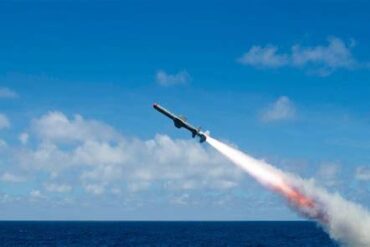
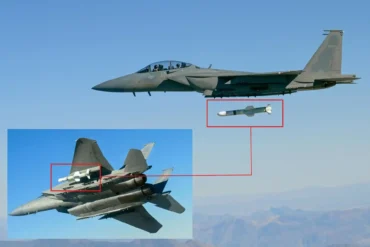
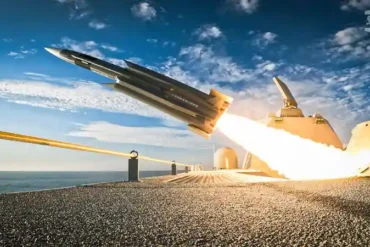
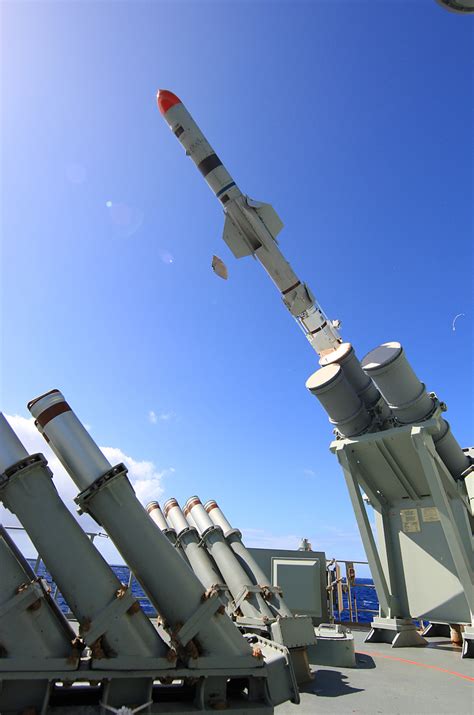
The missile deployed with the land-based system is the RGM-84L-4 Harpoon Block II, a modernized variant optimized for littoral warfare. During midcourse flight, the missile relies on a GPS-assisted inertial navigation system, transitioning to an active radar seeker in the terminal phase. This combination allows it to engage moving targets amid land clutter, dense shipping traffic, and complex coastal geography.
Flying a low sea-skimming profile, the Harpoon Block II minimizes detection range and compresses reaction times for shipborne defenses. Its 221-kilogram high-explosive warhead is designed to inflict catastrophic damage on surface combatants through blast and fragmentation, potentially mission-killing even large vessels.
With a maximum range of approximately 124 kilometers, the missile enables Taiwan to hold adversary naval assets at risk well beyond the immediate coastline. This coverage extends across key sea lanes and potential amphibious approach routes, forcing hostile forces to operate farther offshore or accept increased vulnerability.
Strengthening a Layered Maritime Denial Strategy
The Harpoon Coastal Defense System does not operate in isolation. Instead, it reinforces Taiwan’s broader layered maritime denial posture, which integrates naval forces, airpower, indigenous missile systems, and coastal surveillance assets. Road-mobile Harpoon batteries add depth to this network, providing a survivable strike option that complements sea- and air-launched capabilities.
Mobility allows batteries to disperse across multiple sectors, fire from unpredictable positions, and relocate rapidly after engagement. Within their engagement envelope, these units present a credible threat to surface combatants and amphibious task groups, compelling adversaries to invest heavily in suppression, air defense, and standoff tactics. While vulnerabilities remain, particularly under sustained countermeasures, the system significantly increases the cost and complexity of hostile maritime operations.
Regional and Strategic Implications
Beyond Taiwan’s immediate defense needs, the arrival of land-based Harpoon systems carries wider regional significance. It underscores sustained U.S. involvement in Taiwan’s security under existing policy frameworks and highlights a growing emphasis on mobile coastal missile forces across the Western Pacific. For regional navies, Taiwan’s deployment illustrates how relatively compact, land-based systems can exert outsized influence on maritime planning and deterrence calculations.
As additional Harpoon systems enter service through 2028, Taiwan’s expanding coastal strike capability is likely to shape operational assumptions across the Taiwan Strait. By prioritizing dispersion, redundancy, and survivability, Taipei is signaling that any attempt to coerce or isolate the island by sea will face a dense, adaptive, and persistent defensive network. In an era defined by contested littorals, the land-based Harpoon emerges as a strategically potent instrument of maritime denial.