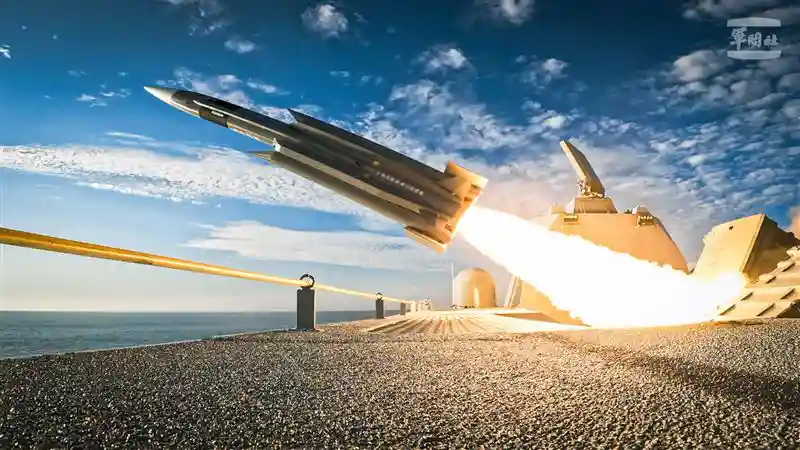
Taiwan’s decision to push forward a $40 billion supplemental defense budget marks one of the most consequential military shifts in the island’s modern history. The initiative, unveiled by President Lai Ching-te, signals a long-term restructuring of Taiwan’s defensive architecture from conventional, platform-centric forces to a survivable, asymmetric, missile-saturated posture designed to complicate any potential Chinese offensive across the Taiwan Strait.
This new seven-year injection—set between 2026 and 2033—adds unprecedented financial mass to Taiwan’s ongoing modernization programs, layering new missile stockpiles, autonomous drones, and an integrated air-defense shield onto existing plans. The budget is framed not simply as an arms package but as a national strategy to raise Beijing’s invasion costs to prohibitive levels.
The timing is sensitive. Beijing continues to pressure Taipei politically, militarily, and through gray-zone operations, while Washington intensifies calls for Taiwan to bring its defense spending closer to 5% of GDP by 2030. Lai’s announcement places Taiwan on a trajectory toward that expectation and reinforces a message of self-reliant deterrence.
A Strategic Reorientation Toward Asymmetric Warfare
Taipei’s supplemental plan sits atop a core 2024 defense budget of roughly TWD 607 billion (about $18.9 billion). While previous special funds prioritized high-value acquisitions—most notably 66 F-16 Block 70 fighters and naval aviation upgrades—the new allocation concentrates on weapons that distribute lethality rather than compress it into large, vulnerable platforms.
The philosophical pivot is clear: Taiwan aims to become harder to find, harder to hit, and far more punishing to attack. Officials describe an evolving arsenal built around mobile missile batteries, dispersed drone networks, resilient command nodes, and digitized early warning systems.
Missiles, Drones, and the T-Dome Shield
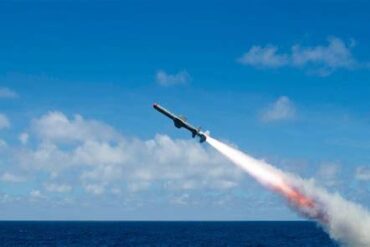
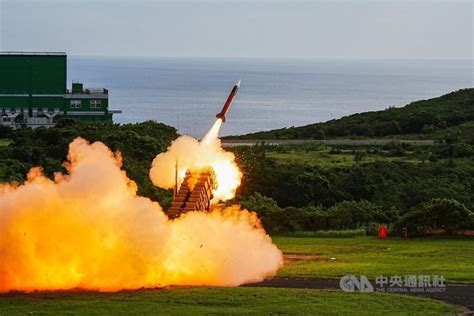
Defense Minister Wellington Koo outlined the centerpiece of these investments: vast new missile inventories, drone fleets designed for both reconnaissance and strike missions, and a national air-defense construct known as “T-Dome.” This system envisions a fully networked defensive grid integrating radars, sensors, dispersed interceptor sites, and hardened command infrastructure. While details remain classified, the architecture is expected to fuse:
- Long-range early-warning radars feeding real-time intelligence
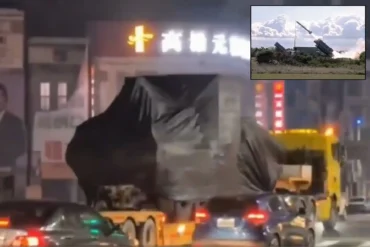
- Mobile and concealed missile launchers capable of rapid relocation
- Multi-layer interceptor coverage against aircraft, cruise missiles, and unmanned systems
- AI-enabled threat correlation to streamline responses
Together, these systems deepen Taiwan’s transition from traditional static defense to a far more dynamic, unpredictable posture—one built to outlast the opening hours of a Chinese assault.
Ground Forces Modernization: Tanks, IFVs, and Indigenous Industry
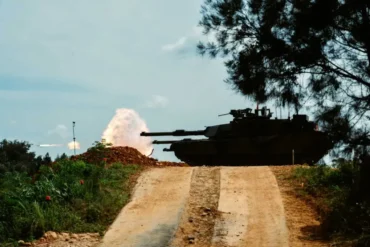
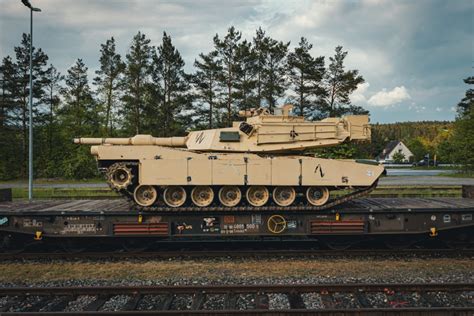
Even as Taiwan leans heavily toward missiles and drones, armored and mechanized modernization continues across the island’s land forces. The military fields around 650 tanks, a mix of aging M60A3s, upgraded CM-11 Brave Tigers, and—critically—the first M1A2T Abrams battalion now entering service. This enhanced variant carries a 120 mm smoothbore gun, advanced thermal sights, digitalized fire control, and improved armor protection, marking a decisive leap over previous generations.
Alongside heavy armor upgrades, over 300 CM-34 Yunpao infantry fighting vehicles are being deployed to mechanized brigades, strengthening mobility and ground firepower. These acquisitions are backed by a fast-maturing domestic industry that now builds missiles, unmanned systems, aerospace components, and even the island’s first indigenous conventionally powered submarine.
The Politics Behind the Budget: Deterrence, Division, and Domestic Stakes
President Lai’s messaging is unambiguous: Taiwan’s survival depends on resisting coercion rather than seeking compromise with an increasingly assertive China. He invoked historic cases where concessions failed to secure peace, arguing that deterrence—not accommodation—preserves sovereignty and democracy.
The opposition Kuomintang (KMT), however, warns against “brinkmanship.” Party leaders emphasize the public’s desire for peace, even as polling consistently shows strong support for strengthening Taiwan’s defensive capabilities. With parliament controlled by the opposition, the budget’s approval may spark a political showdown, though few expect outright rejection given the scale of the threat environment.
This tension reflects a broader reality: Taiwan’s electorate is weary of constant war talk, but it also recognizes the need for credible deterrence. The debate has shifted from whether to spend to how and how fast.
China’s Reaction: Familiar Accusations and Escalating Pressure
Beijing condemned the proposal as wasteful and externally driven, accusing Taiwan of diverting funds from social programs to foreign arms purchases—a message aimed at both domestic audiences and Taiwanese public opinion. Yet these criticisms sit uneasily beside China’s own immense buildup across from the island, including:
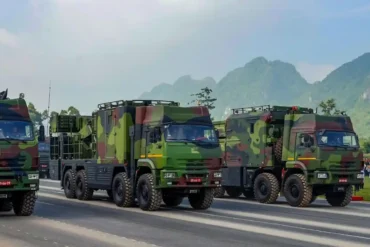
- PCH-191 long-range rocket brigades, capable of massed strikes
- Joint Sword exercises simulating blockade and invasion scenarios
- Expanding missile inventories positioned along the southeast coast
China’s framing contrasts sharply with the strategic environment Beijing itself has shaped. Taipei’s response is not an isolated decision but a direct reaction to years of intensifying military pressure.
The U.S. Factor: Arms, Expectations, and Regional Strategy
Washington remains a central pillar of Taiwan’s defense planning. Under the Taiwan Relations Act, the United States is obligated to provide “defensive” systems, a mandate that has translated into sales of Patriot upgrades, F-16 Block 70 fighters, Stinger systems, HIMARS-linked missiles, and coastal strike weapons.
Senior U.S. officials have increasingly urged Taiwan to prioritize survivable, mobile, and attritable systems, aligning perfectly with the logic of the new supplemental budget. Raymond Greene, the de facto U.S. ambassador, praised the package as a major step toward reinforcing Strait stability, noting that credible deterrence reduces the likelihood of miscalculation.
For Washington, Taipei’s choices dovetail with broader Indo-Pacific strategies aimed at strengthening the first island chain, enabling forward-deployed U.S. forces, and coordinating with Japan and South Korea on regional security.
Regional Implications: A Tipping Point in the Indo-Pacific Balance
Military spending across Asia is accelerating, expected to reach $524 billion in 2024. China dominates that growth, but U.S. allies—including Japan, South Korea, and Australia—are expanding defense budgets at historic rates. Taiwan’s new plan aligns it with this broader militarization trend, adding mass to the strategic geometry spanning the East China Sea, South China Sea, and Philippine Sea.
Taiwan’s position at the core of the first island chain gives it disproportionate geopolitical weight. A more resilient Taiwanese defense posture complicates PLA planning and feeds into Japanese debates about counterstrike capability, U.S. deliberations about force distribution, and trilateral security architecture linking Washington, Tokyo, and Seoul.
In this sense, the $40 billion investment is not merely domestic budgeting. It contributes to shaping the future military balance of the Indo-Pacific, influencing deterrence calculations far beyond Taiwan’s own shores.
A Defense Transformation With Global Consequences
Taiwan’s supplemental defense budget represents a stark acknowledgment of a rapidly shifting strategic reality. With missiles, drones, a dense air-defense shield, and hardened command networks, Taipei aims to create a battlespace so costly, so complex, and so uncertain that Beijing hesitates before contemplating force.
The island’s defensive transformation will ripple across Asia, reinforce U.S. regional strategy, challenge Chinese military planning, and elevate Taiwan’s role in the broader contest between democratic resilience and authoritarian pressure.
The next decade will reveal whether this massive investment succeeds in shaping China’s calculus. What is certain is that Taiwan is preparing for the most dangerous security environment it has faced in generations.