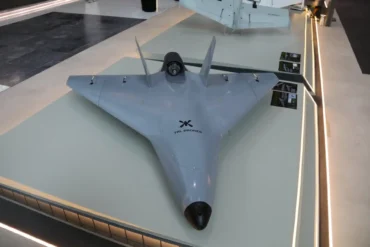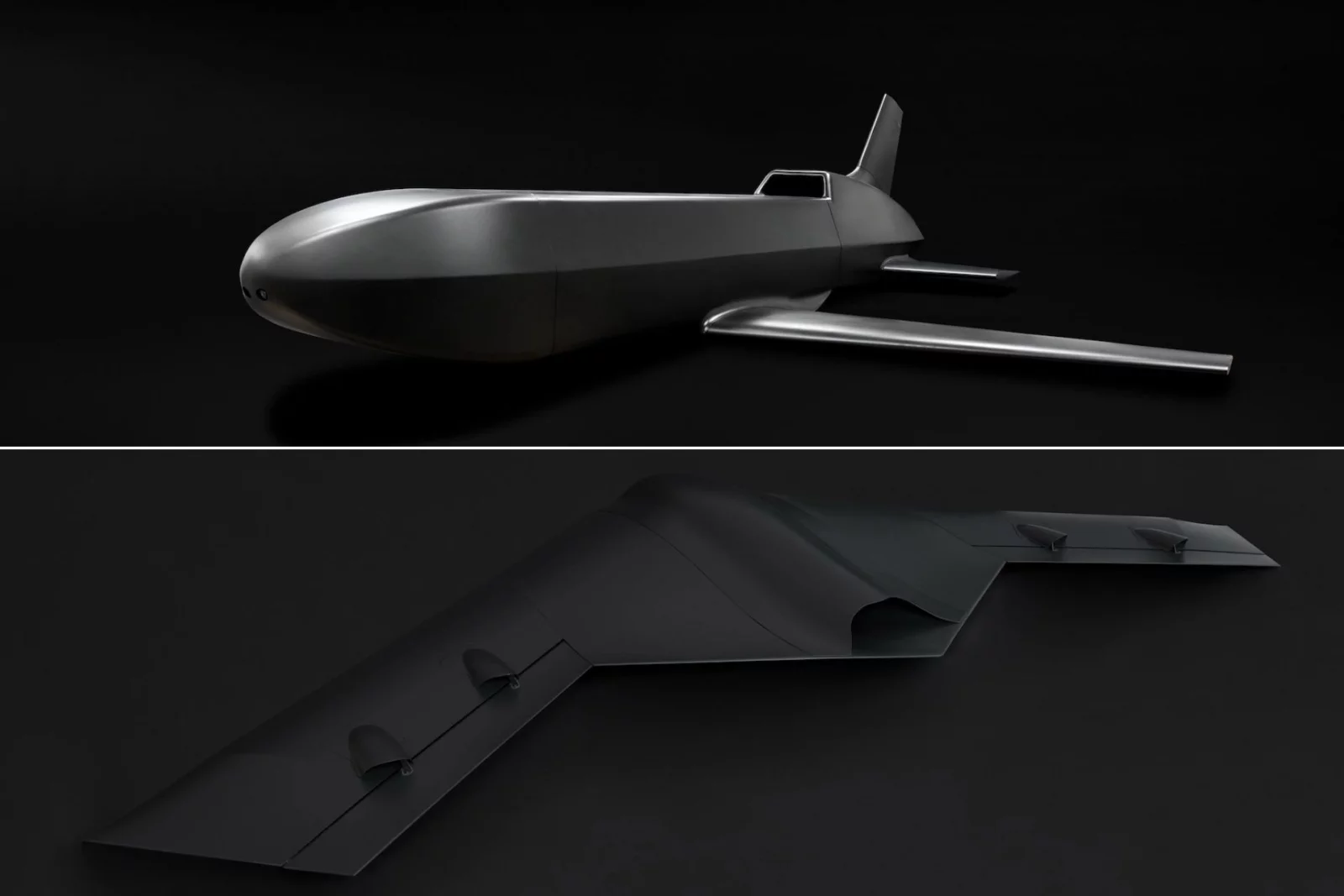
In a bold and unmistakable signal of growing European defense self-reliance, the Czech Republic has unveiled two domestically developed deep-strike systems—the MTS Narwhal cruise missile and the MTS Nightray stealth attack drone—during the Dubai Airshow. Engineered by Czech defense firm LPP s.r.o., these systems represent a significant leap in autonomous precision-strike capabilities from a nation that, until recently, was not seen as a leader in such domains.
These twin systems are built for one defining purpose: to penetrate contested, GPS-denied airspace with lethal autonomy and precision. Their emergence reflects a pragmatic, threat-driven response to the realities of modern warfare, as demonstrated in conflicts where satellite navigation is actively jammed and air defense systems are increasingly complex.
LPP’s Strategic Vision: Breaking Into the Long-Range Strike Market
At the heart of this breakthrough is LPP’s commitment to full-spectrum, indigenous development. Both the Narwhal and Nightray were entirely conceived, designed, and manufactured in the Czech Republic. This ensures that critical intellectual property remains within national borders and enables the country to sidestep restrictive export controls that traditionally limit access to such weaponry.
This positioning isn’t accidental. In an era where deep-strike assets are increasingly valued by medium-sized powers, LPP is delivering a high-performance alternative for countries unwilling—or unable—to source such weapons from traditional Western or Eastern suppliers.
The MTS Narwhal Cruise Missile: Precision Strike at Theater Range
The MTS Narwhal is a subsonic, turbojet-powered cruise missile specifically designed to strike static, high-value targets located far behind enemy lines. With a range of 680 kilometers and a 120 kg conventional warhead, the Narwhal is optimized for strategic strike missions, targeting critical infrastructure, command nodes, and logistics hubs.
Its key features include:
- Maximum speed: 750 km/h
- Flight profile: Low-altitude, terrain-following to minimize radar detection
- Dimensions: 4 meters in length, 2.6-meter wingspan
- Maximum takeoff weight: 260 kg
One of the standout engineering achievements is its versatile launch architecture. The Narwhal can be launched from:
- Fixed runways
- Catapult systems
- Improvised roads using LPP’s reusable trolley launcher, reducing logistical burden and improving mobility in austere environments
This system isn’t merely a missile—it is a mobile strike platform engineered for use by modern expeditionary forces.
The MTS Nightray: A Stealth Drone for GPS-Denied Precision Attacks
Complementing the Narwhal is the MTS Nightray, a stealthy one-way attack drone (OWA-UAS) tailored for loitering, deep-penetration roles. Designed with signature reduction in mind, the Nightray is intended to infiltrate highly defended Integrated Air Defense Systems (IADS) and execute pinpoint attacks with minimal detectability.
The Nightray’s design includes:
- Flying wing architecture for reduced radar cross-section
- Radar-deflecting coating developed in-house
- Buried turbojet engine to suppress infrared and acoustic signatures
Its specifications:
- Range: 400 kilometers
- Speed: Up to 500 km/h
- Warhead: 30 kg
- Length: 1.77 meters
- Wingspan: 4 meters
Like the Narwhal, the Nightray uses the same launch infrastructure, enabling interoperability across mission sets and streamlined operational logistics. This is a critical design feature, ensuring mixed-fleet deployment without the burden of unique support equipment.
The Game-Changer: Visual Navigation in a Jammed Battlespace
Arguably the most disruptive capability in both systems is LPP’s battle-proven Visual Navigation suite. This AI-enabled navigation system leverages onboard imaging and terrain correlation to navigate in GPS-denied or spoofed environments, a condition that is increasingly common in modern high-intensity conflicts.
Key capabilities include:
- Autonomous flight planning and route correction using terrain matching
- Terminal guidance without satellite dependency
- Optional jamming-resistant radio link for real-time targeting adjustments and telemetry
This system gives both the Narwhal and Nightray a distinct advantage in survivability and mission reliability, where other systems might fail or veer off course under jamming conditions.
Enabling Human-in-the-Loop Control Without Emission Compromise
For scenarios requiring operator intervention or dynamic retargeting, LPP offers an optional secure data link. This communication link is designed to provide real-time situational awareness, without compromising the platform’s stealth profile through constant emissions.
Features include:
- Telemetry feedback
- Live video or infrared streaming (on Nightray)
- Command override and target reprogramming
By allowing flexible control modes—fully autonomous, semi-autonomous, or operator-controlled—the platforms can be tailored to mission needs, risk appetite, and Rules of Engagement (ROE).
Strategic Implications for NATO and Global Defense Markets
With the Czech Republic a member of NATO, LPP’s systems are likely compliant with Alliance standards and can be rapidly integrated into joint force structures. This opens the door for interoperable deployment among European partners who are actively seeking affordable and politically independent deep-strike capabilities.
At the same time, their commercial availability on the global market presents an interesting dilemma. These cost-effective systems can potentially:
- Shift regional military balances by giving smaller nations credible strike tools
- Challenge traditional missile defense paradigms through stealth and autonomy
- Expand access to deep-strike missions without reliance on foreign aid or licensing
The dual-use launch infrastructure, GNSS-independent guidance, and modular design create a compelling export package—especially for nations looking to modernize without being tied to the export restrictions of the U.S., Russia, or China.
A Milestone for European Defense Industrial Autonomy
The Narwhal and Nightray underscore a larger transformation underway in Europe: the rise of medium-power defense innovation hubs. No longer confined to legacy producers like France, Germany, or the U.K., cutting-edge technologies are now emerging from Central and Eastern European states, often shaped by more recent, frontline experiences with hybrid warfare and Russian aggression.
Czechia’s LPP is not just building weapons—it is challenging the monopoly on deep-strike technologies and setting new standards for affordability, deployability, and independence.
Conclusion: The Future of Deep Strike is Autonomous and Adaptive
The unveiling of the MTS Narwhal and MTS Nightray is more than a product announcement; it is a strategic inflection point in how mid-sized powers arm themselves in the 21st century. These systems reflect the urgent need for resilient, precise, and stealthy strike capabilities that can operate without satellites, heavy infrastructure, or foreign approval.
The Czech Republic, through LPP, has demonstrated that such capabilities are no longer the exclusive domain of superpowers. Visual navigation, autonomous control, and modular mobility are no longer future aspirations—they are operational realities. And as conflicts evolve, it is systems like Narwhal and Nightray that will define the next era of warfare. With their introduction, the Czech Republic doesn’t just strengthen its own defenses. It reshapes the very definition of what a modern strike system must be.