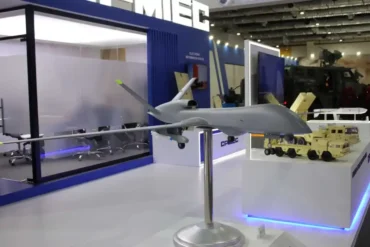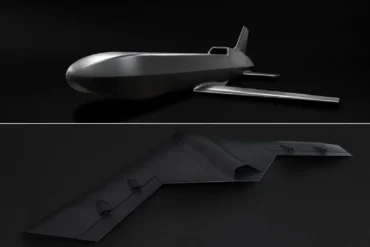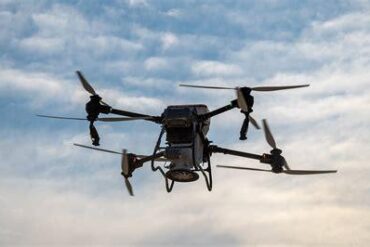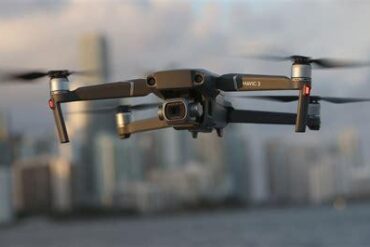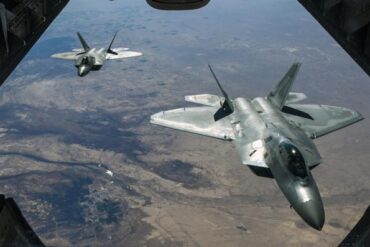
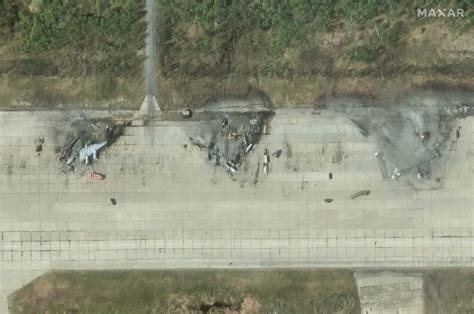
Modern battlefields are no longer dominated solely by tanks, fighter jets, or aircraft carriers. Instead, unmanned aerial systems (UAS)—especially small, cheap, mass-produced drones—are redefining the tempo and nature of conflict. The war in Ukraine has demonstrated how swarms of drones can alter the balance of power. They have destroyed strategic aircraft deep within Russian territory, exposed vulnerabilities in air defense systems, and forced militaries to rethink traditional concepts of force projection.
Col. Jim Price, special assistant to the director of operations at Air Combat Command, underscored the urgency at the Air, Space & Cyber Conference: “Ukraine’s Operation Spiderweb highlighted the strategic implications of disregarding small UAS as a threat.” In June, Ukraine successfully used drones to damage Russian air bases, proving that even the most advanced militaries are not immune. For the U.S., this is more than just a lesson learned—it is a warning about the future.
Why the U.S. Cannot Play the Numbers Game with China
The United States faces an even more daunting challenge than Russia: China’s massive industrial capacity for drone production. China is already the global leader in commercial drone manufacturing, with DJI holding an 80 percent global market share and a 90 percent dominance in the U.S. commercial drone sector. With this foundation, Beijing can easily convert civilian production lines into military drone assembly at a scale the Pentagon cannot hope to match.
Michael Hiatt, chief technology officer at Epirus Inc., did not mince words: “We can’t keep up with China on drones. They are better at producing cheap electronics than we are. We need a different solution. We can’t do one versus one.” Hiatt’s blunt assessment reflects a growing consensus: the U.S. must abandon the idea of downing drones on a one-for-one basis and instead focus on scalable solutions that can neutralize swarms in seconds.
Directed Energy: The Game-Changer in Drone Defense
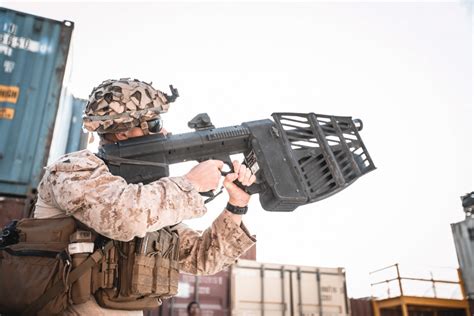
One of the most promising areas is directed energy weapons. High-power microwaves and lasers provide unique advantages against swarming threats. Unlike missiles or gunfire, which require one shot per target, directed energy can engage multiple drones at once. Epirus’ Leonidas system recently demonstrated this by disabling 49 drones in less than a second with a single pulse.

Lasers also hold appeal due to their low cost per shot and ability to sustain fire as long as power is available. However, the prohibitive upfront price of such systems and the potential risk of collateral damage in urban areas remain obstacles. High-power microwaves can disrupt or destroy drones instantly, but they also risk shutting down civilian cell phone networks, posing legal and operational dilemmas outside active warzones.
Kons Muhtaris of L3 Harris emphasized this difficulty: “You can’t go hot in an urban environment. You can’t do certain electromagnetic effects in certain areas, because it may interfere with cell phones or other communications infrastructure.” This illustrates the strategic tightrope between military necessity and civilian safety.
Pentagon Initiatives: Replicator and Counter-Drone Task Forces
Recognizing the scale of the problem, the Pentagon has launched multiple counter-drone initiatives. The original Replicator program sought to mass-produce thousands of cheap drones to counterbalance China’s arsenal, but its successor—Replicator 2—is focused on counter-UAS systems.
Secretary of Defense Pete Hegseth recently unveiled a joint interagency task force to accelerate counter-drone technologies for warfighters. These efforts are designed to break away from slow procurement cycles that hinder rapid adaptation. In late summer, the Defense Innovation Unit (DIU) shortlisted solutions under Replicator 2, aiming for fast deployment to U.S. forces worldwide.

Despite these initiatives, experts caution that America cannot close the gap by merely building more drones. Instead, the focus must be on innovative kill mechanisms that can address large numbers of drones simultaneously, leveraging both kinetic and non-kinetic means.
The Limits of Traditional Weapons in Drone Defense
Missiles and precision-guided munitions, effective in conflicts against traditional air threats, are economically unsustainable against drones. A $2,000 quadcopter should not be countered with a $2 million missile. As Muhtaris noted, “We can’t waste expensive precision munitions on low-cost drones.”
Instead, low-cost kinetic options like the Advanced Precision Kill Weapons System (APKWS) rockets have proven viable. Used in the Middle East to down Iranian drones, these rockets provide a cost-efficient balance between precision and affordability. However, they are still limited in scalability when faced with swarms numbering in the hundreds or thousands.
The Need for Layered Defenses and Open Architecture
Industry leaders are calling for a layered defense approach that integrates multiple solutions. This includes:
- Electronic warfare: Jamming signals or exploiting vulnerabilities in drone communications.
- Directed energy: Lasers and microwaves for scalable swarm defense.
- Kinetic interceptors: Affordable rockets or gun systems for battlefield use.
- Traffic management systems: Tools to distinguish between civilian, rogue, and hostile drones.
Jon Piatt of Sierra Nevada Corp. argued for the establishment of drone-free zones around critical bases and infrastructure. These zones would act as “kill zones” where any unauthorized drone could be neutralized without hesitation. Meanwhile, John Theuerkauf of Frequentis Defense stressed the need for military coordination with the Federal Aviation Administration (FAA) to manage airspace effectively and avoid accidental shootdowns of benign drones.
An open-architecture model is equally crucial. By allowing plug-and-play integration of new systems, the Pentagon could rapidly adopt emerging technologies without being locked into a single manufacturer’s ecosystem. Piatt highlighted that “an open architecture allows us to plug and play not just the kinetic but the non-kinetic solutions as well.” This adaptability is vital in keeping pace with evolving threats.
Learning from Ukraine and Preparing for China
Ukraine’s innovative drone use has shown that traditional air defense doctrines are insufficient. Russia’s struggles in intercepting cheap drones with costly missiles illustrate the unsustainable economics of one-for-one defense. For the U.S., this lesson carries even greater weight, as China possesses the capacity to build and field drones on an unprecedented scale.
China’s strategy, experts suggest, will be to overwhelm American defenses through numbers. A massive swarm attack could saturate existing countermeasures, rendering traditional interception strategies obsolete. Without scalable, swarm-focused defenses, even the most advanced U.S. bases could be left vulnerable.
Conclusion: Rethinking the Future of Drone Warfare
The U.S. cannot and should not attempt to match China’s drone numbers. Instead, victory in future conflicts will hinge on innovation, adaptability, and layered defenses. Directed energy weapons, low-cost kinetic solutions, robust traffic management, and open-architecture integration represent the path forward.
As defense leaders repeatedly emphasize, there is no silver bullet in drone warfare. Success will require a quiver of options capable of neutralizing diverse drone threats across different domains. The stakes are high: failing to adapt risks leaving America’s critical infrastructure and military assets exposed to the very technology reshaping modern war.
The Pentagon’s challenge is now clear—think differently, move faster, and prepare for swarm warfare on a scale the world has never seen.