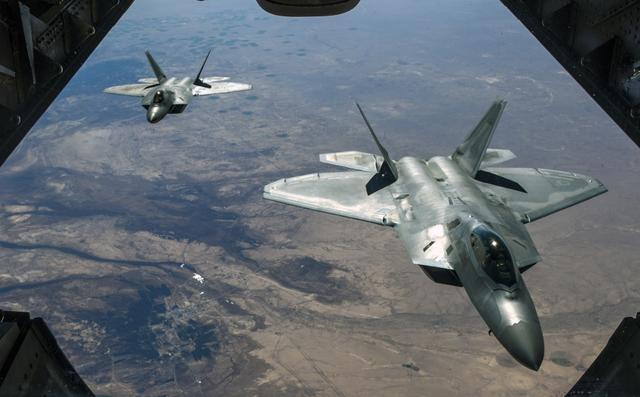
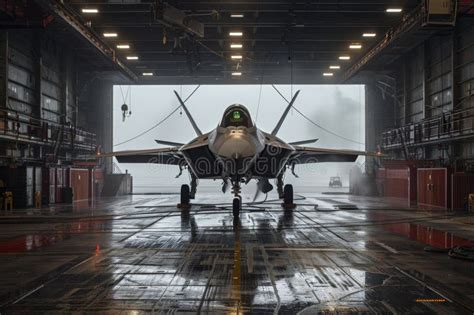
The Lockheed Martin F-22 Raptor is widely regarded as one of the most advanced fighter jets ever built. Its stealth capabilities, supercruise ability, advanced avionics, and unmatched air superiority make it a highly coveted asset for any air force. However, despite its close alliance with the United States and its advanced military capabilities, Israel has never been able to acquire the F-22. This article explores the legal, financial, technological, and geopolitical reasons why Israel has been denied access to this fifth-generation fighter jet.
The U.S. Export Ban on the F-22
One of the primary reasons Israel cannot obtain the F-22 Raptor is the strict export ban imposed by the U.S. government. In the 1990s, the United States Congress passed a law explicitly prohibiting the export of the F-22, even to its closest allies, including Israel, Japan, and Australia. The primary motivation behind this restriction was to prevent the leakage of classified technologies, such as:
- Advanced stealth coatings and materials that make the F-22 virtually invisible to radar
- Thrust vectoring engines that provide unparalleled maneuverability
- Cutting-edge avionics and sensor fusion systems
The United States feared that if exported, these technologies could be compromised through espionage or reverse engineering, potentially benefiting adversaries like Russia or China.
Production Line Closure and Cost Constraints
Even if the export ban were lifted, Israel would still face significant hurdles in acquiring the F-22 due to its high costs and production challenges.
- Production Line Closure
- The F-22 Raptor program was officially terminated in 2011, with the last aircraft delivered to the U.S. Air Force in 2012. A total of 187 operational F-22s were built, far fewer than the originally planned 750 units.
- Restarting the F-22 production line would require an estimated $10 billion investment, as many of the original suppliers no longer manufacture key components.
- Extreme Costs
- The estimated unit cost of an F-22 Raptor is over $200 million, nearly twice the cost of an F-35 Lightning II.
- The maintenance and operational costs are also extremely high, making the F-22 less economically viable compared to other modern fighters.
- Israel, while possessing a significant defense budget, would face financial challenges in integrating such an expensive and maintenance-heavy aircraft into its fleet.
Strategic and Technological Protection Measures
The F-22 Raptor remains a highly classified aircraft, and the United States is reluctant to share its most advanced air combat capabilities. Even if an export version were considered, the U.S. would likely need to remove or downgrade key features, including:
- Radar-absorbing materials
- Certain avionics and sensor capabilities
- Encryption and data-sharing systems
Additionally, U.S. defense officials fear that if Israel obtained the F-22, it could lead to an arms race in the Middle East. Potential adversaries, such as Iran, could seek more advanced air defense systems or pursue partnerships with Russia and China to counteract Israeli air superiority.

Israel’s Alternative: The F-35I “Adir”
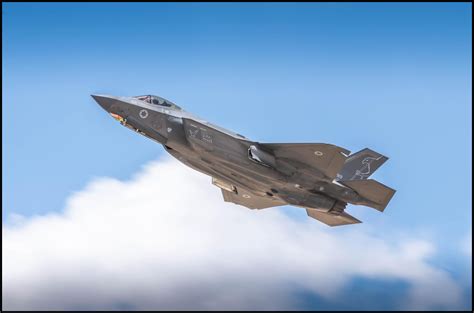
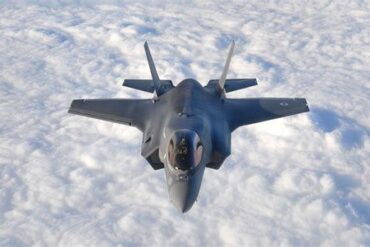
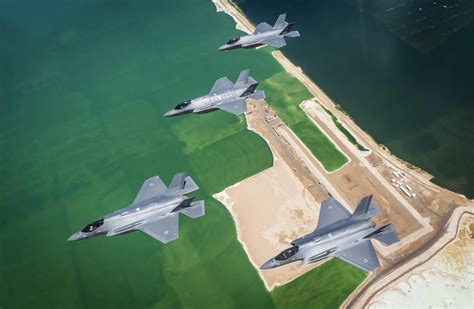
Instead of the F-22, the Israeli Air Force (IAF) operates the F-35I Adir, a customized variant of the F-35 Lightning II that has been modified for Israel’s unique operational needs. While the F-35 lacks the sheer air dominance of the F-22, it offers several advantages:
- Advanced stealth capabilities, making it highly survivable in enemy airspace
- State-of-the-art electronic warfare systems, enhanced with Israeli-developed technology
- Multi-role functionality, allowing it to conduct air-to-ground strikes, reconnaissance, and electronic warfare missions
- Lower operational costs compared to the F-22
With these capabilities, the F-35I Adir ensures that Israel maintains a significant edge in the region, even without access to the F-22 Raptor.
Geopolitical Considerations and U.S. Policy
The United States carefully balances military sales to maintain strategic stability in the Middle East. When Israel sought the F-22, one major concern was how this would affect other U.S. allies, such as Saudi Arabia and the UAE.
- In 2020, the U.S. approved the sale of the F-35 to the UAE, which sparked concerns in Israel about losing its qualitative military edge (QME).
- The U.S. mitigates these concerns by restricting access to certain classified technologies while providing Israel with alternative capabilities, such as advanced air defense systems and precision-guided munitions.
Conclusion
Despite its advanced air force and strong ties with the United States, Israel remains unable to acquire the F-22 Raptor due to a combination of legal restrictions, economic factors, and strategic considerations. The F-35I Adir serves as a viable alternative, offering advanced capabilities while maintaining the U.S.’s strategic balance in the region. Looking ahead, Israel is expected to focus on further enhancing its F-35 fleet and possibly collaborating on next-generation fighter programs to maintain air superiority.
Frequently Asked Questions (FAQ)
1. Why doesn’t the U.S. lift the export ban on the F-22?
The U.S. government passed a law prohibiting the export of the F-22 to protect its most sensitive stealth and avionics technologies from potential adversaries. Even close allies like Israel, Japan, and Australia are not permitted to purchase the aircraft.
2. Could Israel afford the F-22 if it were available?
While Israel has a large defense budget, the F-22’s high costs make it an impractical choice. The estimated $200 million per unit price, along with high maintenance and operational expenses, would strain Israeli military resources.
3. How does the F-35 compare to the F-22 for Israel’s needs?
The F-35I Adir, Israel’s customized version of the F-35, is optimized for its specific operational requirements. While the F-22 excels in air superiority, the F-35I provides superior multi-role capabilities, advanced electronic warfare, and enhanced stealth—making it a more practical choice for Israel’s defense strategy.