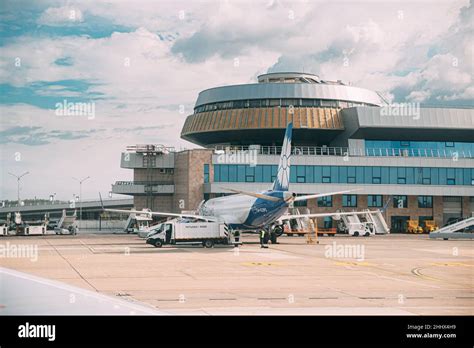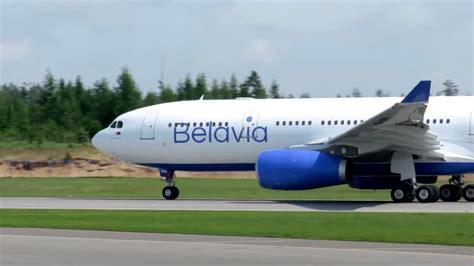
Belarus has once again found itself at the center of a high-stakes geopolitical maneuver, skirting the edges of legality and exposing the fragile enforcement mechanisms behind global aviation sanctions. In a calculated and shadowy sequence of events, Belavia, the national airline of Belarus, has acquired three Airbus A330-200 aircraft—long-range, widebody jets previously operated by Emirates—despite being under sweeping Western sanctions.
These aircraft, approximately two decades old, were originally part of Emirates’ fleet before finding their way to the defunct Onur Air, a Turkish airline that collapsed financially around five years ago. It was from this bankruptcy estate that the aircraft were first snapped up by an obscure entity with significant ties to questionable dealings.
The Gambian Loophole: Magic Air’s Legal Facade
At the core of this sanctions-evasion strategy is Magic Air, a little-known and never-operational airline registered in the Gambia. This airline exists primarily on paper, and it is fronted by Tarek Abdel Hamid Al Ajami, a Jordanian-Syrian businessman with a track record of helping sanctioned regimes and carriers procure aircraft through roundabout legal maneuvers. Magic Air never flew a single passenger, and its creation appears to have been strategically planned to serve as a legal buffer zone in aviation transactions.
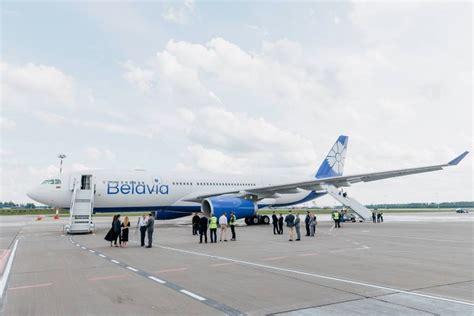
Al Ajami acquired the aircraft from Onur Air, and held onto them via Magic Air—likely to allow their residual legal status to “cool off” before initiating their final transfer. Then, in August 2024, the Gambian Civil Aviation Authority (CAA) announced the aircraft were being sold to an “unnamed buyer” in the United Arab Emirates. This was a deliberately misleading claim, as the jets never made it to the Gulf. Instead, they were flown directly to Minsk, re-registered under the Belarusian flag, and quietly integrated into Belavia’s fleet.
Belavia’s Desperate Need for Long-Haul Capacity
Belavia’s push to acquire widebody aircraft is rooted in strategic necessity. Following the fallout from the 2021 sanctions, European leasing firms quickly repossessed a significant portion of Belavia’s fleet, reducing it to just 15 narrowbody aircraft, mostly Boeing 737s and Embraer E-Jets. This severely limited the airline’s long-range connectivity, especially to nations considered “friendly,” such as Russia and China.
The introduction of the Airbus A330-200s now gives Belavia the capacity to re-establish routes that were shuttered due to sanctions. Two aircraft are expected to enter service by the end of 2025, with the third expected by mid-2026.
Training in Moscow: A Pre-Meditated Strategy
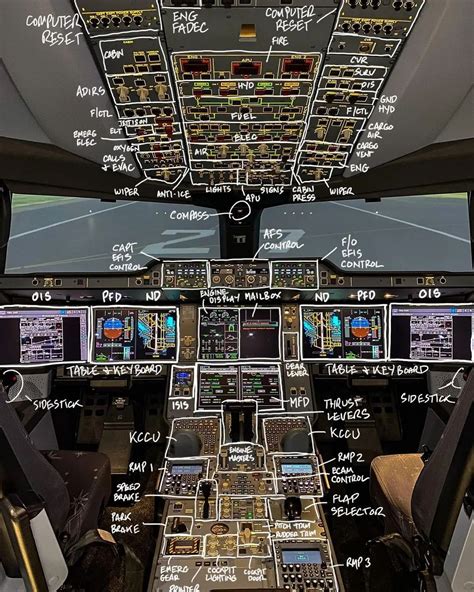
Interestingly, the groundwork for operating these jets began long before the aircraft landed in Belarus. Belavia sent its flight crews, maintenance teams, and cabin staff to Aeroflot’s training facilities in Moscow to gain operational certification and familiarity with the A330 platform. This reveals that the airline’s acquisition strategy was not a last-minute workaround, but a methodically planned operation likely in motion for over a year.
This partnership with Aeroflot, a Russian airline also under Western sanctions, illustrates the growing aviation interdependence among countries excluded from Western systems. With Airbus and Boeing both prohibited from dealing directly with Belarus, these alternative training and support ecosystems have become lifelines for Belarusian aviation.
Sanctions Evasion Playbook: How It Worked
What makes this transaction particularly troubling to regulators is how international legal and registration systems were manipulated:
- Aircraft acquired from Onur Air post-bankruptcy and held dormant
- Transferred to Magic Air, a paper company in Gambia (a country not aligned with Western sanctions)
- Registered as sold to a fake UAE buyer to provide a paper trail
- Flown directly to Belarus instead of the Gulf
- Re-registered under Belarusian authority, effectively completing the transfer
This blueprint mirrors many sanctions-evasion tactics used not only in aviation but in sectors such as energy, defense, and maritime logistics. It underscores the global patchiness of sanctions enforcement—especially when intermediary nations with no incentive to comply are involved.

A Cautionary Tale for Global Aviation Regulators
The case of Belavia and its Airbus A330s highlights the enormous difficulty faced by Western governments in enforcing sanctions in an increasingly multipolar world. Even as powerful entities like the European Union and the United States attempt to clamp down on sanctioned aviation players, the existence of legally murky jurisdictions offers a workaround for those patient and well-connected enough to exploit them.
While regulators can track official registries, investigate end-user certificates, and even threaten retaliatory trade measures, the effectiveness of such tools depends largely on global compliance and cooperation—which remains fractured at best.
What’s more, component-level restrictions are even harder to enforce. Jet engines, avionics, and flight management systems from Western manufacturers are often embedded in legacy aircraft that move from owner to owner across borders. The moment these planes leave the direct regulatory zone, tracking becomes opaque, and enforcement is reduced to diplomatic finger-pointing.
The Future of Belavia’s Sanction-Dodging Fleet
As of early 2025, the three Airbus A330s are undergoing routine checks and refitting in Minsk, while Belavia aligns schedules for expanded service. It is likely these aircraft will be deployed on routes to Moscow, Beijing, and possibly Middle Eastern destinations with permissive regulatory stances.
Despite their age, these A330s provide significant operational capability, offering range and capacity far beyond anything Belavia previously had at its disposal. This represents not only a strategic leap but a symbolic win for Belarus’s resistance to Western containment efforts.
However, this also paints a troubling picture for the aviation industry: that with enough time, intermediaries, and paper companies, even the most sanctioned nations can eventually rebuild, fly internationally, and project soft power via commercial air travel.
Conclusion: Sanctions Are Only As Strong As Their Weakest Link
Belavia’s acquisition of three Airbus A330s through a labyrinthine and legally dubious process is a stark reminder that sanctions are not impermeable barriers, but rather policy tools riddled with exceptions, gaps, and enforcement challenges. The maneuver involved corporate facades, jurisdictional arbitrage, false transactions, and a subtle but deliberate manipulation of international aviation protocols.
For regulators and policymakers in the West, the Belavia case demands urgent attention. It underscores the need for greater cooperation across aviation registries, enhanced scrutiny on non-operational carriers, and more aggressive targeting of individuals and facilitators who specialize in exploiting legal gray zones. Only then can meaningful deterrents be constructed against the kind of aerial shell games that continue to undermine international sanctions.