For over a century, Boeing has towered over the global aerospace industry. Widely recognized for its commercial airliners, few are aware that Boeing is also the quiet powerhouse behind several influential aviation companies. These subsidiaries span autonomous aircraft, cutting-edge urban air mobility, and experimental aerospace technology. Below, we explore five aviation companies that are wholly or partially owned by Boeing—names that may not be as familiar but are vital to Boeing’s dominance across both civilian and defense sectors.
The Unseen Wings of Boeing’s Empire
From humble beginnings as the Pacific Aero Products Co., Boeing has transformed into a sprawling conglomerate that builds everything from intercontinental jets to lunar rovers. As the demand for diversified aerospace technology surged, so did Boeing’s interest in acquiring or reabsorbing specialized companies. Today, it boasts an ecosystem of subsidiaries involved in every layer of flight—commercial, military, space, and urban mobility.
This article uncovers five aviation companies that may not carry the Boeing nameplate, yet operate under its expansive wing.
Insitu: Boeing’s Drone Powerhouse
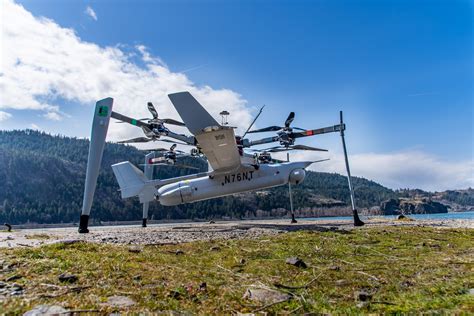
Insitu, a leader in the design and production of unmanned aerial systems (UAS), epitomizes Boeing’s strategic grasp of the UAV revolution. Founded in 1994, Insitu gained early fame by achieving the first uncrewed transatlantic flight in 1998. Boeing saw its potential and acquired the company in 2008, integrating it into its defense and surveillance portfolio.
Based in Bingen, Washington, Insitu develops drones that are anything but recreational. The company’s portfolio includes:
- Integrator VTOL (Vertical Takeoff and Landing)
- ScanEagle series
- RQ-21A Blackjack
These platforms are equipped with high-resolution cameras, laser targeting systems, and long-range surveillance tech, making them indispensable tools in modern warfare and intelligence gathering. Boeing’s ownership ensures Insitu has a powerful launchpad for global defense contracts.
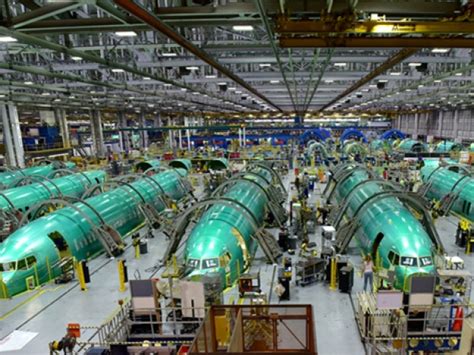
Spirit AeroSystems: The Fuselage Architect
Spirit AeroSystems stands as a testament to Boeing’s long-term investment in manufacturing excellence. Originally the Stearman Aircraft Company, founded in the early 1900s, it was absorbed by Boeing in 1929. Decades later, Boeing spun it off in 2005 to Onex Corporation—but kept close ties.
Spirit’s facilities, notably in Wichita, Tulsa, and McAlester, manufacture critical components such as:
- Fuselages for the Boeing 737 and 787
- Pylons, nacelles, and wing structures
Interestingly, Spirit re-entered Boeing’s corporate fold in 2024, marking a full-circle moment. While Boeing focuses on final assembly and systems integration, Spirit’s expertise in structural design and composite fabrication is irreplaceable.
Spirit also has international operations, particularly in Northern Ireland, where it manages Short Brothers, another Boeing-owned subsidiary focusing on aircraft wings and nacelle systems.
Wisk Aero: Autonomous Air Taxi Visionaries
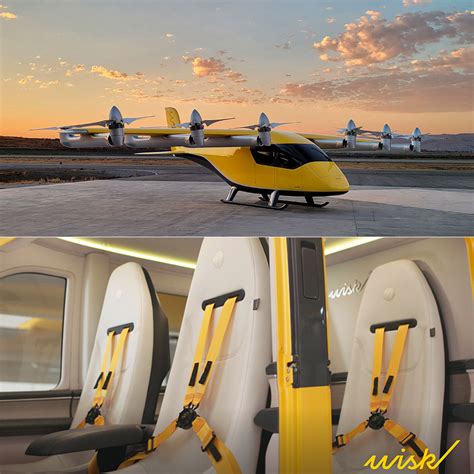
In the race to build autonomous urban air taxis, Boeing has strategically positioned itself through Wisk Aero. The company originated as Zee Aero in 2010, backed by Google co-founder Larry Page. It merged with Boeing in 2019, becoming Wisk Aero.
Wisk’s flagship concept is a four-passenger, fully autonomous air taxi. With no onboard pilot, these aircraft rely on:
- Ground-based supervision
- Advanced collision-avoidance algorithms
- Integrated radar and camera systems
Flights are booked via a rideshare-style app, and safety inspections are handled by ground crews before takeoff. With a cruising altitude of 2,500 feet and a range of 90 miles, Wisk’s Generation 6 eVTOL aircraft targets urban commuters seeking speed, safety, and sustainability.
Boeing’s investment in Wisk reflects its broader vision: shaping the future of urban air mobility, beyond conventional aircraft.
Aurora Flight Sciences: The Experimental Frontier
Aurora Flight Sciences (AFS) represents Boeing’s dedication to aeronautical experimentation and innovation. Founded by MIT graduate John Langford, Aurora initially gained attention with Daedalus, a human-powered aircraft.
Boeing acquired AFS in 2017, incorporating it into the Engineering, Test & Technology division. Aurora’s work spans both military and civilian applications:
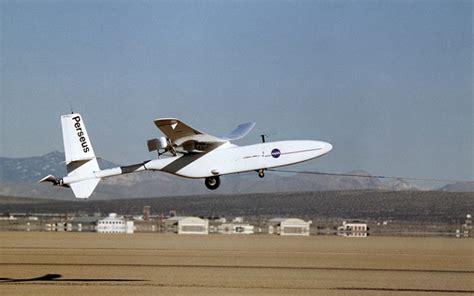
- Perseus Proof-of-Concept for atmospheric research
- Perseus B, which set a world record altitude of 60,620 feet
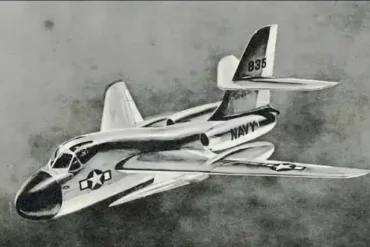
- Development of DARPA’s VULTURE, a solar-powered aircraft capable of multi-year flight endurance
Aurora has also built robotic aircraft intended for planetary exploration, such as Mars. Their Z-wing design for solar optimization and autonomous decision-making systems represent a futuristic leap in aircraft design.
By absorbing AFS, Boeing ensures that it remains at the forefront of the experimental aerospace space.
McDonnell Douglas: A Legacy Within
Of all Boeing’s acquisitions, none is more iconic than McDonnell Douglas. The merger in 1997 reshaped the aerospace industry. But before the union, McDonnell Douglas itself was the product of multiple legacies:
- Douglas Aircraft Company, founded in 1921, played a massive role in WWII military aviation, delivering nearly one-sixth of the U.S. airborne fleet.
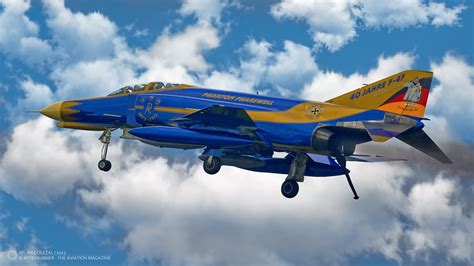
- McDonnell Aircraft, established in 1939, specialized in advanced fighter jets like the F-4 Phantom and A-4 Skyhawk.
The merged entity, McDonnell Douglas, became a powerhouse of both commercial and military aviation, manufacturing aircraft, missiles, and space vehicles. The Cold War-era demand for innovation and defense systems propelled the company’s relevance.
When Boeing took over McDonnell Douglas, it gained access to decades of technological advancement and defense expertise. Today, many of Boeing’s military platforms carry the legacy DNA of McDonnell Douglas designs.
Conclusion: Boeing’s Invisible Network of Influence
While Boeing’s commercial jets dominate global runways, its true strength lies in the depth and diversity of its subsidiaries. From autonomous drones to solar-powered aircraft, and from advanced air taxis to military mainstays, these companies feed into Boeing’s unmatched command of the skies.
By acquiring, investing in, and strategically managing a suite of specialized aviation companies, Boeing doesn’t just build airplanes—it builds the future of flight. These hidden giants ensure Boeing stays resilient, innovative, and ahead of aerospace trends shaping tomorrow’s world.
What appears to be a single aerospace company is, in reality, a networked colossus, spanning emerging markets, frontier science, and global defense initiatives—all under one name: Boeing.