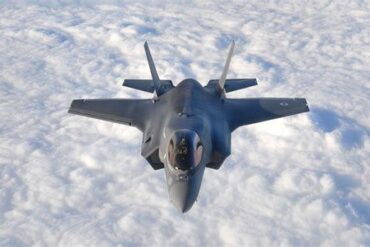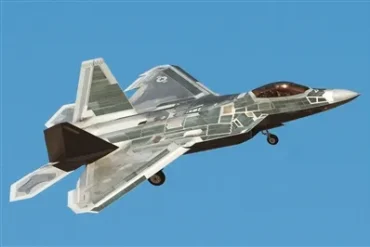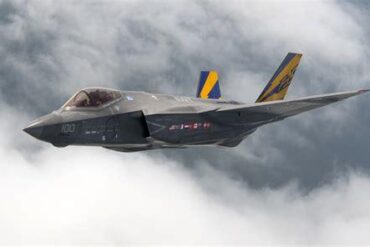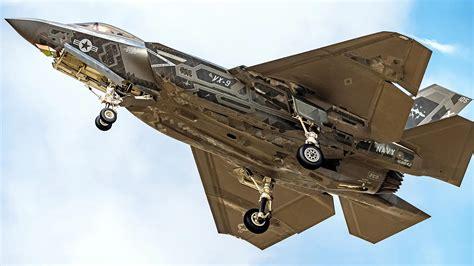
Stealth has transformed modern air combat, allowing fifth-generation fighters to penetrate sophisticated air defense networks while remaining difficult to detect. Among these aircraft, the Lockheed Martin F-35 Lightning II stands as one of the most advanced examples of low-observable engineering ever placed into operational service. Its stealth capability is not merely a product of radar-absorbing paint but the result of a carefully integrated design philosophy that combines airframe geometry, advanced composite materials, precision manufacturing, and specialized surface treatments.
Because this capability is so technologically advanced and strategically valuable, many people assume operators that purchase the aircraft can maintain every aspect of it independently. In reality, that is not the case. While partner nations perform routine inspections, localized repairs, and standard maintenance, they cannot independently conduct every level of stealth coating restoration. More complex repairs continue to require Lockheed Martin’s direct involvement, engineering oversight, or manufacturer-approved procedures.
This arrangement is not simply about protecting commercial interests. It exists because the F-35’s stealth system represents one of the most closely guarded military technologies in the world. Every repair must preserve the aircraft’s radar signature, structural integrity, corrosion resistance, and long-term reliability without introducing even microscopic imperfections that could compromise survivability during combat.
The F-35’s Stealth Is Much More Than Specialized Paint
One of the biggest misconceptions surrounding stealth aircraft is the belief that their radar invisibility comes primarily from a secret coating. While advanced radar-absorbing materials certainly play an important role, the F-35’s low observable (LO) capability is actually the result of dozens of interconnected engineering solutions working together.
Every external feature of the aircraft has been carefully designed to reduce radar reflections. The alignment of panel edges, placement of fasteners, shape of air intakes, internal weapons bays, embedded antennas, and even tiny surface transitions all contribute to minimizing the aircraft’s radar cross-section.
The stealth coating itself is only one layer within a much larger system. Rather than acting like ordinary military paint, these sophisticated materials absorb, scatter, and redirect portions of incoming electromagnetic energy. Instead of reflecting radar waves directly back toward enemy sensors, the aircraft significantly weakens the returning signal, making detection considerably more difficult.
Maintaining these characteristics requires preserving not only the coating but also the aircraft’s precise external contours. Even subtle changes in surface geometry may alter how radar waves interact with the aircraft.
Unlike conventional repainting, restoring stealth means restoring the aircraft’s electromagnetic behavior.
Every Surface Repair Must Preserve Invisible Performance
Repairing battle damage, weathering, or routine wear on an F-35 involves far more than cosmetic restoration.
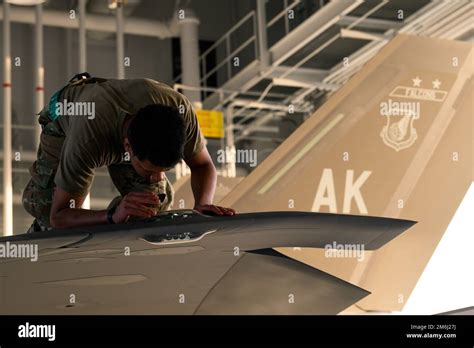
Technicians must rebuild damaged sections layer by layer using specialized materials that restore both the physical shape and the radar-absorbing properties of the affected area. Each repair demands extraordinary precision because any deviation in thickness, density, texture, or contour can alter radar performance.
Low observable maintainers frequently spend hours carefully sanding repaired sections by hand, masking adjacent surfaces, applying multiple material layers, and reshaping damaged areas before final finishing begins.
The work is frequently described as being both an art and a science.
A repair that appears visually perfect may still fail low-observable standards if microscopic inconsistencies exist beneath the surface. Consequently, technicians must work within extremely narrow manufacturing tolerances throughout the restoration process.
Why Specialized Materials Cannot Simply Be Purchased
Unlike standard military aircraft paint, the F-35’s stealth materials are proprietary products developed specifically for the Lightning II program.
These materials include specialized radar-absorbing compounds, advanced adhesives, fillers, primers, and protective coatings engineered to function together as an integrated system.
Their exact chemical compositions remain closely guarded.
Manufacturing methods, curing procedures, application temperatures, humidity requirements, and finishing techniques are also tightly controlled. Even if another organization attempted to replicate the coating, reproducing identical electromagnetic performance would be extraordinarily difficult without access to the original engineering data.
This is one reason why operators cannot simply source equivalent materials from commercial suppliers.
Every approved repair relies upon manufacturer-certified materials whose performance has been thoroughly validated.
The Aircraft’s Shape Is Just As Important As Its Coating
Stealth maintenance extends beyond restoring damaged paint.
The F-35’s external geometry itself is engineered with remarkable precision. Panel gaps, access doors, fasteners, and structural joints all contribute to controlling radar reflections.
When damage occurs, technicians must restore the original aerodynamic contours within extremely tight tolerances.
A repair only fractions of a millimeter outside specification can potentially increase radar returns from specific angles.
This explains why maintainers spend significant time contouring repaired areas before applying finishing materials.
The objective is not simply achieving a smooth appearance but recreating the exact three-dimensional geometry intended by Lockheed Martin’s original design.
Highly Trained Technicians Still Operate Within Strict Limits
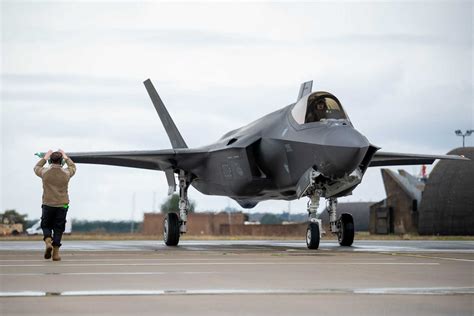
Military maintainers assigned to F-35 squadrons receive specialized low-observable training before performing stealth-related repairs.
They learn approved repair procedures, inspection methods, material handling requirements, and quality assurance techniques specifically developed for the aircraft.
These technicians are fully capable of conducting numerous field-level maintenance tasks, including:
- Routine inspections of low-observable surfaces.
- Minor localized coating repairs.
- Surface cleaning using approved methods.
- Limited restoration of small damaged areas.
- Preventive maintenance designed to preserve stealth integrity.
However, larger repairs involving structural damage, extensive material replacement, engineering deviations, or significant restoration remain outside routine operational authority.
Those situations require coordination with higher-level maintenance facilities and Lockheed Martin specialists.
Classified Engineering Data Cannot Be Fully Shared
Another major reason operators cannot independently perform every stealth repair involves national security.
The F-35 contains highly classified information regarding radar signature management, materials engineering, manufacturing tolerances, and electromagnetic performance.
Sharing unrestricted access to every aspect of these technologies would significantly increase the risk of sensitive information being compromised.
Instead, participating nations receive the technical data necessary for routine operations while the most sensitive engineering information remains protected.
This balance allows operators to maintain combat readiness while preserving technologies that required decades of research and billions of dollars to develop.
Export control regulations further reinforce these restrictions, particularly under U.S. defense technology transfer rules.
Lockheed Martin Maintains Configuration Control Across The Entire Fleet
Another often-overlooked factor is configuration control.
The F-35 is not operated by a single air force. Instead, it serves dozens of nations that collectively operate more than 1,100 aircraft, with thousands more planned over the program’s lifetime.
Maintaining consistency across such a large multinational fleet requires centralized oversight.
Whenever improved repair techniques, updated materials, or revised engineering standards become available, every operator must implement those changes consistently.
Without centralized management, individual fleets could gradually diverge.
Such differences would complicate logistics, maintenance planning, software compatibility, engineering documentation, and multinational interoperability.
Lockheed Martin, together with the F-35 Joint Program Office, helps ensure every aircraft continues meeting identical certification standards regardless of where it is maintained.
Regional Maintenance Centers Increase Independence Without Eliminating Oversight
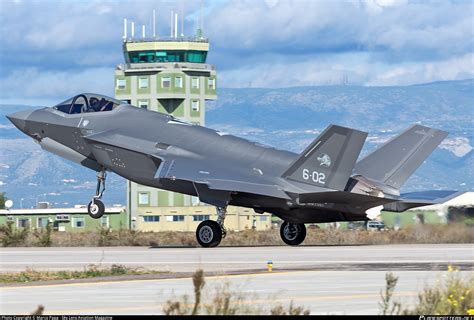
Recognizing the logistical challenges of supporting a global fleet, the F-35 program has gradually expanded regional maintenance capabilities.
Major sustainment centers now support operators across North America, Europe, and the Asia-Pacific region.
These facilities reduce the need to return aircraft to the United States for every significant repair, shortening turnaround times and improving fleet availability.
They also provide:
- Depot-level maintenance.
- Component repair.
- Structural restoration.
- Advanced low-observable work.
- Engineering support.
However, these regional centers still operate using approved materials, certified procedures, and standardized engineering oversight.
Their purpose is to increase operational efficiency rather than replace Lockheed Martin’s role entirely.
Stealth Maintenance Also Protects Against Corrosion
An important but frequently overlooked aspect of the F-35’s surface treatment is corrosion protection.
The aircraft regularly operates from coastal bases, aircraft carriers, humid tropical environments, deserts, and regions experiencing significant temperature fluctuations.
Its protective coating shields advanced composite structures and metallic components against environmental degradation while simultaneously preserving radar performance.
Consequently, every repair must satisfy multiple engineering requirements simultaneously.
A repaired section must:
- Preserve radar absorption.
- Restore structural protection.
- Resist corrosion.
- Match surrounding material properties.
- Withstand operational stresses.
- Maintain aerodynamic smoothness.
Meeting all of these objectives simultaneously requires specialized engineering expertise.
Sustainment Challenges Continue Across The Growing Global Fleet
As additional nations introduce the F-35 into service, sustainment has become one of the program’s biggest long-term priorities.
Aircraft availability depends not only on stealth maintenance but also on spare parts, depot capacity, logistics networks, and repair turnaround times.
Recent evaluations have highlighted continuing challenges involving component shortages, maintenance bottlenecks, and increasing operational demands.
Improving sustainment efficiency has therefore become almost as important as improving aircraft performance.
Lockheed Martin continues introducing improved repair materials, simplified maintenance procedures, and expanded technician training designed to reduce downtime while preserving the aircraft’s low-observable effectiveness.
These improvements have already made the F-35 substantially easier to maintain than earlier stealth aircraft, but advanced repairs remain significantly more demanding than those performed on conventional fourth-generation fighters.
Earlier Stealth Aircraft Were Even More Difficult To Maintain
The F-35 actually represents a major improvement over previous stealth platforms.
Earlier low-observable aircraft often required extensive post-flight inspections, lengthy coating repairs, and labor-intensive maintenance after relatively few operational hours.
Engineers developing the Lightning II sought to dramatically reduce these burdens.
Advances in composite manufacturing, radar-absorbing materials, corrosion-resistant technologies, and automated production techniques have made the aircraft considerably more durable.
Many repairs that once required depot-level attention can now be completed much closer to operational squadrons.
Even so, simplifying maintenance does not eliminate the need for centralized oversight whenever repairs could affect certified stealth performance.
Why Complete Maintenance Independence Is Unlikely
Some F-35 operators have expressed interest in expanding sovereign maintenance capabilities to improve operational flexibility and reduce dependence on external support.
While additional responsibilities will almost certainly continue shifting toward national maintenance organizations over time, complete independence remains unlikely.
Several factors continue supporting Lockheed Martin’s central role:
- Classified engineering information must remain protected.
- Proprietary repair techniques require controlled distribution.
- Certified materials ensure identical performance worldwide.
- Configuration management keeps multinational fleets standardized.
- Engineering validation prevents repairs from degrading radar performance.
- Export regulations restrict unrestricted technology transfer.
These considerations extend well beyond contractual agreements and reflect the strategic importance of preserving one of the world’s most advanced stealth technologies.
Why Lockheed Martin Remains Essential To F-35 Stealth Maintenance
The inability of F-35 operators to independently perform every aspect of stealth coating maintenance is rooted in engineering reality rather than simple manufacturer control. The aircraft’s low-observable capability is an integrated system where advanced materials, precision manufacturing, structural geometry, proprietary repair methods, and classified design information function together as a single survivability package. Altering any one element without proper validation risks degrading the aircraft’s defining combat advantage.
Military operators already conduct a substantial portion of routine low-observable maintenance through highly trained technicians using approved procedures. Local inspections, minor repairs, and preventive maintenance have become increasingly efficient as sustainment methods continue to improve. Yet whenever damage extends beyond established field-level limits, manufacturer-approved materials, engineering oversight, and standardized validation remain essential to ensure the aircraft continues meeting its certified stealth performance.
As the worldwide F-35 fleet expands across North America, Europe, the Middle East, and the Indo-Pacific, regional maintenance centers and enhanced training programs will continue increasing operator autonomy. Nevertheless, the combination of classified technology, strict export controls, configuration management, and the extraordinary precision required to preserve radar invisibility means Lockheed Martin’s direct involvement will remain an indispensable part of sustaining the F-35’s stealth capability for years to come.