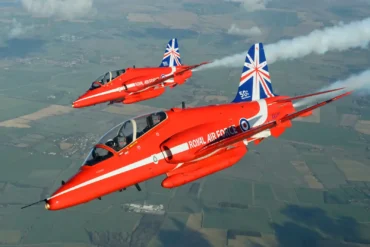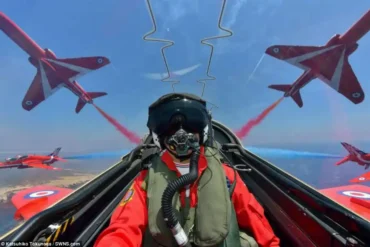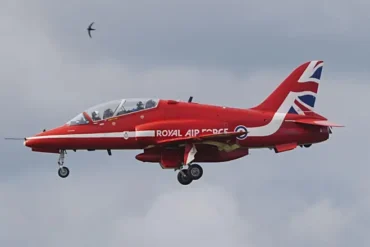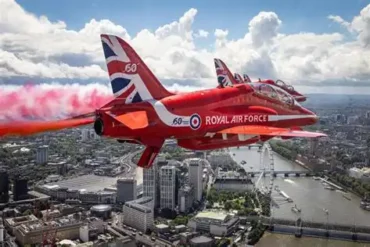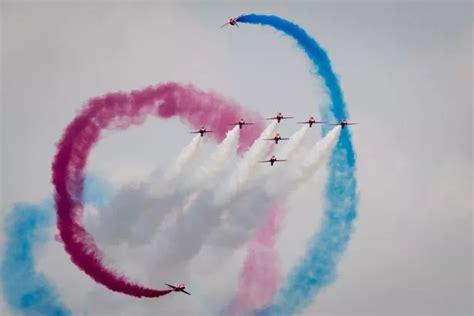
The Red Arrows have long represented the very best of British aviation. Their precision flying, synchronized maneuvers, and unmistakable trails of red, white, and blue smoke have captivated millions of spectators across the world. Whether appearing at national celebrations, international airshows, or diplomatic events, the Royal Air Force’s aerobatic display team remains one of the UK’s most recognizable aviation ambassadors.
Yet one of Britain’s most famous aviation gatherings, the Farnborough International Airshow, no longer features the Red Arrows’ signature aerobatic routine. Visitors expecting dramatic loops, barrel rolls, and breathtaking formation flying are often surprised to discover that the team is absent from the flying display or limited to simple flypasts. The reason has little to do with the team’s capabilities and everything to do with one of the darkest days in modern British airshow history.
The decision stems from sweeping safety changes introduced after the tragic 2015 Shoreham Airshow disaster, an accident that fundamentally reshaped how aerial displays are conducted over populated areas throughout the United Kingdom. Since then, Farnborough has adopted a very different approach to aerial demonstrations, prioritizing public safety above spectacular aerobatics.

The Red Arrows Remain One Of The World’s Finest Display Teams
Officially known as the Royal Air Force Aerobatic Team, the Red Arrows have flown since 1964 and have earned a worldwide reputation for precision flying. Operating primarily with BAE Systems Hawk advanced trainer aircraft, the team typically performs with seven to nine aircraft executing remarkably accurate maneuvers that demand exceptional pilot skill.
Their displays are carefully choreographed to showcase discipline, teamwork, and the professionalism of the Royal Air Force rather than combat capability. Every maneuver is practiced repeatedly, with pilots flying only a few feet apart while traveling at several hundred miles per hour.
Each display season includes appearances across Britain and overseas. The team frequently supports diplomatic visits, commemorative events, military anniversaries, and international airshows, making it one of the country’s most effective tools for aviation outreach and national representation.
Because of this extensive schedule, many aviation enthusiasts naturally assume the Red Arrows would be a permanent fixture at Farnborough. Ironically, one of Britain’s most famous aviation events has become one of the few places where their traditional display is no longer considered appropriate.
The 2015 Shoreham Airshow Disaster Changed Everything
The turning point arrived on August 22, 2015, during the Shoreham Airshow in West Sussex.
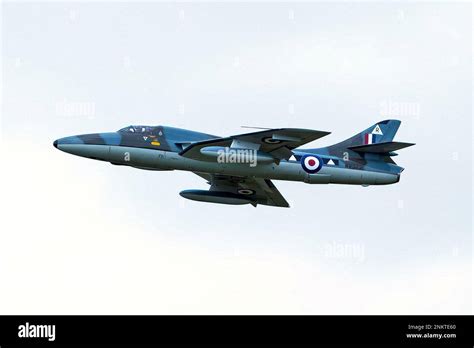
Unlike accidents involving the Red Arrows themselves, this tragedy centered on a privately operated Hawker Hunter T7, a classic British jet fighter originally built during the 1950s. During its aerobatic sequence, the aircraft attempted a looping maneuver but failed to recover before reaching the ground.
Investigators later determined that the aircraft entered the maneuver significantly lower than normal while also carrying insufficient speed. Instead of completing the loop and climbing safely away, the aircraft continued descending before crashing directly onto the busy A27 dual carriageway beside the airfield.
The consequences were devastating.
The explosion destroyed several vehicles traveling along the highway. Although pilot Andy Hill survived with serious injuries, 11 people on the ground lost their lives, while many others suffered injuries. Rather than remaining confined within the airfield, the accident demonstrated how quickly an aircraft accident could affect completely uninvolved members of the public outside the event itself.
It became Britain’s worst airshow disaster in decades and prompted an immediate reassessment of aviation display safety nationwide.
New Safety Rules Reshaped UK Airshow Displays
Following the Shoreham tragedy, British aviation authorities undertook a comprehensive review of airshow operations.
The Civil Aviation Authority (CAA) introduced stricter regulations governing aerobatic displays, particularly those involving vintage military aircraft performing over land. Display permissions became far more restrictive, with greater emphasis placed on aircraft performance, pilot qualifications, maneuver approval, and geographical risk assessments.
The philosophy behind the changes was straightforward. Even exceptionally experienced pilots can encounter unexpected circumstances, and if something goes wrong during a high-energy aerobatic maneuver, the surrounding environment becomes critically important.
Areas containing dense housing, major highways, industrial estates, shopping centers, or large civilian populations were considered significantly higher risk than open countryside or coastal locations.
These revised safety standards affected far more than vintage aircraft alone. Military display teams, including the Red Arrows, also reviewed where and how they could safely perform.
Why Farnborough Became Unsuitable For Aerobatics
At first glance, Farnborough Airport appears perfectly suited for spectacular flying displays. It possesses a long runway, extensive aviation infrastructure, and decades of airshow history.
However, the surrounding landscape presents a very different picture.
The airport sits amid substantial urban development within Hampshire and Surrey. Residential neighborhoods, commercial business parks, busy road networks, and other civilian infrastructure surround much of the display area.
Unlike coastal airshows, where aerobatic routines can safely take place over open water, Farnborough provides relatively little empty space beneath the display box. Should an aircraft experience a catastrophic failure during an aerobatic maneuver, there is a significantly greater possibility that debris could reach populated areas.
Following detailed safety reviews after Shoreham, the RAF concluded that the traditional high-speed Red Arrows routine was no longer appropriate for Farnborough’s environment.
Rather than attempting to redesign the performance, officials decided the safest solution was to eliminate the aerobatic display altogether.

Why Flypasts Are Still Considered Acceptable
Although visitors no longer witness the famous looping and crossing maneuvers, the Red Arrows have occasionally continued participating through carefully planned flypasts.
A flypast differs dramatically from a full aerobatic routine.
Instead of repeated high-energy maneuvers involving rapid changes in altitude, direction, and airspeed, aircraft simply pass over the crowd in predetermined formations while maintaining safer flight profiles.
This considerably reduces operational risk while still allowing spectators to experience the team’s distinctive formations and appreciate the precision with which the aircraft are flown.
Flypasts also require less airspace and avoid the repetitive maneuvering that would otherwise place aircraft over nearby communities multiple times throughout a display.
Farnborough Has Become More Focused On The Aerospace Industry
Safety changes coincided with another significant transformation at the Farnborough International Airshow.
Historically, the event balanced two audiences. Aviation professionals attended during the trade week, while large public crowds filled the weekend to enjoy spectacular flying displays.
Over recent years, however, Farnborough has increasingly concentrated on its role as one of the world’s premier aerospace business exhibitions.
Aircraft manufacturers unveil new technology, airlines announce billion-dollar fleet orders, defense companies present advanced military systems, and aerospace suppliers negotiate commercial partnerships. The exhibition floor has become just as important—if not more important—than the flying program itself.
Public flying weekends were ultimately discontinued, allowing organizers to dedicate greater attention to industry networking, aircraft demonstrations for customers, sustainability initiatives, and business development.
The result is an event that remains globally influential despite offering fewer traditional airshow attractions than in previous decades.
The Red Arrows Continue To Perform Around The World
The absence of an aerobatic display at Farnborough should not be mistaken for a reduction in the Red Arrows’ overall activity.
The team continues maintaining a demanding annual schedule across Britain and overseas. Their appearances regularly support international partnerships, commemorate historical anniversaries, and inspire future generations to pursue careers in aviation and the armed forces.
Recent overseas deployments have included performances across the United States during Independence Day celebrations, alongside numerous appearances throughout Europe and other international venues.
Each display continues to demonstrate the extraordinary precision for which the team has become famous over more than six decades of operation.
Safety Now Defines Modern Airshow Planning
The Shoreham disaster reinforced an important lesson shared throughout the international aviation community: even rare accidents can have catastrophic consequences when aerobatic displays occur near densely populated areas.
Earlier tragedies at airshows in locations such as Rammstein in 1988 and Sknyliv in 2002 had already illustrated the devastating effects that display accidents can have on spectators. Britain’s post-Shoreham reforms reflected a broader global trend toward increasingly rigorous risk management.
Modern airshow organizers now devote enormous attention to crowd placement, emergency planning, aircraft separation, approved maneuver design, pilot authorization, and environmental risk assessments. While these precautions may reduce the spectacle at certain venues, they significantly improve protection for both participants and the public.
Farnborough Prioritizes Safety Without Losing Its Aviation Importance
Although aviation enthusiasts may miss seeing the Red Arrows perform their full aerobatic routine over Farnborough, the decision reflects a carefully considered balance between excitement and responsibility. The tragedy at Shoreham fundamentally altered how British authorities evaluate display risks, especially where surrounding communities could be affected.
Today, Farnborough continues to rank among the world’s most influential aerospace events, attracting leading aircraft manufacturers, airlines, defense organizations, technology companies, and government delegations. Meanwhile, the Red Arrows remain one of the globe’s premier aerobatic teams, thrilling audiences at venues where full displays can be conducted within modern safety requirements.
Rather than signaling the end of an aviation tradition, the Red Arrows’ absence from Farnborough’s aerobatic program demonstrates how the airshow industry has evolved—placing public safety first while preserving the enduring appeal of flight.