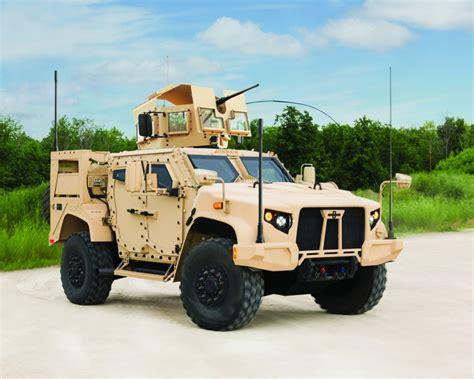
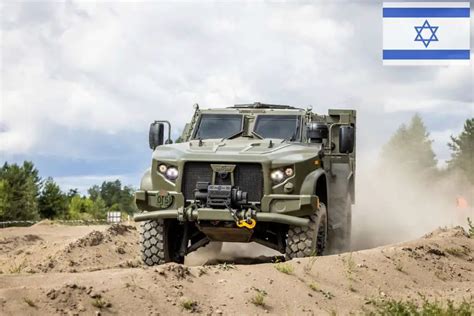
The United States has approved a $1.98 billion Foreign Military Sale (FMS) that would allow Israel to acquire 3,250 Joint Light Tactical Vehicles (JLTVs), marking one of the most significant upgrades to the Israel Defense Forces’ light tactical vehicle fleet in decades. The authorization, cleared on January 30, 2026, positions the JLTV as the principal successor to large portions of Israel’s long-serving Humvee inventory, reshaping how Israeli ground forces move, fight, and survive on future battlefields.
The deal reflects a broader shift in modern land warfare. Light vehicles are no longer just transports; they are expected to survive mines, improvised explosive devices, and precision fire while carrying increasingly heavy electronic and weapons payloads. Israel’s decision to expand its JLTV fleet at scale signals confidence in a platform originally designed around the harsh lessons learned by U.S. forces in Iraq and Afghanistan, where legacy light vehicles proved dangerously vulnerable.
Beyond raw numbers, the sale highlights the depth of U.S.–Israel defense cooperation. The JLTV package includes not only vehicles but also weapons interfaces, communications, training, sustainment, and long-term logistical support. Taken together, these elements aim to ensure that the vehicles are not merely delivered, but fully integrated into Israeli doctrine and operational reality.
A Strategic Shift Away from the Humvee Era
For more than three decades, the High Mobility Multipurpose Wheeled Vehicle, better known as the Humvee, formed the backbone of Israel’s light tactical fleet. While upgraded and armored over time, the platform was never originally designed to withstand the modern threat environment dominated by roadside bombs, anti-armor weapons, and dense urban combat. The Israel Defense Forces operate more than 2,000 Humvees, many of which have reached the limits of practical modernization.
The JLTV was conceived precisely to address these shortcomings. Its arrival allows Israel to retire a significant portion of older vehicles while maintaining, and in many cases enhancing, tactical mobility. Unlike heavy mine-resistant vehicles that sacrifice agility, the JLTV aims to balance survivability, payload, and maneuverability in a single family of vehicles suited for diverse missions, from border security to high-intensity conflict.
What the $1.98 Billion Package Includes
The approved Foreign Military Sale goes far beyond a simple vehicle purchase. Israel’s request covers 3,250 JLTVs across four mission variants, each tailored to a specific operational role. The JLTV Utility configuration focuses on cargo movement and logistics support in a compact two-door layout. The Heavy Guns Carrier variant expands to four doors and is optimized to carry heavier crew-served or remotely operated weapons for escort and fire support. The Close Combat Weapons Carrier is designed for frontline missions requiring robust weapon integration, while the General Purpose variant provides a flexible baseline that can be adapted through mission kits.
Supporting equipment forms a substantial part of the package. Included are Common Remotely Operated Weapon Stations, M1289 JLTV cargo trailers, mission-specific kits, Objective Gunner Protection Kits, and Driver’s Vision Enhancement systems. The sale also covers standard and non-standard command, control, communications, computers, intelligence, surveillance, and reconnaissance equipment, ensuring compatibility with Israeli networks and battlefield management systems.
Integration, Training, and Long-Term Sustainment
A defining feature of the deal is its emphasis on long-term usability rather than rapid delivery alone. The FMS includes system-unique integration work to connect weapons, sensors, radios, displays, and power management systems to Israeli configurations. This is critical for a military that relies heavily on customized communications and sensor fusion to maintain situational awareness.
Sustainment and training are equally prominent. Spare and repair parts, special tools, test equipment, technical manuals, and maintenance trainers are all part of the package. Israeli personnel will receive new equipment training and total package fielding support, while depot-level maintenance and repair capabilities will be established over time. The plan anticipates the deployment of up to 15 U.S. government personnel and 20 contractor representatives to Israel for periods of up to six years, supporting training, logistics, and engineering assistance.
Building on Earlier JLTV Deliveries
This large-scale authorization builds on earlier, smaller JLTV transfers that began in late 2023. An initial batch of 75 vehicles was delivered through U.S. channels to meet urgent operational needs, followed by additional acquisitions via direct commercial mechanisms. By November 2024, JLTVs were already in Israeli service, providing early operational feedback that likely informed the decision to proceed with a much larger purchase.
Those early deliveries occurred alongside transfers of other U.S. military equipment, including precision-guided munitions, artillery ammunition, night-vision devices, and specialized bunker-buster weapons. Within this broader context, the JLTV represents a structural investment rather than a stopgap measure, reshaping how Israeli ground forces are equipped for years to come.
Protection and Survivability at the Core of JLTV Design
The JLTV was designed from the outset to correct the vulnerabilities exposed during two decades of counterinsurgency warfare. Its hull incorporates blast-resistant shaping, combined with energy-absorbing floors, seats, and restraint systems intended to reduce crew injuries from mines and improvised explosive devices. Protection follows a modular A-kit and B-kit armor architecture, allowing vehicles to be fielded with baseline protection and upgraded rapidly as threat levels increase.
This approach offers flexibility that legacy up-armored Humvees never achieved. The JLTV delivers significantly higher protection while remaining smaller and lighter than mine-resistant ambush-protected vehicles, which often struggled in narrow streets and rough terrain. For Israel, where operations range from dense urban areas to rugged border regions, this balance is particularly valuable.
Mobility, Power, and Payload for Modern Operations
Under the hood, the JLTV is powered by a 6.6-liter turbocharged diesel engine producing roughly 400 horsepower, paired with a six-speed automatic transmission. This configuration supports a maximum road speed of around 110 kilometers per hour and an operational range of approximately 480 kilometers, depending on load and mission profile.
The vehicle’s independent TAK-4i suspension system allows adjustable ride height and extended wheel travel, preserving mobility across paved roads, urban rubble, and off-road environments even under heavy loads. With a gross vehicle weight of about 10,200 kilograms and payload capacity ranging from roughly 1,600 to 2,300 kilograms, the JLTV can carry substantial weapons, sensors, and communications equipment without sacrificing performance.
Weapons Integration and Networked Warfare
Armament options reflect the JLTV’s role as a multi-mission platform. The vehicle can mount 7.62 mm and 12.7 mm machine guns, automatic grenade launchers, and anti-armor weapons, either on manned mounts or remotely operated weapon stations. Its electrical architecture is designed to support advanced radios, sensors, and battlefield management systems, enabling seamless integration into networked operations.
For Israel, which places heavy emphasis on real-time intelligence sharing and rapid target engagement, this digital backbone is as important as armor or firepower. The JLTV’s ability to serve as both a shooter and a node in a larger information network enhances its value across conventional and asymmetric conflict scenarios.
Industrial and International Dimensions
The Foreign Military Sale identifies AM General LLC as the principal contractor, reflecting the company’s role in later JLTV production standards following the transition from Oshkosh. Armored cabins for Israeli vehicles may involve Plasan North America, a U.S.-based subsidiary of Israel’s Plasan group, which has supplied armor components to the JLTV program for years. This industrial linkage reinforces Israel’s participation in the broader supply chain while ensuring that specific protection requirements can be met.
Globally, the JLTV has gained traction among U.S. allies. More than 20,000 units had been produced by mid-2023, and international operators now include Belgium, Brazil, Lithuania, and Romania. Israel’s decision to adopt the platform at scale places it among the largest non-U.S. JLTV users, underscoring the vehicle’s growing role as a standard light tactical platform across allied forces.
A Long-Term Transformation of Israel’s Ground Mobility
Israel’s planned acquisition of 3,250 JLTVs represents more than a fleet refresh. It is a structural modernization that aligns the Israel Defense Forces with contemporary concepts of protected mobility, networked warfare, and modular force design. By replacing aging Humvees with a platform built for modern threats, Israel gains not only improved survivability but also the flexibility to adapt as technologies and operational demands evolve.
In a region where ground forces must be ready for everything from high-intensity conflict to prolonged security operations, the JLTV offers a versatile foundation. The $1.98 billion Foreign Military Sale signals a long-term commitment to that foundation, ensuring that Israeli soldiers move into the next decade better protected, better connected, and better prepared.