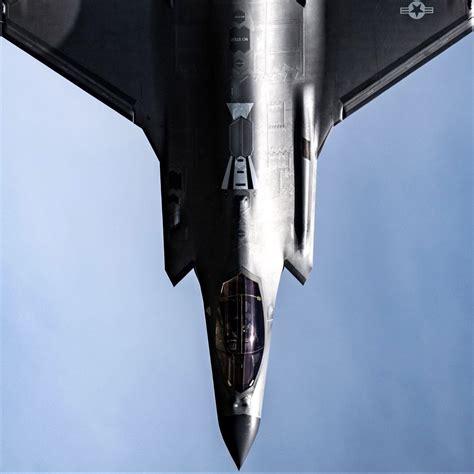
Portugal has officially moved toward the acquisition of Lockheed Martin’s F-35 Lightning II, a fifth-generation stealth fighter, marking the country’s most significant military aviation upgrade in decades. With a projected purchase of between 14 and 28 aircraft, the decision sets Portugal firmly on a path toward enhanced NATO integration and full-spectrum digital warfare capabilities.
A Decisive Leap After Decades of Delay
For over 30 years, the Portuguese Air Force (Força Aérea Portuguesa) has operated its F-16AM/BM fighters—aircraft that, while versatile, are increasingly outmatched by the demands of modern warfare. According to General João Cartaxo Alves, the Air Force Chief of Staff, the delay in upgrading the fleet placed immense strain on operational readiness. “Some aircraft have been in service for nearly forty years,” he stated in a December 19, 2025 interview with Diário de Notícias.
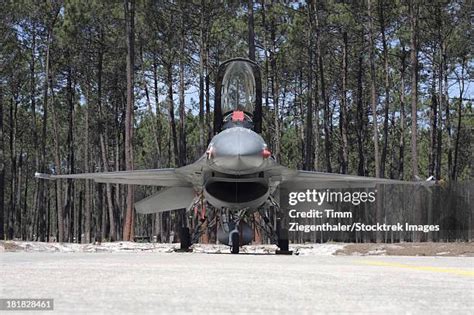
Portugal’s belated transition is a stark contrast to earlier adopters like Norway and Denmark, who began integrating F-35s in 2008. However, General Alves emphasized that the replacement of the F-16s is no longer optional but a strategic necessity—not simply to acquire better aircraft, but to embed the Portuguese Air Force within networked NATO defense ecosystems.
The Strategic Rationale Behind the F-35
The F-35’s appeal is not just its stealth profile or next-gen avionics. It is the aircraft’s connectivity, its role as an ISR (Intelligence, Surveillance, and Reconnaissance) hub, and its capacity to operate as a data node in coalition environments that defines its true value. General Alves reinforced this point: “Either we operate in real time, with access to all data flows, or we cannot cope with the threats that exist today.”
That threat landscape is shifting dramatically. The Middle East and Eastern Europe are clear examples of missile saturation and hybrid warfare. Portugal’s military leadership is increasingly aware that to survive and deter in such an environment, it must evolve from platform-centric warfare to a digitally fused battlespace.
The SAFE Program and NATO Interoperability
At the heart of Portugal’s fifth-gen transformation is the SAFE program (Sistema de Atividades de Força Aérea e Espaço)—a strategic blueprint for synchronizing air and space defense assets. This includes:
- Deployment of new radar systems across the Azores to boost early-warning capabilities.
- Acquisition of ground-based air defense systems compatible with NATO networks.
- Development of automated threat prioritization algorithms to enable real-time targeting and response.
Such infrastructure ensures that the F-35 will not operate in isolation. Instead, it becomes the centerpiece of a multi-domain defense architecture—linking satellites, ground units, air patrols, and electronic warfare assets.
European Consensus Around the F-35
With this move, Portugal joins a growing cohort of European nations that have opted for the F-35, including:
- Italy
- Norway
- Denmark
- Belgium
- The Netherlands
- United Kingdom
- Germany, Finland, Poland, and the Czech Republic (recent adopters)
This collective choice reflects more than procurement preferences; it’s a signal of continental convergence on a single fifth-generation standard, ensuring deep interoperability for both combat and logistical operations.
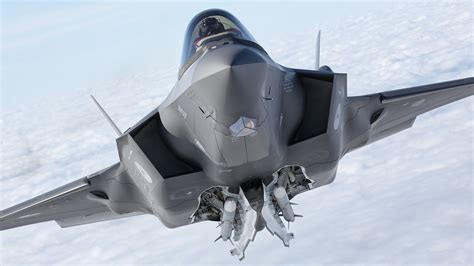
For Portugal, the benefits are compounded: shared training programs, pooled maintenance resources, and a unified tactical doctrine. Smaller NATO states gain force multipliers through allied integration—accessing not only advanced hardware, but also real-time coalition data flows.
Operational and Geostrategic Impact
Portugal’s current fleet of 28 F-16AM/BM fighters, operated from Air Base No. 5 (BA5) in Monte Real, are used by Esquadra 201 “Falcões” and Esquadra 301 “Jaguares.” These units play essential roles in Baltic Air Policing and NATO’s Very High Readiness Joint Task Force (VJTF). However, the aging F-16s are increasingly unsuited for the challenges ahead—lacking stealth, sensor fusion, and AI-driven targeting.
The F-35’s deployment would significantly extend the reach and survivability of Portuguese air power, allowing Lisbon to contribute more robustly to missions such as:
- Integrated Air and Missile Defense (IAMD)
- Electronic warfare and jamming operations
- ISR-led strategic reconnaissance missions
- Joint air-sea operations in the North Atlantic
Of particular strategic value is the Azores archipelago. These islands are poised to become a key forward radar and logistics node under the SAFE program, offering vital positioning for transatlantic defense coordination.
Economic and Timeline Considerations
Although no official contract has been signed, advanced negotiations are underway between Portugal and the United States via the Foreign Military Sales (FMS) program. A Letter of Request (LOR) is expected in early 2026, with a potential delivery window beginning in 2029, contingent upon budget approval and production scheduling.
While the price tag for a full F-35 acquisition—including support systems and infrastructure—can exceed €2 billion, the cost-benefit calculus increasingly favors adoption. General Alves cited Israel’s €3 billion defense spend in a single night as a warning of the stakes involved in unpreparedness. “We can no longer afford to fire two missiles at the same target,” he warned. “Algorithmic targeting and AI-enhanced defense logic are critical.”
Conclusion: Portugal Enters the Fifth-Generation Era
Portugal’s choice of the F-35 Lightning II represents more than a technological upgrade. It is a commitment to a new era of data-centric, AI-enhanced military operations. It reinforces Lisbon’s credibility within NATO and positions the country to face the threats of the 2030s and beyond.
This modernization may have arrived late, but it is neither rushed nor reactive. It reflects a deliberate, deeply strategic alignment with the broader evolution of European defense. As Portugal moves forward, the F-35 will serve not just as a fighter, but as a keystone in the nation’s digital defense architecture—ushering in a long-overdue era of full-spectrum deterrence, resilience, and operational dominance.