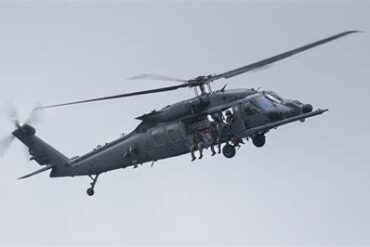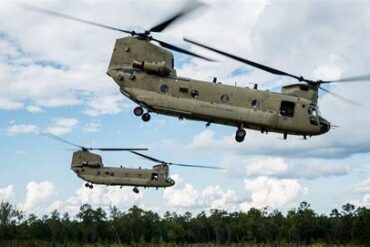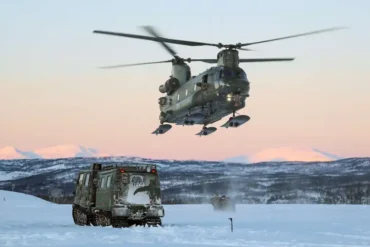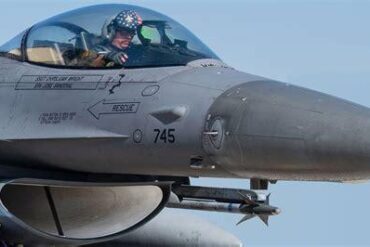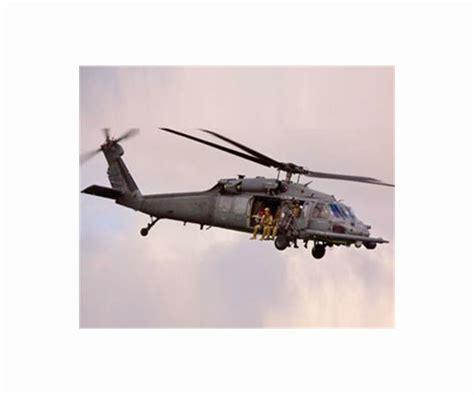
The United States has formally approved a $2.6 billion military deal involving the sale of HH-60W Jolly Green II combat rescue helicopters to Norway, marking a significant boost in the Scandinavian nation’s air combat and special operations capabilities. This move underscores a deepening strategic alliance within NATO, especially crucial as tensions persist along the alliance’s eastern frontier with Russia.
Announced by the U.S. Defense Security Cooperation Agency (DSCA), the deal includes not just the helicopters but also accompanying equipment, logistics, and training packages, ensuring seamless integration into Norway’s existing defense infrastructure. The U.S. State Department authorized the sale, while the DSCA has submitted the necessary congressional notification for final approval.
Strategic Significance of the HH-60W Deployment in Norway
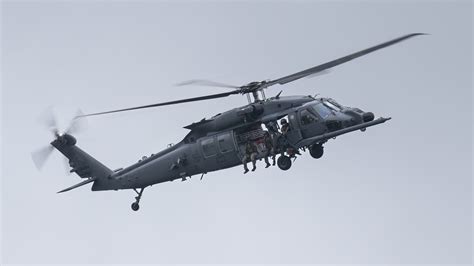
The HH-60W helicopters, also known as the Jolly Green II, represent the latest evolution of the U.S. Air Force’s combat search and rescue (CSAR) fleet. For Norway, a nation that shares a strategic border with Russia and whose airspace and terrain are critical for Arctic and North Atlantic operations, this procurement signals a profound operational enhancement.
According to the DSCA statement, “Norway will use these aircraft to defend other NATO members and its allies. Norway will have no difficulty absorbing these articles and services into its armed forces.”
This sentiment echoes a broader NATO strategy: enhancing mobility, resilience, and response capabilities across its northern and Arctic theaters. The HH-60W’s features, particularly its extended range, enhanced avionics, and rescue-focused configuration, make it ideal for operations in Norway’s challenging geography — from snow-laden forests to stormy coastal zones.
Advanced Capabilities of the HH-60W Jolly Green II
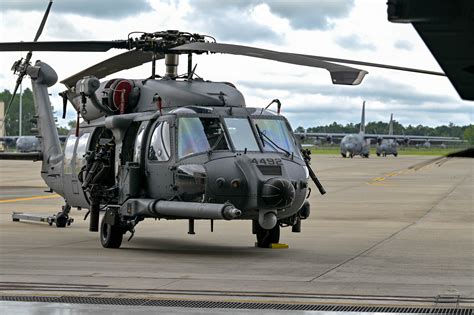
Derived from the UH-60M Black Hawk lineage, the HH-60W incorporates major modifications aimed at boosting survivability, endurance, and mission versatility. Sikorsky, a Lockheed Martin subsidiary, engineered the helicopter with direct input from active CSAR personnel, ensuring every feature answers to real-world demands.
Key capabilities of the HH-60W include:
- Enhanced fuel capacity for longer range without external tanks.
- Integrated mission systems with secure communications, satellite links, and electronic warfare support.
- Rescue hoist system with a 600-pound lift capacity for rapid personnel extraction.
- Armored cabin and ballistic protection against small arms fire.
- Advanced glass cockpit with digital mapping, infrared cameras, and low-light displays for night operations.

These upgrades mean the helicopter can operate effectively in “hostile or denied territory, day or night, in adverse weather, and in a full range of threat environments,” as noted by Sikorsky representatives. The integration of a personnel locator system ensures rapid recovery of downed aircrew or special operations units, further reinforcing NATO’s quick response doctrine.
Strengthening NATO Interoperability
The approval also underlines growing U.S.-Norwegian military interoperability. Norway has long relied on U.S. aviation platforms, operating various Hawk aircraft models. The HH-60W’s entry into its fleet brings it in line with over 35 global operators of the Black Hawk family, streamlining cross-border operations, maintenance logistics, and combat tactics.
This interoperability is especially critical in multinational missions involving rapid troop insertions, casualty evacuations, or special operations raids. The HH-60W can be seamlessly deployed alongside U.S. and allied forces across NATO’s integrated defense architecture, ensuring coalition readiness and synchronization.
Replacing the HH-60G Pave Hawk: A Leap Forward
The HH-60W replaces the aging HH-60G Pave Hawk, a platform that had seen decades of service in U.S. CSAR operations, including during the Gulf War, Iraq, and Afghanistan. The new model delivers:
- 50% more internal fuel than the Pave Hawk.
- Improved armor and self-defense systems.
- State-of-the-art radar and threat detection arrays.
- New generation navigation systems for degraded visual environments.
Since its induction into U.S. service in 2020, the Jolly Green II has been deployed to units such as the 41st Rescue Squadron at Moody Air Force Base and continues to roll out across the Air National Guard, Reserve, and active-duty units.
U.S. Strategic Intentions Behind the Deal
Beyond equipment upgrades, the $2.6 billion sale aligns with broader U.S. geopolitical objectives. The State Department clearly stated that the proposed sale would “support the foreign policy goals and national security objectives of the United States by improving the security of a NATO Ally that is a force for political stability and economic progress in Europe.”
As Russia continues to test NATO’s resolve in Eastern Europe and the High North, the presence of advanced rotary assets in Norway is a direct signal of deterrence. These helicopters aren’t merely rescue assets; their range, sensors, and armament make them ideal for special reconnaissance, insertion missions, and rapid crisis response.
This sale comes at a time when the U.S. is recalibrating its defense posture in the Arctic, an area experiencing rapidly increasing military activity from both Russia and China. Norway’s proximity to key maritime chokepoints and air corridors makes it an indispensable NATO outpost.
Implications for Arctic and Baltic Defense Strategy
The HH-60W’s unique configuration allows it to adapt to polar operating environments, from freezing winds to snow-covered terrain. Unlike fixed-wing aircraft that require prepared runways, rotary assets like the HH-60W offer true tactical flexibility — launching from destroyers, airbases, or even forward-operating camps.
Its arrival in Norway marks a significant shift in the NATO defense calculus in the Arctic-Baltic arc. As military planners anticipate future flashpoints near Svalbard, the Barents Sea, or Kaliningrad, having high-readiness air rescue and insertion assets will be critical for both peacetime deterrence and wartime response.
Industry and Economic Impact
The deal represents a substantial victory for Lockheed Martin and its Sikorsky division, further entrenching their presence in Europe’s defense aviation market. Beyond aircraft delivery, the package includes training, support services, simulation equipment, and spare parts, establishing a long-term service relationship with Norway.
This transaction is expected to boost defense industrial collaboration between the two nations, with possible offsets including technology sharing, joint exercises, and integration of Norwegian defense firms into the supply chain.
Norway, known for its commitment to NATO’s 2% GDP defense spending guideline, continues to modernize its air force and defense posture. Earlier procurements included the F-35 fighter jet and P-8 Poseidon maritime surveillance aircraft, both American-made.
Congressional Approval: A Formality or Potential Flashpoint?
While the sale has cleared the executive hurdle, it must now be reviewed by U.S. Congress, which typically takes a favorable stance on NATO-aligned defense transfers. However, any delay or obstruction could signal deeper partisan divisions or hesitations about escalating U.S. commitments in Europe.
Still, given the bipartisan consensus on strengthening NATO after the Russian invasion of Ukraine, the transaction is widely expected to proceed.
Conclusion: An Evolution in NATO Rotary-Wing Strategy
The $2.6 billion U.S. sale of HH-60W helicopters to Norway is more than a weapons deal — it’s a strategic investment in the resilience and readiness of NATO’s northern flank. With these aircraft, Norway enhances its capability to lead or support combat search and rescue, rapid troop deployment, and special operations across one of the most geopolitically sensitive regions in the world.
As the HH-60W Jolly Green II joins Norwegian squadrons, it brings more than advanced avionics and firepower — it brings a new level of interoperability, deterrence, and alliance cohesion to NATO’s evolving defense matrix.