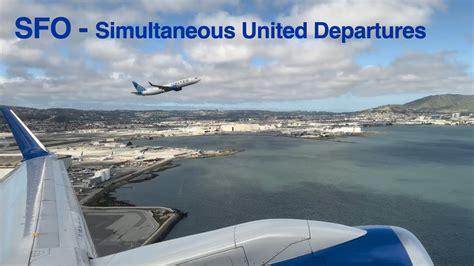
At San Francisco International Airport, precision is supposed to be routine. Parallel runways, choreographed departures, and tightly timed instructions are the daily grammar of safe flight. Shortly after midnight on January 24, 2026, that grammar slipped. Two United Airlines aircraft were cleared in a sequence that placed them on parallel takeoff rolls at nearly the same moment, a scenario that immediately raised alarms once both jets were airborne.
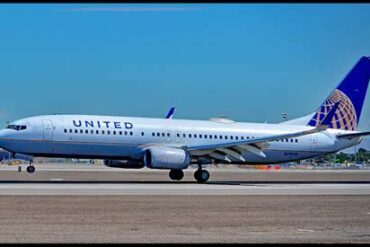
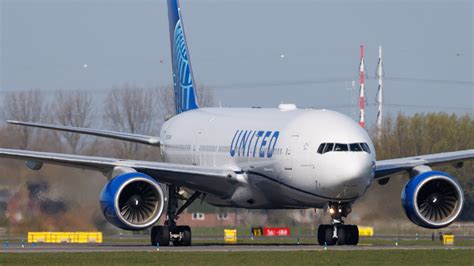
The incident involved United flight UA2621, a Boeing 777-200ER bound for Houston, and UA2312, a Boeing 737 MAX scheduled for San Jose. Both departures were routine on paper, yet the timing and taxi geometry at SFO quietly turned routine into risk. What followed was not only a separation issue in the air, but an unusual moment on frequency when the tower appeared to deny a clearance that had already been issued.
San Francisco’s runways 1R and 1L operate in parallel and are frequently used for closely sequenced departures. The system works because controllers track aircraft position down to the second. In this case, the sequence unraveled when timing assumptions met physical reality on the ground.
UA2621, the heavier 777, received takeoff clearance first on runway 1R. Its taxi route required a short but meaningful delay to line up. Roughly half a minute later, UA2312 was instructed to line up and wait on runway 1L. Moments after that, the 737 was cleared for takeoff while already in position, just as the 777 was finally advancing onto its runway.
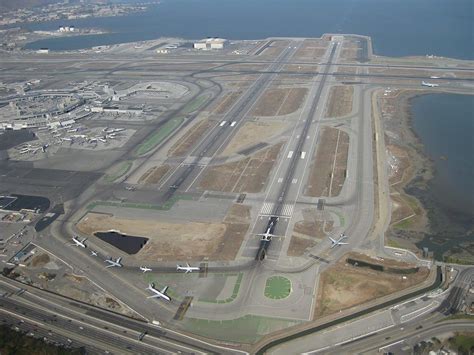
The result was two United aircraft beginning their takeoff rolls almost simultaneously on parallel runways, each operating under the same departure clearance. While parallel departures are not inherently unsafe, this particular pairing created a compressed margin for error, especially given the aircraft types, wake turbulence considerations, and identical initial routing.
Once airborne, the anomaly became obvious. The tower controller issued vectors to rapidly increase lateral spacing between the aircraft. The corrective action worked, and no loss of separation occurred. The real surprise came seconds later when the controller remarked, “I don’t know how you guys both got takeoff clearances… that did not happen.” The statement landed awkwardly on frequency, because the clearances had, in fact, happened—audibly and sequentially.
Parallel Runways, Parallel Assumptions
San Francisco’s layout demands mental multitasking. Controllers must continuously predict how long an aircraft will take to taxi, line up, and begin its roll. In this case, the critical miscalculation appears to be time-to-runway. The 777’s slower alignment on runway 1R was not fully accounted for when the 737, already in position on 1L, was cleared to depart.
This was not a systems failure or a mechanical fault. It was a human timing error, subtle but consequential. Modern ATC still relies heavily on human spatial awareness, especially in tower environments where automation assists but does not decide.
Confusion After Liftoff
After departure control took over, the situation clarified quickly. UA2621’s crew queried why they were flying an assigned heading instead of the published SSTIK departure. The response was blunt: the tower had flagged an issue because “you rolled and another one rolled right behind you,” requiring immediate separation.
The exchange remained calm and professional. One pilot noted that the tower controller “sounded a bit alert,” a polite understatement for a moment that likely spiked workload and adrenaline on both sides of the frequency.
Why the Denial Matters
Errors happen in aviation, and the system is designed to catch them quickly. What makes this incident stand out is not the clearance itself, but the denial of the clearance moments later. That reaction suggests momentary situational overload, where actions outpaced conscious tracking. In a field where accountability and clarity are safety tools, even brief confusion is notable.
Late-night operations, reduced staffing, and circadian fatigue all form part of the background context. None excuse the mistake, but they help explain how a controller could issue two clearances and then genuinely struggle to reconcile the outcome seconds later.
A Near Miss, Not a System Collapse
No aircraft were damaged. No passengers were endangered. The separation was restored swiftly, and all parties acted with discipline once the conflict was recognized. The episode underscores a familiar truth in aviation: safety is often preserved not by perfection, but by rapid correction.
At the same time, the incident quietly fuels a broader debate about whether tower operations lean too heavily on human memory and timing in environments that demand near-perfect sequencing. As traffic density grows, the margin for these micro-errors narrows.
In the end, this was a close call shaped by seconds, geometry, and human perception. It resolved safely, but it left behind a recording that captures how thin the line can be between routine and remarkable in modern air traffic control.