Air traffic control relies on a delicate choreography of timing, communication, and strict procedural discipline. At one of the world’s busiest airports, even a momentary deviation from that choreography can cascade into a dangerous situation. Such a scenario unfolded at Los Angeles International Airport (LAX) on March 2, when two United Airlines aircraft found themselves on a collision course during a runway incursion that forced a dramatic 106-knot rejected takeoff.
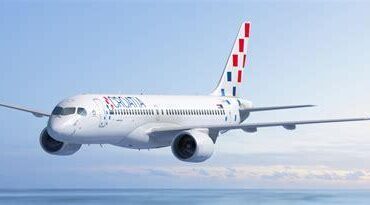
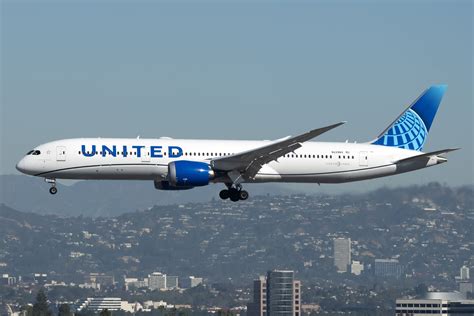
The event involved a United Airlines Boeing 787-9 Dreamliner departing for Hong Kong International Airport (HKG) and a United Airbus A321neo that had just landed on a parallel runway. A crucial intervention by an air traffic controller prevented what could have escalated into a catastrophic runway accident. The incident illustrates both the risks of runway incursions and the resilience built into modern aviation safety systems.
Although no injuries occurred and the aircraft eventually completed its long-haul journey later that evening, the sequence of events highlights how quickly routine operations can turn critical on an active runway.
Runway Incursion During United Airlines Departure
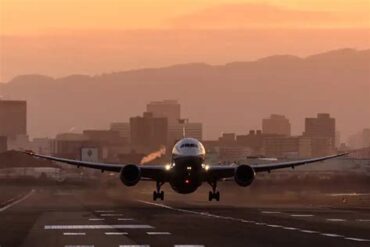
The close call began as United flight UA-152, operated by a Boeing 787-9, prepared to depart Runway 24L at LAX on its scheduled transpacific flight to Hong Kong. The aircraft, loaded with passengers and fuel for a journey of roughly 15 hours across the Pacific Ocean, had already received takeoff clearance and initiated its acceleration down the runway.
At nearly the same time, another United Airlines aircraft—an Airbus A321neo—had just landed on Runway 24R, the parallel runway located immediately south of 24L. After touching down, the A321 crew was instructed by air traffic control to hold short of Runway 24L, a standard safety procedure designed to prevent aircraft from entering an active departure runway.
The pilots acknowledged the instruction correctly. However, after exiting their landing runway via a taxiway, the aircraft continued moving forward and failed to stop before the hold-short line, inadvertently entering the protected area of Runway 24L.
This type of event is known as a runway incursion, a situation where an aircraft, vehicle, or person enters a runway without proper clearance. In a busy environment like LAX, where multiple aircraft may be departing or arriving simultaneously, even a few seconds of misjudgment can produce a serious hazard.
The Moment the Controller Intervened
Air traffic controllers continuously monitor aircraft movement through radar systems, ground surveillance technology, and direct visual observation. In this case, the controller noticed the developing conflict just as the Dreamliner was accelerating down the runway.
With the departing aircraft already moving at high speed, the controller issued two rapid instructions:
- The A321neo was told to expedite its exit from the runway environment immediately.
- The Boeing 787-9 had its takeoff clearance cancelled, forcing the pilots to abort the departure.
By the time the call was made, the Dreamliner had reached 106 knots, or roughly 122 miles per hour (196 km/h). At this speed the aircraft was approaching the threshold where pilots must decide whether it is safer to continue the takeoff or attempt to stop.
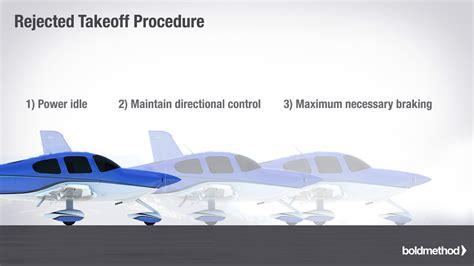
The flight crew reacted quickly and executed a rejected takeoff, applying maximum braking to bring the heavy aircraft to a halt before reaching rotation speed.
Understanding the 106-Knot Rejected Takeoff
A rejected takeoff—often abbreviated as RTO—occurs when pilots abort the takeoff roll and stop the aircraft before liftoff. While it sounds simple, it is one of the most demanding procedures in airline operations.
In aviation training, pilots are taught that the risk profile changes dramatically as speed increases during the takeoff roll. The transition from low-speed to high-speed rejection typically occurs between 80 and 100 knots, depending on aircraft type.
At lower speeds, stopping is relatively straightforward. Pilots can simply reduce thrust and apply brakes. However, once an aircraft moves beyond the 80-knot range, several additional factors come into play.
Aerodynamic forces begin acting strongly on the aircraft’s control surfaces—rudder, ailerons, and elevators. The airplane is no longer just a rolling vehicle; it is a partially flying machine interacting with airflow. At the same time, the aircraft’s kinetic energy increases exponentially with speed, meaning the brakes must absorb immense heat to bring the aircraft to a stop.
For a long-haul aircraft like the Boeing 787-9, which was carrying heavy fuel loads for a transpacific flight, the braking demand during a high-speed rejection is enormous.
Why the Aircraft’s Brakes Overheated
The Dreamliner’s braking system successfully stopped the aircraft on the runway, but physics extracted a price. When brakes absorb the energy of a heavy aircraft traveling above 100 knots, they convert that energy into heat.
In this incident, the heat generated during the abrupt stop caused the brake assemblies on the landing gear to overheat, a common consequence of high-speed rejected takeoffs.
Modern airliners are designed with sophisticated brake cooling systems and safety margins to prevent catastrophic failures such as tire explosions or wheel fires. Still, once brake temperatures exceed operational limits, the aircraft cannot depart again until maintenance teams verify that the braking system has cooled and remains structurally sound.
For the passengers aboard UA-152, that meant returning to the terminal and waiting while technicians inspected the aircraft.
Eight-Hour Delay Before the Transpacific Flight
Following the rejected takeoff, the United Airlines Dreamliner taxied back to the gate at LAX for inspection. Maintenance crews evaluated the braking system and ensured that no structural damage had occurred to the landing gear.
The process took several hours. Ultimately, the aircraft departed approximately eight hours later than scheduled, leaving Los Angeles at 7:13 PM local time rather than the originally planned 11:10 AM departure.
Despite the lengthy delay, the aircraft successfully completed its journey to Hong Kong, landing at 1:35 AM local time, more than a day after the originally scheduled arrival time.
The aircraft involved in the incident was Boeing 787-9 registration N29984, part of United’s long-haul fleet used on international routes across the Pacific.
How the Delay Affected United’s Fifth Freedom Route
The flight in question is part of a somewhat unusual operation within United’s global network. After arriving in Hong Kong, flight UA-152 continues onward to Ho Chi Minh City (SGN) in Vietnam.
This segment is known as a fifth freedom route, a special aviation arrangement that allows an airline to carry passengers between two foreign countries as part of a longer international journey.
Because the inbound flight from Los Angeles arrived late, the onward flight to Vietnam was also delayed by several hours. However, the aircraft had a long scheduled ground time in Ho Chi Minh City, allowing the later segments of the route—SGN to HKG and HKG to LAX—to return to near-normal scheduling.
This kind of operational flexibility helps airlines recover from disruptions that occur earlier in a multi-segment itinerary.
Why Runway Incursions Remain a Major Safety Focus
Runway incursions remain one of the most closely monitored safety risks in modern aviation. Despite sophisticated radar systems, cockpit alerts, and strict communication procedures, airports with parallel runways and dense traffic patterns can still present challenges.
At airports like Los Angeles International, where multiple widebody aircraft may be taxiing, landing, or departing within minutes of each other, controllers must maintain constant awareness of aircraft position and movement.
Aviation safety analysts often emphasize that preventing runway incursions relies on three layers of protection:
- Precise air traffic control instructions
- Accurate pilot readbacks and situational awareness
- Ground surveillance systems that track aircraft movement
When one layer falters, the remaining layers must react quickly. In this case, the air traffic controller’s rapid intervention prevented a dangerous situation from escalating.
A Close Call That Demonstrates Aviation Safety Systems
Although the incident at LAX ended without injuries or aircraft damage, it serves as a vivid example of how multiple safety barriers in aviation operate together.
The A321 crew initially acknowledged their hold-short instruction, but the aircraft still crossed the boundary line. The controller identified the problem in time to cancel the takeoff clearance. The Dreamliner crew responded immediately by executing a high-speed rejected takeoff.
Each action formed part of a safety chain that prevented two large commercial aircraft from occupying the same runway at the same moment.
Commercial aviation operates in an environment where thousands of flights move through crowded airspace every day. The rare moments when something goes wrong reveal just how critical vigilance, training, and technology are in keeping passengers safe—even when a 106-knot takeoff roll suddenly turns into an emergency stop.